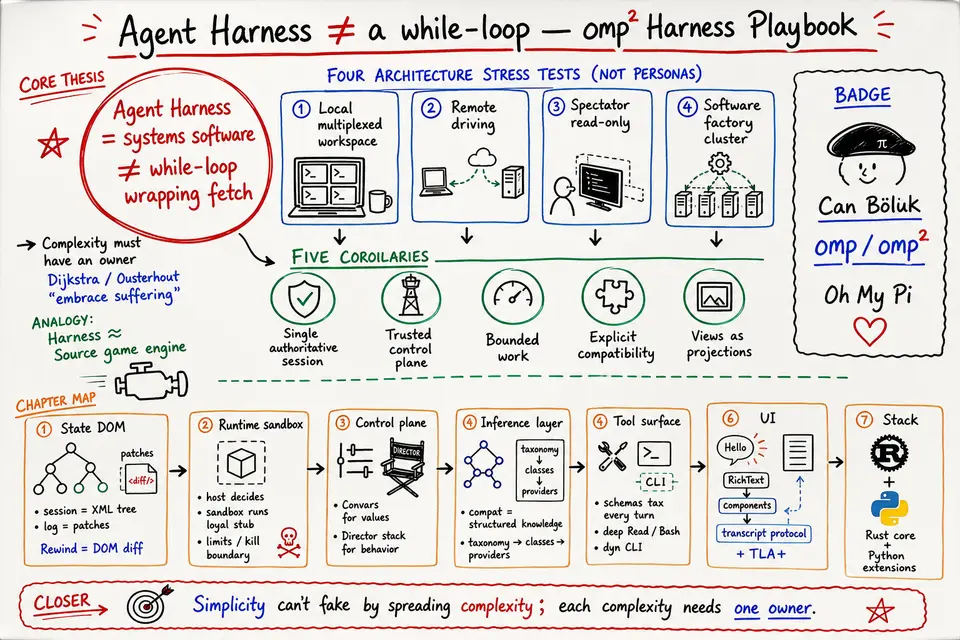
Agent Harness 不是 while 循环:omp²《Harness Playbook》
Before adding another loop, decide who owns state, who can stop the work, and where one run ends.
From authoritative harness state to takeover-ready interfaces and real deployment costs: eight reads that reconsider what an agent actually is.
From the editor
Most of this week’s saved pieces move past “how much stronger is the model?” and ask what an agent needs as a working system: authoritative state, bounded execution, interfaces people can take over, and costs that shape the product. Their answers conflict, especially on how much history to keep. That tension is why they belong together.
Before adding another loop, decide who owns state, who can stop the work, and where one run ends.
01 / State and control
More context is not automatically better, and neither is less. The real question is which state must persist and which attempts are worth keeping.
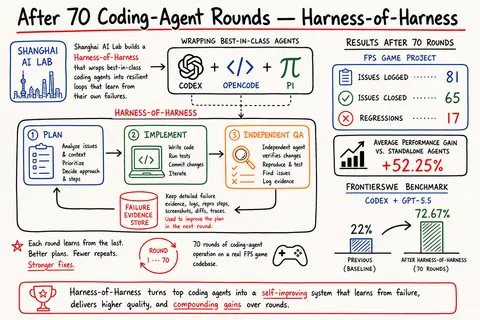
After 70 rounds, the hard part is not generating more code. It is keeping the next round from erasing work that already passed review.
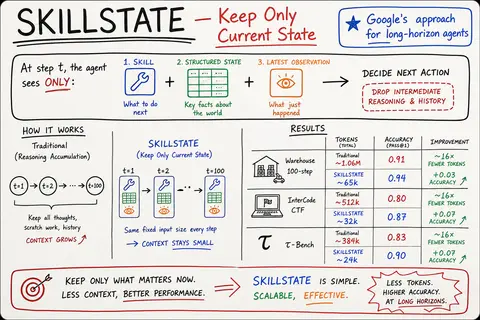
Keeping only current state and the latest observation is a clean rebuttal to the idea that more context is always better.
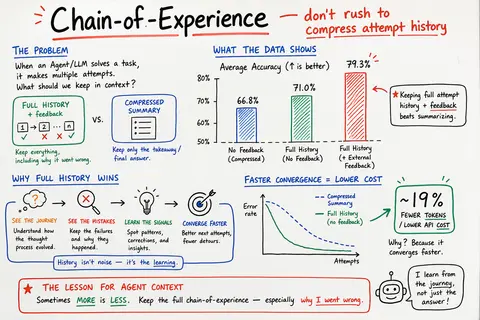
The counterpoint: feedback embedded in attempt history may itself be capability. The choice is not more or less, but what survives.
02 / Working interfaces
If an agent keeps working, a chat transcript cannot remain the product’s only container.
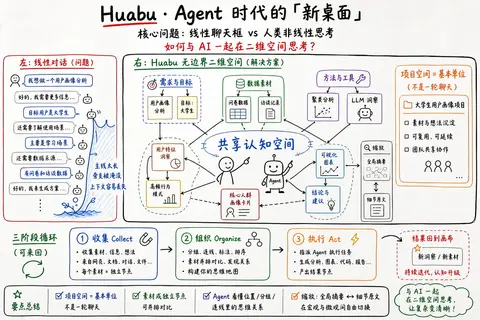
A two-dimensional canvas turns delegation into a visible spatial relationship across collecting, organizing, and executing.
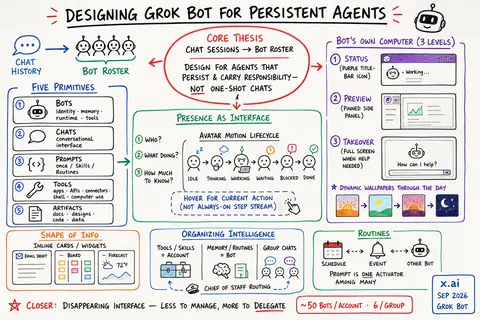
Once a bot becomes persistent, the entry point is no longer a conversation but a recoverable unit of work that people can take over.
03 / Scale and fieldwork
Infrastructure determines how many instances can run. Fieldwork determines whether any of them create value.
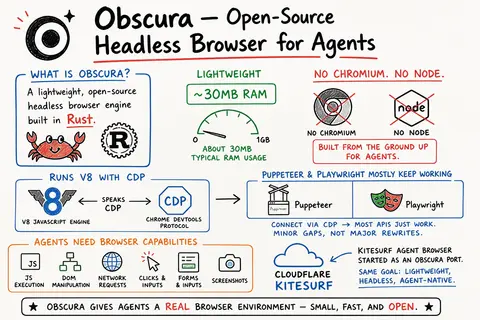
A lighter browser is not a benchmark trophy. At hundreds of concurrent instances, 30 MB becomes a product boundary.
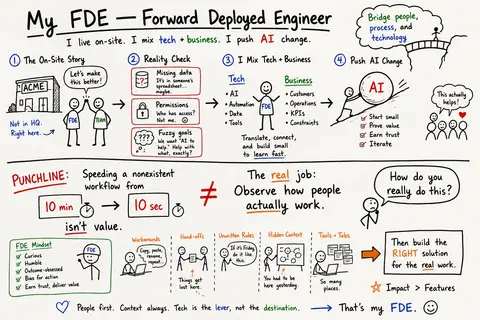
Reducing ten minutes to ten seconds is not the same as creating value. Agents still have to meet real data, permissions, and people.