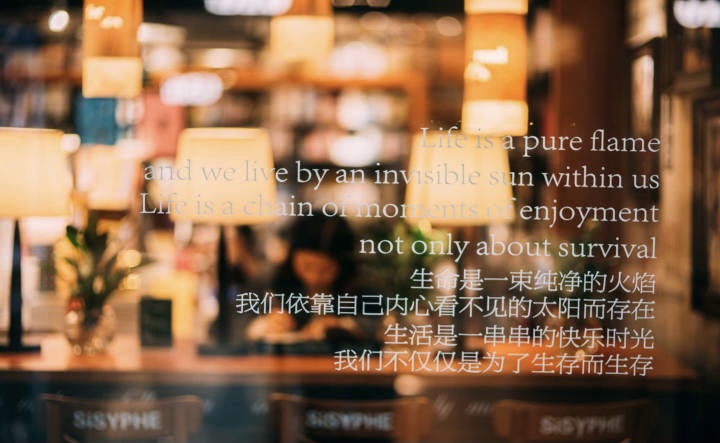
Part One: Present, Past, and Future
1.1 Present
Like the morning dew. — Short Song Ballad
I handed in my resignation. My last day is set for National Day — a clean break, no next job lined up.
When I told my manager I was leaving, he couldn’t understand why. Good prospects, a stable high income, a pile of unvested stock, and a core project that could earn me a T12 — why would I walk away? Later the director and GM both sat down with me. I just said I wanted to experience more possibilities; I’d been here too long. According to my original plan, I should have left a long time ago.
Twenty-nine years old. Former elementary-school teacher. Philosophy master’s degree. Four and a half years at Tencent, currently T11. Plenty of labels surround me — the occasional awards, strong projects, polished business skills — and gradually I slipped into a comfort zone. I’m afraid of a future I can already see in its entirety. I want to break free from where I am now. This predetermined highway is not one I’m willing to walk to the end.
The summer my monthly digest went quiet, my father was diagnosed with a brain tumor. He was admitted to the hospital. After surgery, repeated lung infections set in, and his recovery was poor. Three hospital transfers. Four trips in and out of the ICU. Every time I visited, I was counting the visits I might have left. Looking at him in that hospital bed, I was stunned at how much he had aged. In my memory he was always a towering mountain, and past scenes flickered through my eyes like a reel. In an instant, twenty-nine years had passed — and I don’t know how many years of my own life remain.
Fortunately, my father has recovered and is now in rehabilitation. I also decided to resign — to shed every title and step into an unknown future.
1.2 Past
Drifting like dust on the road. — Miscellaneous Poems
Looking back at my years at TME after graduation, I gained a great deal. Year 1: green-diamond membership campaigns on QQ Music. Year 2: Flutter framework for live streaming. Year 3: 3D metaverse. Year 4: game rendering engine on WeSing. The business changed every year, and every year I pushed myself as hard as I could to grow within it — T9 after 2 years, T10 after 2.5 years, T11 after 4.5 years. Honestly, by Year 3 I already wanted to leave when growth opportunities dried up. I did submit a resignation that time, but the director offered me a core rendering engine project to lead, and I grabbed the opportunity and made it to T11. But my joy lasted exactly one night — the night I got the promotion news. Then what? Keep growing? Set my sights on T12?
I suddenly realized I had been treating everything I’d been through as some kind of countdown death game, with 35 as the finish line. So every year before that, I needed to level up — grind, grow, get promoted as early as possible before the clock ran out. Up to this point I’d played the game well. In every likely scenario for how it ends, I had a very high chance of “winning.”
But I chose to quit partway through, because I realized what I’d be doing next in this game held no real interest for me. What I would gain wasn’t worth the life energy I’d have to spend. Given that, continuing to play was only wasting time. I should actively seek change.
A while ago a blog post was making the rounds — an outstanding Google SRE engineer who quit after nine years. She felt that although she’d received fair compensation, she had regrets. She had recognized early on that the job wasn’t quite right for her, but she waited passively for change instead of transitioning sooner to explore new possibilities.
Losing possibility is one part of it, but more importantly you fall into a comfortable cycle. Most people grow accustomed to expanding within their comfort zone, but the comfort zone itself erodes individual agency and possibility.
Beyond that — similar to how chasing dopamine continually reinforces the pleasure circuit — life must not fall into “growth addiction.” You can’t pin all your achievements and happiness on a permanently ascending self. Desires that expand without limit will eventually consume you. The day your capabilities can no longer satisfy your desires, your sense of worth collapses instantly into endless emptiness and pain.
Every year after writing my year-end reflection, I sketch a five-year plan — all the possible goals and life paths in the next five years. If you want a life that keeps moving, you have to push yourself into the next phase at regular intervals: finish one goal, then strive toward a new one. Now it’s time to update the path. It came sooner than I expected — it arrived in this summer.
To close this section, I’ll do a postmortem on this chapter of my career, just as Postmortem of my 9 year journey at Google did:
Introduction
The summer before my final year of grad school, at twenty-three, I joined Tencent Music during campus recruiting. TME was still part of Tencent’s SNG at the time.
I had already been an active independent developer on GitHub for over five years, but I had never worked on an enterprise-scale project. Through this internship I gained end-to-end project experience and developed a deep respect for production systems and the individual users behind the traffic.
Expectations when I joined
After the internship I was genuinely enthusiastic about Tencent. The team had a great vibe. I decided to stay without even looking at other options.
I wanted to pick up as much technical skill and growth as possible, and to connect with as many of my colleagues — the “geese” — as I could. I wanted to feel the energy of a motivated team, and to collect a unique life experience. My career plan was simple then: reach T9 within three years, and I’d be satisfied.
I saved this lyric for myself at that time, and I’m grateful to my younger self for it:

Career experience
The reality was much more turbulent. I joined the internet industry right as it was entering a volatile period — the pandemic hit almost immediately, followed by waves of layoffs. My business unit and team changed multiple times over five years, and I actively sought growth opportunities throughout.
What I gained:
- Adequate compensation, and the satisfaction of being a Tencent employee
- Software engineering skills — today, when any requirement lands in front of me, I can instantly sketch out an implementation plan
- Problem-solving ability — a personal methodology for root-cause analysis that earned the recognition of colleagues
- Efficient, structured planning — I handled up to seven parallel tasks simultaneously without dropping anything
- A focused work ethic — the ability to bring 100% effort and accountability to whatever I’m doing
- A spirit of deep exploration — broad, deep technical understanding across platforms, driven by genuine curiosity
- Communication and coordination skills — especially in the later years, including managing urgent, complex projects coordinating nearly 10 teams
- Data analysis intuition — I developed business sensitivity and the ability to intuitively attribute basic metrics, as well as deeper analytical skills
What I was less satisfied with:
- Growing disillusionment with big tech
- Team-building trips disappeared (though I later heard they were restored this year)
- No real opportunities to build management experience; individual growth trajectory became unclear
- And some other things I won’t get into
Self-reflection
What went well:
- Fast promotions — T10 in two years, T11 in four. My performance scores kept me on the green track almost continuously; all three promotion panels ranked me first, a 100% pass rate
- Ending at T11 exceeded my original expectations
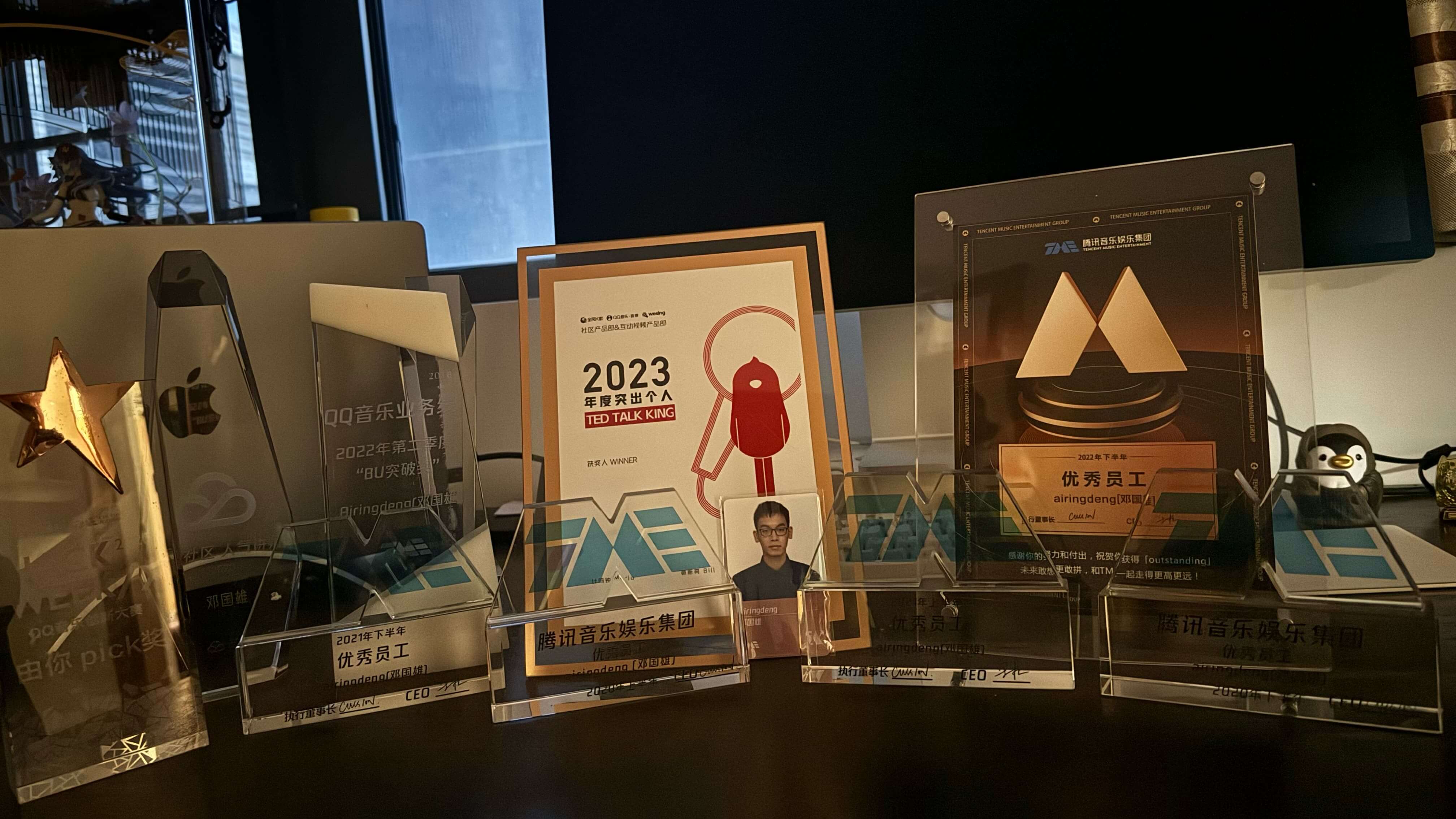
- Accumulated a pile of awards that I’m not sure what to do with now that I’m out
- Led four core projects across four different technical domains
- Soft skills improved significantly — including communication, presenting upward, and technical talks
What didn’t go well:
- Proactivity gradually weakened in the later period; passion eroded as people around me kept leaving
- Push was weak — I was too concerned with appearances. Though I later worked through that: if everyone is working toward the same goal, then keeping feedback focused on the issue rather than the person is the right approach.
Where I was lucky:
- The inclusiveness and friendliness of the team in the early days
- Collaboration with designers; co-authored many patents
- Consistently decent performance scores
- Good managers throughout
- Exposure to many different types of business
- More than half my career was spent focused on technical work
- Opportunities to lead interesting technical projects, including cross-platform and rendering engine work; chances to work on iOS and C++ codebases, and to expand and pivot within the front-end domain
What I would change if I could do it over:
- More technical output — my individual technical writing and sharing was too sparse
- Set aside a portion of energy for technical exploration outside of work
Now, a few words on what comes next.
1.3 Future
I urge you: don’t force a foot onto the snake — one cup of fine wine is not to be passed up. — On Feeling
About the road ahead, I have so many questions I want to explore: Can we ever truly understand another person’s feelings? Are the memories in each person’s heart real? Or do we only believe what we ourselves have seen? What is the structure of consciousness? How does perception grant things their essence? How does a subject construct meaning in the lived world? Why do we always end up confiding deeply in strangers? Can our lives really rise like the sun — warm and upward? Or is that just a beautiful wish we hold inside?
There are countless more questions I want to ask. I want to spend my life submerged in exploring them — exploring the endless possibilities of what a life can be. For now, I’ve decided to start by attempting to realize an idea I’ve carried for years. I hope it will genuinely help people solve real problems.
In last year’s year-end reflection, 2023: Escaping Confusion, I shared some examples of how my writing reached readers:
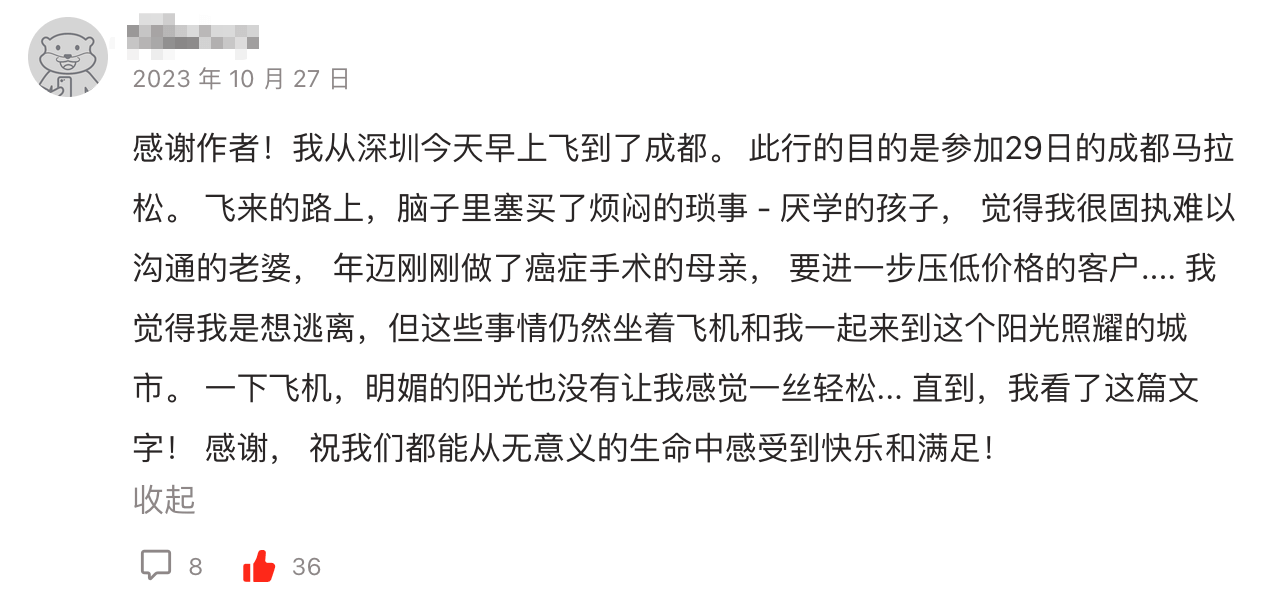
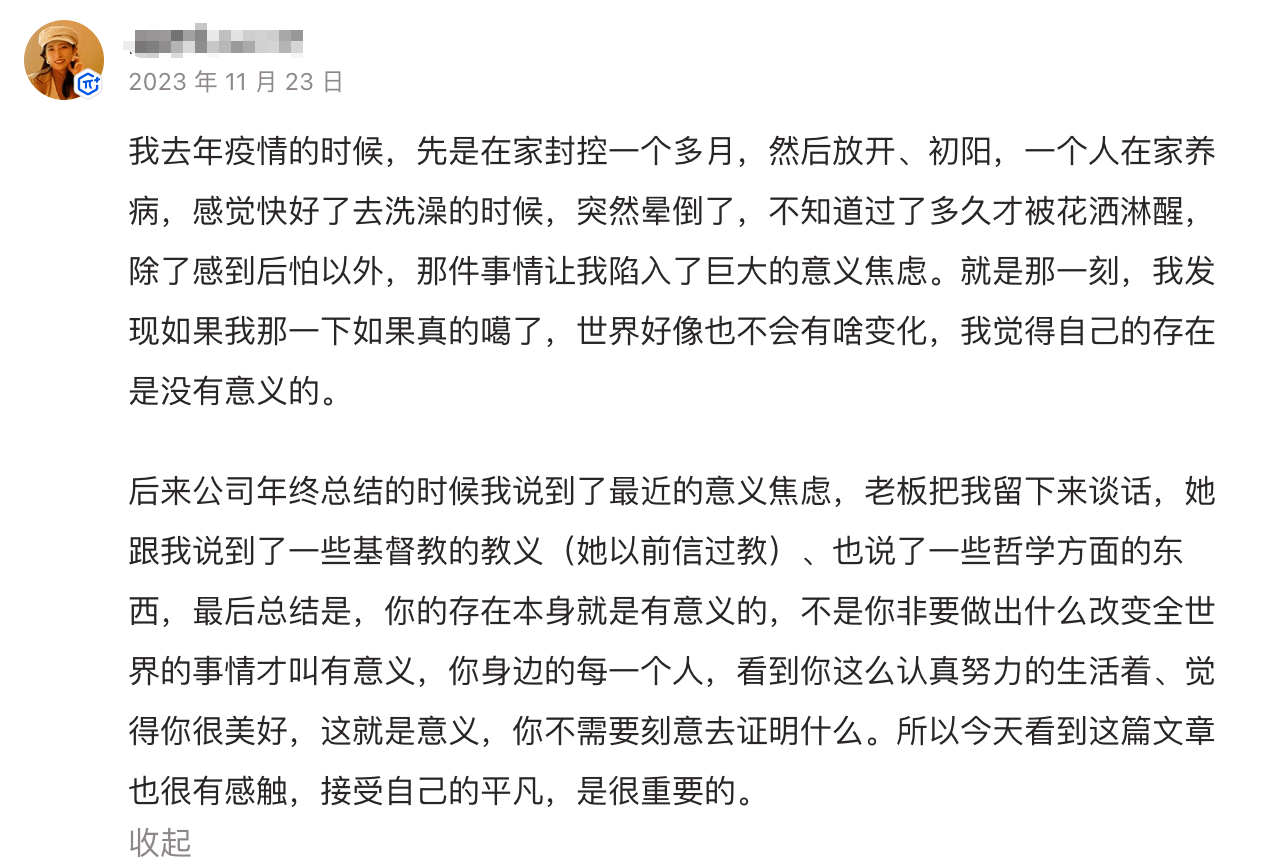
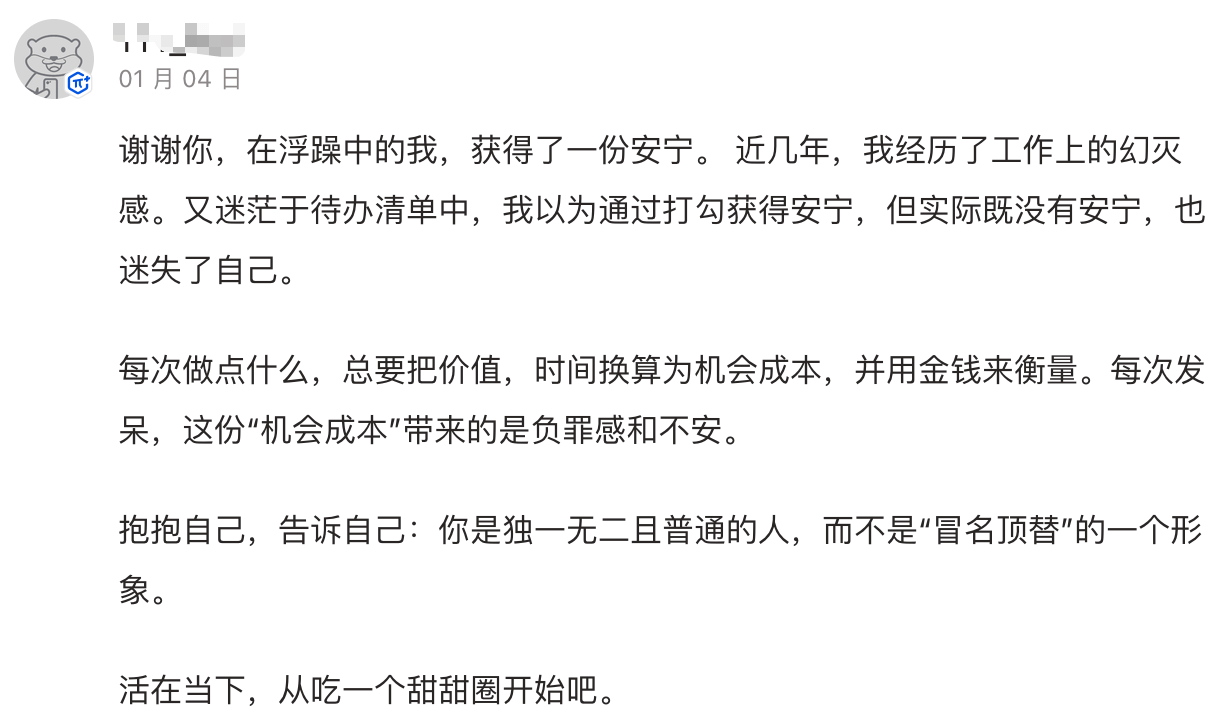
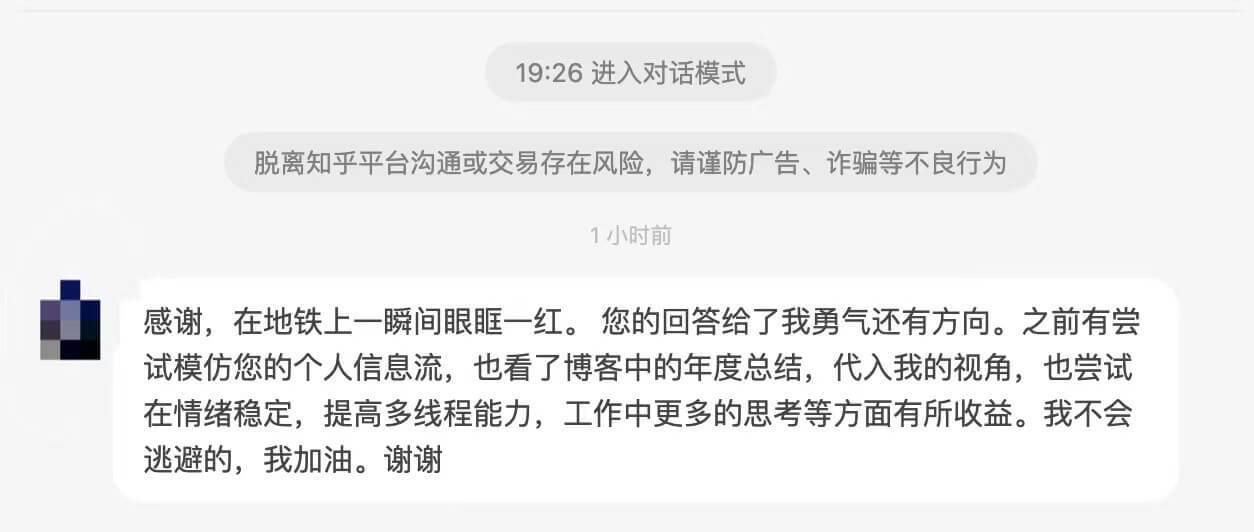
I once heard: “The happiest moment for a baby is when it discovers it can affect the world around it.” In writing — in this creative act — perhaps I too am chasing a kind of “sense of presence”: a small way of influencing and changing the world. The product I want to build for my startup carries that same quality and value.
When I told the people around me I was preparing to start a company, almost everyone was pessimistic. But I knew with absolute clarity that this was the path I had to take. Refusing to do something simply because it’s hard or the immediate payoff is low — that’s not how I operate. I’ve always gravitated toward doing things that are difficult and right, even when others think I’m wrong.
In my 2018 year-end reflection, 2018: Settling the Heart, I wrote about meeting two VCs. My decision then was not to start a company yet — to spend a few years honing myself in a big company first, leave around T9 after about three years. I had many ideas and things I desperately wanted to do, but I knew my abilities and experience at the time weren’t sufficient to see them through. That was my original intention. The buried thread in that title has now been answered, many years later. The time is right. It’s time to act. Whether I succeed or fail, I will have no regrets.
Some say I’m stubborn. Some say I’m baffling, or that I don’t fit in. On reflection, I think all of this comes from the greatest fortune of my life: experiencing an awareness of death at exactly the right moment. In Farewell, My College Years I wrote about two hospitalizations and one near-death experience. Since then, every day has felt like a gift of new life. I want to make the most of every day — to keep searching for the meaning of my existence.
Three years ago I put some of these thoughts into a short essay, On the Value of Existence and the Experience of Life, published on Sspai. It found a large audience and many comments. In this post I want to revisit the theme of life’s meaning from another angle — through the lens of work.
Frankl identified three ways of discovering meaning in life: work, love, and courage. The rest of this piece is organized around those three pillars — and what I call the Goose Cage, Happiness, and Courage.
Part Two: The Goose Cage, Happiness, and Courage
2.1 The Goose Cage
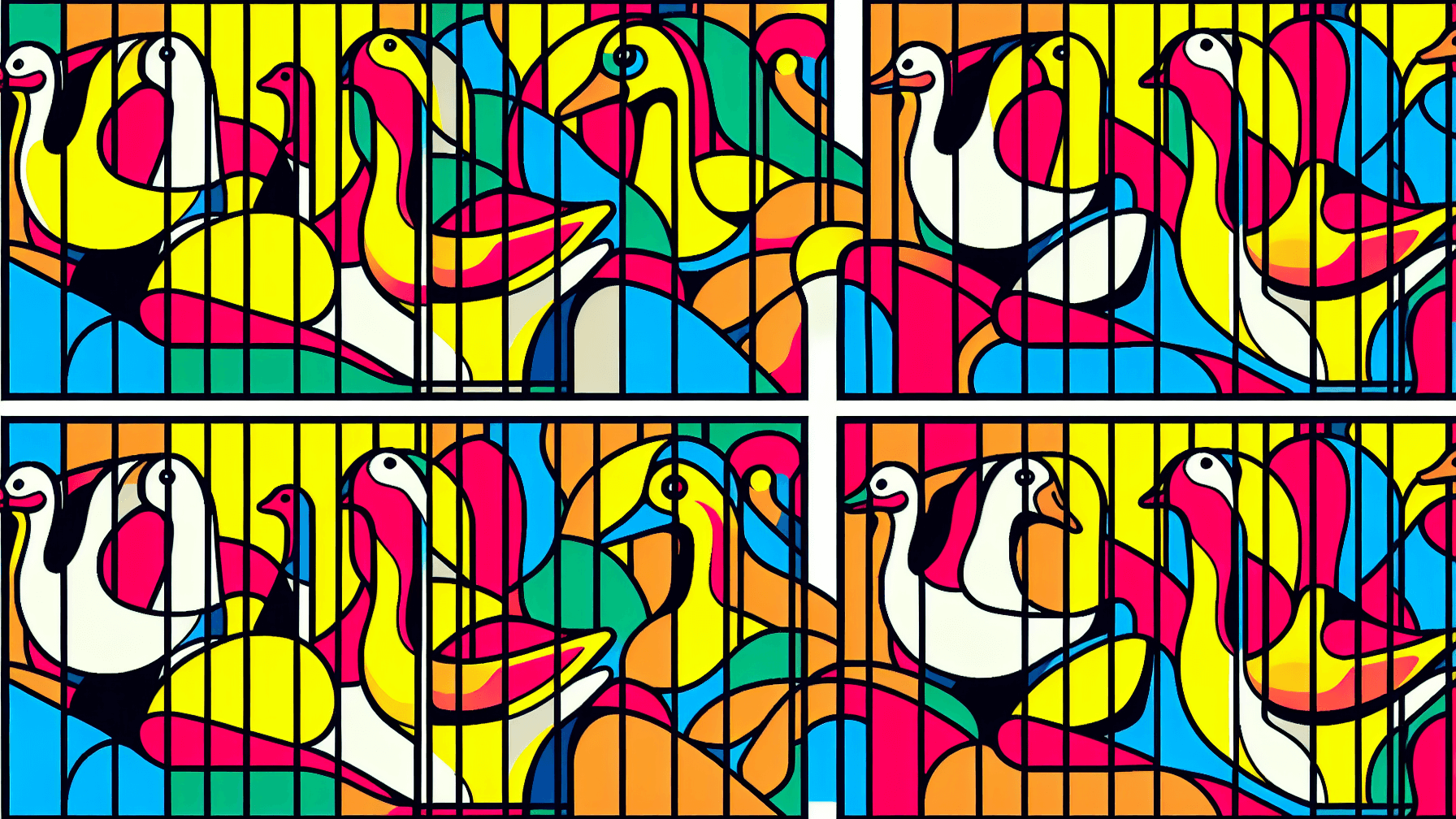 > The cage is no wider; the scholar is no smaller — and yet he sits side by side with two geese, undisturbed. — The Scholar of Yangxian
“Goose Cage” is not a pejorative. It comes from an image in the Tang tale The Scholar of Yangxian, and it symbolizes a kind of constraint and limitation. In the original story, the peddler carrying the goose cage reflects the various restraints and pressures of modern life. Director Hu Rui, who adapted it into the animated short Goose Goose Goose, noted that the goose cage represents all the limitations life places on us — a hint that when we pursue freedom and ideals, we are often trapped by the constraints of reality. The cage is not just a physical container; it is a space where fantasy and reality interweave. “The scholar produces beautiful food and beautiful women from inside the cage, displaying the desires and fantasies deep in the human heart. The realization of that fantasy and its collision with reality reflects the struggle and loss people experience in pursuit of the good life.”
The Goose Cage thus becomes a charged symbol — a representation of both our longing for an ideal life and our helplessness before reality. In this section I want to render the Goose Cage faithfully — to show the individual struggle and search.
The purpose of work
Most middle-class workers in times of difficulty inevitably ask themselves: why am I working? The answers they arrive at generally fall into one of the following categories:
The first: working for money.
Several forces produce this outcome.
First, social conditioning. In modern society we tend to derive social recognition from our jobs, and income level directly shapes how others perceive us. This cultural pattern causes us to link work with money, and even to treat income as a measure of success. When former classmates or relatives back home hear I work at a big tech company, most of them are envious — and only because of the salary.
Second, income satisfies subjective material desire. In an era of rampant consumerism, the purpose of work becomes consumption, and the drive to work for money is a pursuit of endless material desire.
So most people — even when they’re being manipulated or constantly complaining that their job is bad, even when they’re seriously overtaxing their own health — won’t change jobs. When I hear such complaints I tell people to just leave. But usually they only talk the talk. When I push further and ask what company they’d want to go to, the answer is invariably: one that pays more. The Goose Cage of working for money has them firmly locked in.
The second: working for the future.
As I mentioned earlier, the big tech environment is basically a countdown death game, and most employees have a single goal: earn as much as possible before the countdown ends to achieve financial freedom and early retirement. Over the past decade-plus in the internet industry, this path has proven very viable.
On the surface this looks the same as the first type, but it represents a step forward in thinking — at least the person knows what they want. And to achieve that future, the individual keeps pushing themselves to get promoted and grow. During this period, no matter how much they suffer or endure — even if the work feels meaningless, even if they’re just tightening bolts — there are few complaints, because everyone holds a beautiful vision in their hearts, knowing the pain is in service of future sweetness.
Under this vicious cycle, the sole goal of work becomes not working.
The third: working in order not to work.
After passing through the earlier stages, labor has undergone alienation. Workers with this purpose view selling their labor and time as a price to pay for a happy life — not as happy living itself.
What is alienation? Susan Sontag once wrote in On Photography: “People become compulsive photographers: making an experience into an image, a souvenir, is both a way of certifying the experience and of refusing it.” As photography became widespread, people increasingly tend to experience and document life through taking photos. Photography becomes a compulsive behavior, as if an experience only becomes complete when captured in an image. People start to equate real life with the images in photos: traveling is no longer about immersing yourself in scenery and culture, but about taking photos and curating what you’ll share. Photography distorts our understanding of reality, making perception shallow and experience illusory. That is alienation — the tool itself becomes the goal, estranging people from real living.
Work in this scenario is similar. Making “not working” the purpose of work ignores whatever value and meaning the work itself might have.
So what kind of work purpose is healthy and constructive?
Frankl identified three ways of discovering meaning in life, the first of which is work: we find our self-worth by engaging in meaningful work. We must ask: in our individual creative output, what have we accomplished — what have we contributed to the world?
The main reason I chose programming as a career is that the act of creating through code has brought me the most purely joyful feeling I know. However many years have passed, I can still remember those early days of fumbling with VB late into the night — and the moment the program was complete and I opened the interface for the first time, that welling-up of delight has never left me.
In middle school politics class we actually learned that labor is about creating social value and realizing personal value — yet as adults we’ve somehow come to treat that as a joke. This is not individual cognitive failure. It is the result of a distorted social conditioning.
Worldly success
Worldly success has defined a template for our lives. The Score of Happiness describes it vividly:
For Chinese youth born in reform-era first- and second-tier cities, the typical template includes roughly:
- Studying hard through at least a bachelor’s degree;
- Joining a high-growth sector like finance or tech;
- Purchasing an apartment in one of the top-ten GDP cities (Shanghai, Beijing, Shenzhen, Guangzhou, Chongqing, Suzhou, Chengdu, Hangzhou, Nanjing, or Wuhan);
- Marrying and having children between 30 and 35;
- One to two overseas trips per year, or an equivalent “middle-class lifestyle” in purchasing power.
The vast majority of people around me follow this success template to construct their own happy life — and its end state can only be illusion.
“In the past, people like animals on a millstone chased the carrot in front of them — some would always get the carrot, but the point was to make everyone believe that walking in one direction would get them a carrot. The carrot is more like an ultimate fantasy. It doesn’t matter who eats it; what matters is that as long as one carrot exists, countless people will chase it.” (The Score of Happiness)
In Discipline and Punish, Foucault points out that this disciplinary power is pervasive in society — he calls it micro-power. This disciplinary micro-power controls individual behavior through norms, turning society into a panopticon-like prison where individuals are forced to self-discipline and become conforming social members.
This worldly success largely defines our modes of behavior. It tells us which behaviors are normal and which are not. This discipline not only determines our actions but also, to a large extent, shapes our value judgments of others — stamping certain behaviors with the label “should.” In a sense, social discipline is a form of deprivation of our freedom to choose. It defines what we “should” do while ignoring the other possibilities open to us.
This is what Foucault called “the death of man” in The Order of Things — the loss of human subjectivity. We have lost the freedom and infinite possibility that makes us human.
The disappearing subject
The structure of modern society forces people to objectify themselves in order to gain social recognition and worldly success, producing a kind of false individuality performed under disciplinary constraint. Struggling under the logic of sameness further intensifies the erosion of individual subjectivity.
The disappearance of subjectivity means losing the chance to know yourself. If a person has never truly made a decision for themselves, they will have little drive to look inward — and so lose the opportunity to understand their real self. This is the modern predicament: unable to listen to instinct and know what one must do; unable to follow tradition and know what one should do; and not knowing what one wants at all.
A friend once confided in me that even though he knew his current job wasn’t what he most wanted to do — full of complaints and pain — he wasn’t ready to leave, because he didn’t know what he would do if he did. In that situation many people choose to semi-coast at work, putting some energy into exploring a side project during their spare time, then waiting for the right moment to transition. That approach is a compromise — a resistance to micro-power, and an active inward exploration. But it’s not for me, because I believe that whatever you do, you have to give it 100%. That’s what it means to have truly lived.
Beyond this kind of active inward seeking, Frankl identified the two most common behavioral responses to the value crisis of disappearing subjectivity: conformity (doing what everyone else does) and submitting to authority (doing what others want you to do).
And even if you’re lucky enough to know what you want, you may still find yourself unable to act on it for many reasons. Being yourself is hard. “The world will do everything it can, day and night, to make you like everyone else. If you want to be yourself, it means fighting the hardest battle of your life.” (E. E. Cummings)
 — “But darling, isn’t life so much more than that? We are here to feel the sunshine.”
Work and life
Siddhartha once reflected: “Everything he had done was nothing but a game, this game that made him happy and sometimes had filled him with gladness. But true life streamed past him, untouched.” If we treat the life template or the corporate ladder as a game, where does actual living fit?
How to balance work and life has always been a thorny problem. My way through it is “genuine experience.” When working, bring 100% energy to the work. In the remaining time, truly live. The prerequisite for bringing 100% to work is that my purpose in working is growth — so that in the future I’ll have the capacity to realize personal value.
So “work-life balance” is a slippery formulation. Its hidden implication is that work and life sit at equal footing. But life is everything; work is only work — it is a means in service of the former. What’s really needed is not “balance” so much as finding appropriate integration of the two. Meaning is already within life. Pursuing a happy life is every person’s actual goal; a career is just a means of achieving it.
Perhaps in the future, as Work, Consumerism and the New Poor predicts, work will be imbued with aesthetic value — viewed as a form of personal experience and enjoyment, with the boundary between work and personal interest blurring; work itself becomes a source of pleasure and satisfaction rather than merely a livelihood. In that world, work is not only economic activity but a path to self-realization and personal expression. Those who manage to align their work with their personal interests will tend to be the biggest winners.
How to break out of the Goose Cage — I place the answer in “Happiness” and “Courage.”
2.2 Happiness
 > From love comes worry; from love comes fear. — The Verse of King Miaose Seeking the Dharma
Coping with the anxiety of loss
Before we get to happiness, let’s address a prior question: how do we cope with anxiety?
First, we need to clarify what anxiety actually is. In a rapidly changing social environment, the uncertainty of the future is a major source of our anxiety. There’s a saying: “The opposite of anxiety is specificity.” Specificity means making decisions — and the essence of a decision is not what you choose, but what you give up.
So letting go always accompanies deciding. You must relinquish all other options, and usually once you let go, they don’t come back. But deciding is painful, because it means constraining possibility — and the more constrained a person’s possibilities are, the less free they are. The possibilities of a life collapse at the moment a decision is made.
Imagine: if you take no step toward any life, you retain infinite possibility. Like the mother played by Michelle Yeoh in Everything Everywhere All at Once — she is chosen to fight the BOSS precisely because she is the least capable version of herself in all parallel universes; and therefore she has the potential to become any better version of herself. Or as Demian says: “Each man had only one genuine vocation — to find the way to himself… but there was no virtue in it.”
But time keeps ticking. It pushes us toward one decision after another; we must choose, and choosing means giving up another possibility — which produces anxiety. Milan Kundera wrote in The Unbearable Lightness of Being: “Human time does not turn in a circle; it runs ahead in a straight line. That is why man cannot be happy: happiness is the longing for repetition.”
So how do we cope? The old monkey in Black Myth: Wukong gives an answer near the end of the game:
Old Monkey: Throughout history, gifted and extraordinary people have been countless — but those who achieved truly immortal deeds were very few. Do you know why?
Zhu Bajie: The world is unfair?
Old Monkey: The world has always been unfair.
Zhu Bajie: Bad luck?
Old Monkey: Luck is only what the strong call modesty.
Zhu Bajie: Then it can only be… that they weren’t as handsome as me.
Old Monkey: Because they had talent but no ambition, were satisfied with small gains, and sank into pleasure. Wanting comfort yet wanting fame; wanting to roam free yet wanting to become a Buddha. Where is such a thing? Our bodies are full of troubles — how can we expect to get everything?
Our bodies are full of troubles — how can we expect everything? Every day of our life is new; every second is new. But then again — if we spend this precious life cramming ourselves into the Goose Cage and worrying about our anxiety, is that truly worth it? What happens if we lose something? In my limited life experience, loss almost never turns out as catastrophic as we imagined. I am still me. Whether or not those external things are there, we must believe we are 100% precious. We permanently possess our own value — unconditionally.
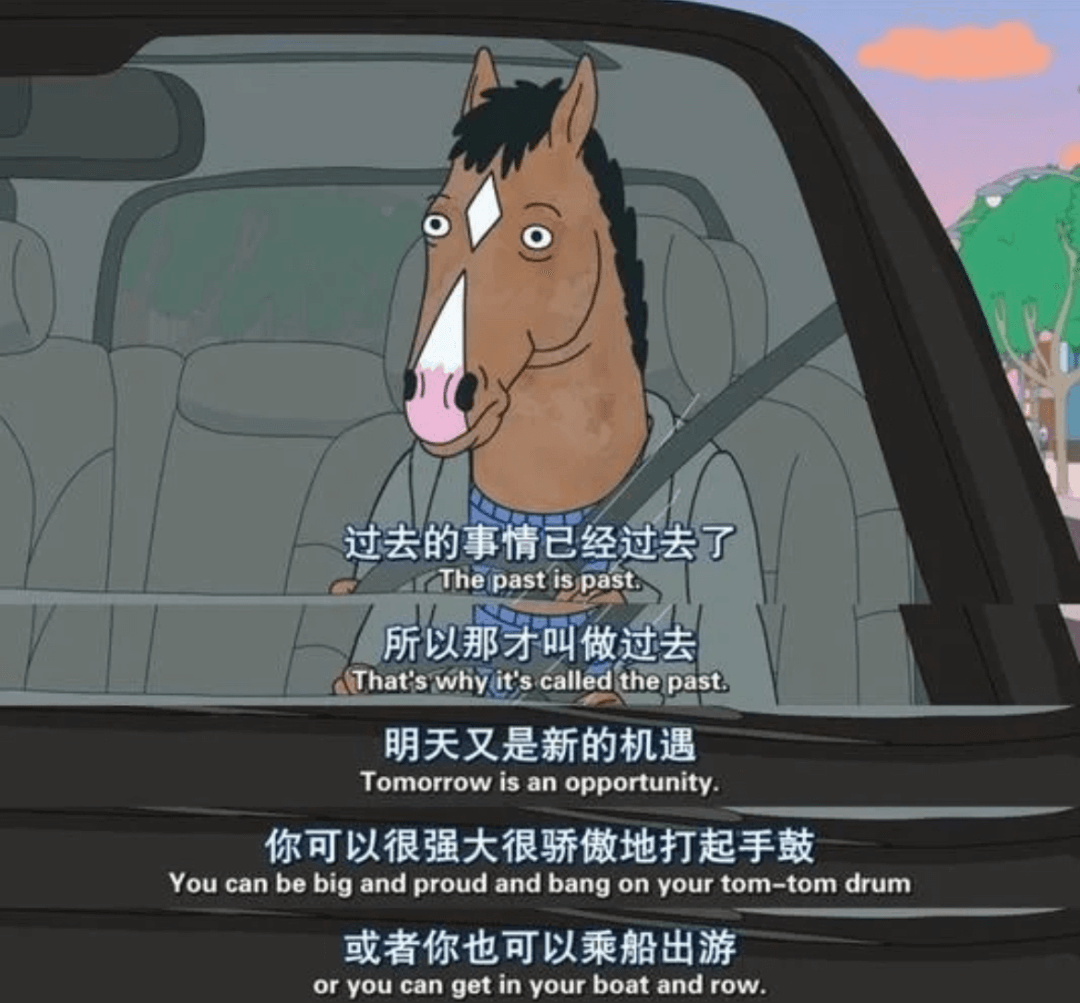
From love comes worry; from love comes fear. Every relationship and circumstance is impermanent, difficult to keep forever. Life in this world generates anxiety, and life is as brief as morning dew. The ancients described people as duckweed on a river — jostling shoulder to shoulder in the current, bumping into each other, all flowing into the sea together.
Adrift like duckweed for one lifetime, I have a responsibility to live this one and only life well. Paulo Coelho, in his preface to Siddhartha, wrote: “Then I thought about Siddhartha, who was determined to plunge into the very reality of life to find his own path. That morning I took a deep breath, wanting to taste everything the world had to offer. I swore I would choose life.”
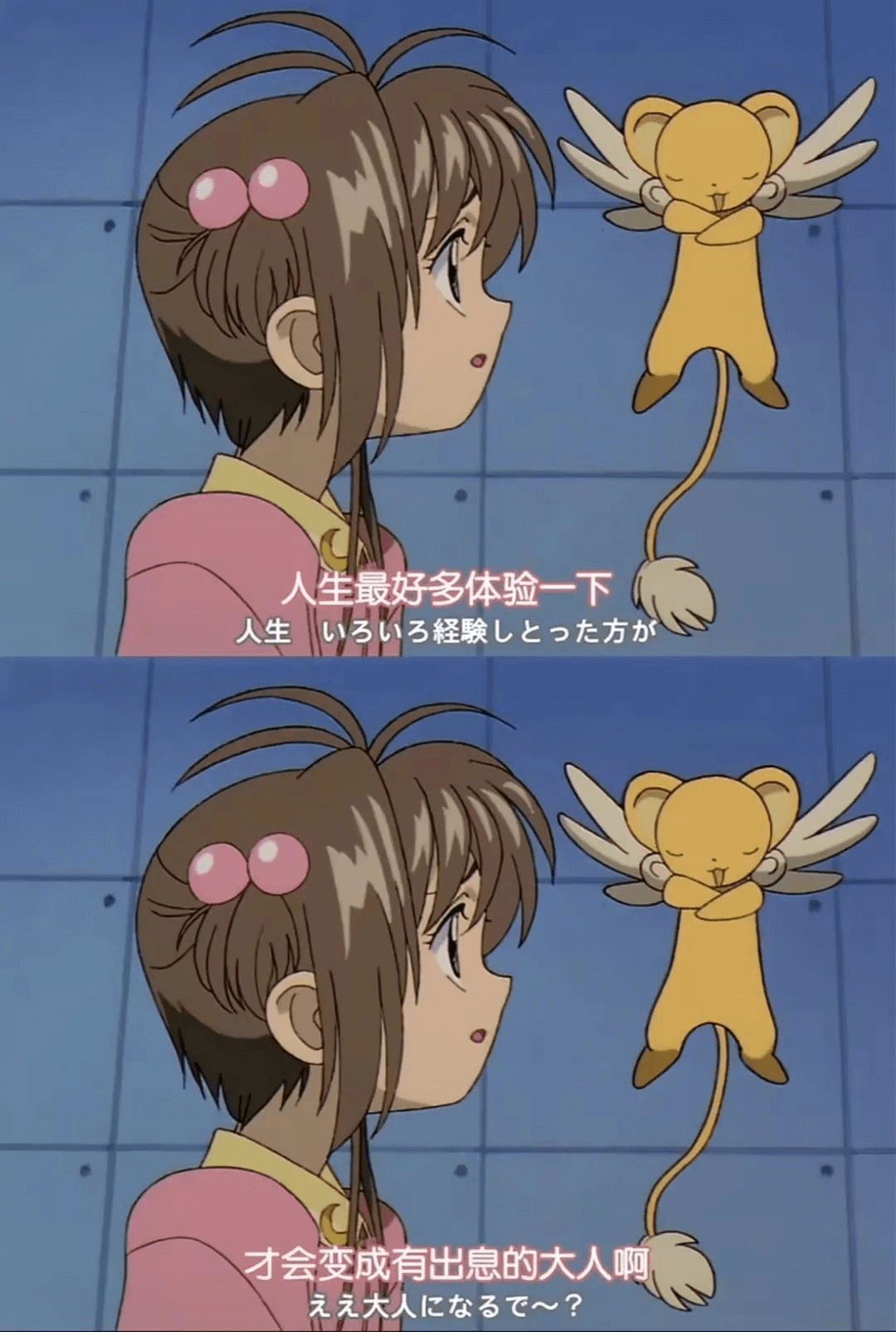
Finding a stable inner core
“Your mind is the whole world — but where is the true self?” Hesse’s Siddhartha spent his entire life seeking the Atman within himself — a state he called the harmonious unity of soul or inner self. He said a person must find the inner source within themselves; throughout a lifetime one must possess it. The human mission is nothing other than returning to the self, finding one’s path — anchored in a stable inner core, that peaceful and harmonious experience of life.
In a late night before my undergraduate graduation, I wrote Farewell, My College Years, which touched on this inner core.
That period was a low point. My body was also at its limit: I came down with a high fever the day after my graduate entrance exam and ended up lying in the hospital for a month. During that month, with nothing to do, I thought about many things. I was reading Feng Youlan’s New Treatise on the Nature of Man, where he divides human life into four realms. When discussing the “natural realm,” he notes that those who live in it tend to lack self-awareness — whether their life is long or short, they simply “act from habit,” as I mentioned earlier with conformity and submission to authority. They have no real understanding of their own life and actions. I kept asking myself: have I just been “acting from habit”? Do I have things I genuinely love? If I do, can I pursue them single-mindedly? In what relationship do all the things I’ve lost and gained stand to each other?
Then everything clarified — “In truth, with an inner openness and a lucid awareness, going with the flow outwardly, not competing with the world — that is how we can live each present moment better, and walk through the whole of life with grace.” “Right now, in this moment, everything is at peace. All the honors I’ve earned are nothing worth mentioning. All the failures I face are nothing to fear. What I have gained is also what I have given up.”
Plato wrote in The Republic: “What we are looking for is what we already have; we always look around but miss what we want — that is why we so rarely get what we wish for.”
But objectively, there are many things in the world that we cannot change and lack the courage to change. Then we must accept them calmly and find inner peace within them. As Zhuangzi: Human World says: “To understand what cannot be changed and to rest in it as one’s lot — that is the height of virtue.” Man is a thinking reed — Pascal used the reed to show that humans are fragile, easily broken, but our thinking can encompass the universe, making us both small and great. No matter how miserable, we must search for a stable inner core.
“Eyes full of starlight, heart holding the cosmos” — this is like what Siddhartha experienced at his enlightenment: “All of this, yes all of this, had always been and he had never seen it; he was never present. Now he was present and belonged to it.” The stable inner core begins with harmony. In every instant of life, thinking in a harmonious and integrated way is the path to a stable inner spirit.
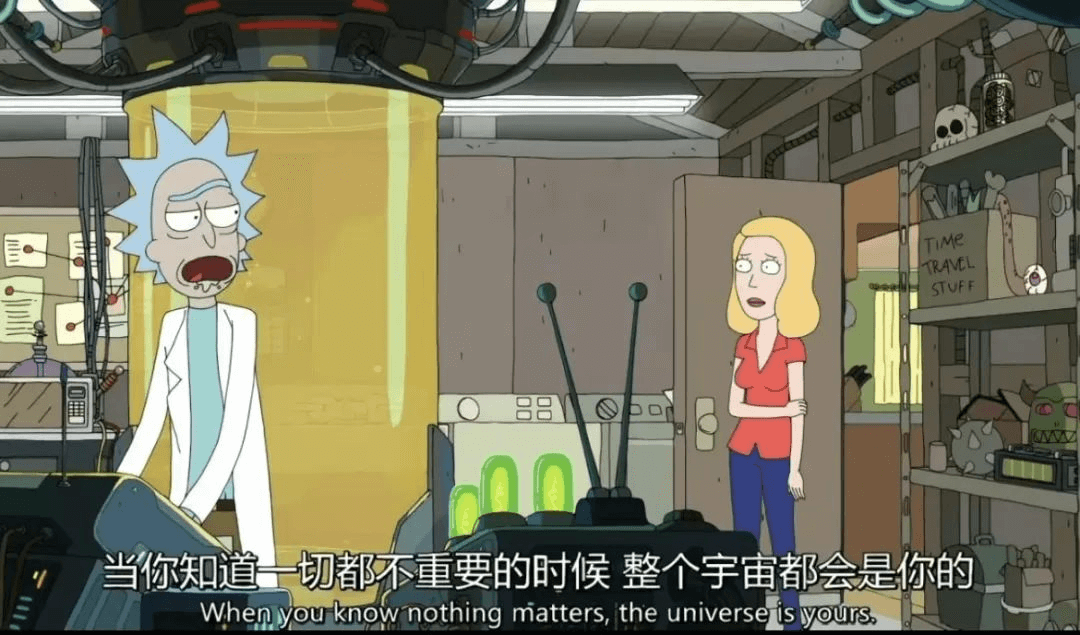
A thin stream flows without ceasing; each drop of water is different. Bubbles float on the murky surface — they form and dissolve. Nothing persists for long. The people, creatures, and resting places of this world — none are exempt.
2.3 Courage
 > The bird fights its way out of the egg. The egg is the world. Whoever wants to be born must destroy a world. — Demian
The courage to face uncertainty
On the road to seeking happiness, may you have the courage to face uncertainty.
In a very unstable world, stand firm and bravely build your immediate surroundings — don’t sacrifice the everyday. If we place too much emphasis on the uncertainty of our environment, it is equivalent to surrendering our agency and submitting without resistance to environmental determinism: the macro environment is bad, the economic situation is rough, so I don’t know what to do.
The truth is that our environment is often shaped by the very individuals who inhabit it — especially by ourselves.
We can be certain: achievement is not defined externally. It all depends on whether you are living according to your own will.
We can be certain: real, small-scale social interaction is within reach. The emotional support of people around us can rescue us from bewilderment about the world. Being a good person, doing things that are meaningful to yourself, to others, and to the world — building connections with yourself, with others, and with the world in that process, so as to feel happiness, satisfaction, and joy — this is always a reliable strategy.
We can be certain: if the macro environment cannot be changed, if fate cannot be fought, then the last freedom humans have is the attitude they choose toward their own life. Everything can be taken away except one thing — man’s last freedom: to choose one’s own attitude in any given circumstance, to choose one’s own way.
Today, everything solid seems to dissolve into air eventually. Yet it is precisely in this era — when values have no anchor, when there is no identity to constrain us — that we are given the freedom to choose and to act. You are not your past. You are not your present. You will always have the capacity to plan and change your circumstances, and to look forward. In an age when everything is changing rapidly, in an age when there is no choice but freedom, we need to be brave.
Just before graduation I won a WWDC Scholarship and attended the WWDC of my dreams. On the way home, I wrote WWDC19 Travel Journal, ending with this:
“There was a time I had such moments — believing without reason that my future was full of possibility, convinced that a rose-colored future lay ahead.
But more often, faced with the unfamiliar, feeling admiration and envy, I would be lost, at a loss for what to do.
No matter which step of the staircase you reach, there are people looking up from below and people looking down from above. The one who looks up feels small; the one who looks down feels pleased — only by looking inward can you see your true self.
Every person needs to know what they want, know what is irreversible, know how to realize their dream, know how to face suffering with the right spirit — and then the answers to advancing and retreating, gaining and losing will all come.
Yet all of this is very, very hard. I don’t know how to face suffering when it comes; I don’t know how to realize my dream; I don’t know what I will miss, what regrets I will carry. I don’t know where fate will take me — but I believe: as long as you run toward the light, you leave the shadow behind.
When IT Home interviewed me and asked for a parting thought, I said: ‘Learn meaningful knowledge, do what you love, build products that contribute to society.’
That was also what I once wrote to my advisor in a letter — the letter in which I decided not to continue toward a PhD, choosing instead to explore more of what the world has to offer. But today I suddenly feel: perhaps the greatest meaning of a life is to spend the rest of it finding those things you love most.
I think this world is unimaginably beautiful — trees bursting into bloom, willows swaying. Sunshine sweeps through the city; a breeze passes between your fingers. This world is beautiful. It is worth fighting for. It is worth fighting for the things you love.”
In an uncertain world, hold steady to the certain self. May your journey be long, and full of wonder.
The courage to embrace ordinariness
In an uncertain world, may you have the courage to embrace being ordinary.
Many people are constantly criticized for being “unfocused” — as if the skills you’ve developed and the hobbies you love only have value when monetized. But life shouldn’t be like that. “If your nature is a bat, you certainly can’t become an ostrich.” (Demian)
Our life is our own. Every minute, every second we live is real, lived experience. If we can’t live in the way we love, what is the point? To have a hobby, to have something you want to do — however niche, however “unfocused” — that is the light of our life.
“The short sword has the ambition of a legendary blade; the firefly hopes to rival the light of the sun and moon.” What we must do is extend those hobbies, develop them, and find in them a sense of meaning, purpose, achievement, and support.
Concretely: whenever we’re about to do something — regardless of its scale or its prestige in the social evaluation system — commit to it fully, investing your talent, attention, and time without calculating gain or loss. From the depths of your heart, a kind of joy and self-affirmation will arise. I believe this is happiness. The thing will often turn out quite well — but that is just a “byproduct” of happiness, not the target we keep our eyes on during the process. Frankl said that what people need is “not a state of no tension, but something worth striving for.” “It is a feature of the human being to always be oriented toward something beyond itself.”
So what is real courage? It is a clear awareness of your own capability, grounded in a healthy, stable self-regard — and a willingness to do hard things, to do things you are good at, to do things only you can do — carrying a sense of mission about it, realizing your continuous growth. It is not fearlessness, but a willingness to believe: the future is good; I have value; everything will be alright. Courage is not the absence of fear of darkness — it is the willingness to move toward the dawn.
“The brave moment has rung our bell.” May the journey be long — may you be sincere and brave, free and fulfilled.
The courage to say goodbye to summer
In the long journey, may you have the courage to say goodbye to summer.
Find yourself. Hold to yourself. Walk your own path forward, wherever it leads. When you feel afraid, remember what Naval Ravikant said: “99% of efforts will ultimately come to nothing.” Once you accept this reality — if you’re afraid to fail, if you stay comfortable, if you do nothing and seek no change — you will never find that 1% of possibility.
At the end of Bilibili’s 2024 New Year’s Eve concert, a toast was offered — the final glass raised to oneself:
I want to clink glasses with myself, and also with each of you who love yourselves.
I hope that in the future, whatever happens, in the new year, we will all quietly say to ourselves:
I will certainly follow my heart.
I will certainly love all things.
I will certainly pursue my dreams.
I will certainly become the person I want to be.
Here’s to myself!
Here’s to myself — and I hope that after we say goodbye to this summer, we will still have an infinite spring ahead.
— “You fly away with pride; the summer where I rest.”
 Written on the night of August 31, 2024.
