
Opening: Letters of Consultation and Reflections on Self-Healing
Over the past two years, I have continued to receive letters of consultation through my blog. These letters led me to open a dedicated consultation service earlier this year — an asynchronous channel for answering readers’ questions. To date I have received nearly a hundred letters. Some correspondents explicitly expressed gratitude after I replied; others went silent. I often wonder whether my responses had any positive impact on their lives — perhaps they found their footing again and no longer needed to write back.
Honestly, on days when fewer letters arrive, I feel considerable relief. Each time I reply, I have to put myself in the writer’s shoes, carefully absorb their words, and try to empathize: “If I were them, in their situation, how would I respond?” Then I collect my thoughts and transform my own energy into the reply. A letter typically takes one to two weeks to answer, because I too need a quiet environment to give the most fitting response. Trying to empathize is already hard enough; I can only imagine the real pain the writers are living through.
In these letters, I’ve noticed that most people face similar struggles and challenges — self-development, relationships, family dynamics, career planning — with a great deal in common. It is very difficult for us to break free from these problems through individual effort alone. Reading these letters, I see that most people lack effective methods — or even the awareness — to handle the problems of daily life. Every person experiences the pressures of the human condition in a highly personal way, and so when problems arise, people tend to absorb them alone until they can no longer bear it, then try to talk. Very few people systematically seek out and address the root causes of their problems.
I therefore want to build a broadly applicable and systematic healing approach that can address these problems at scale — one that allows individuals to heal themselves. I have broken this systematic process into: expression, release, understanding, allowing, and exploration.
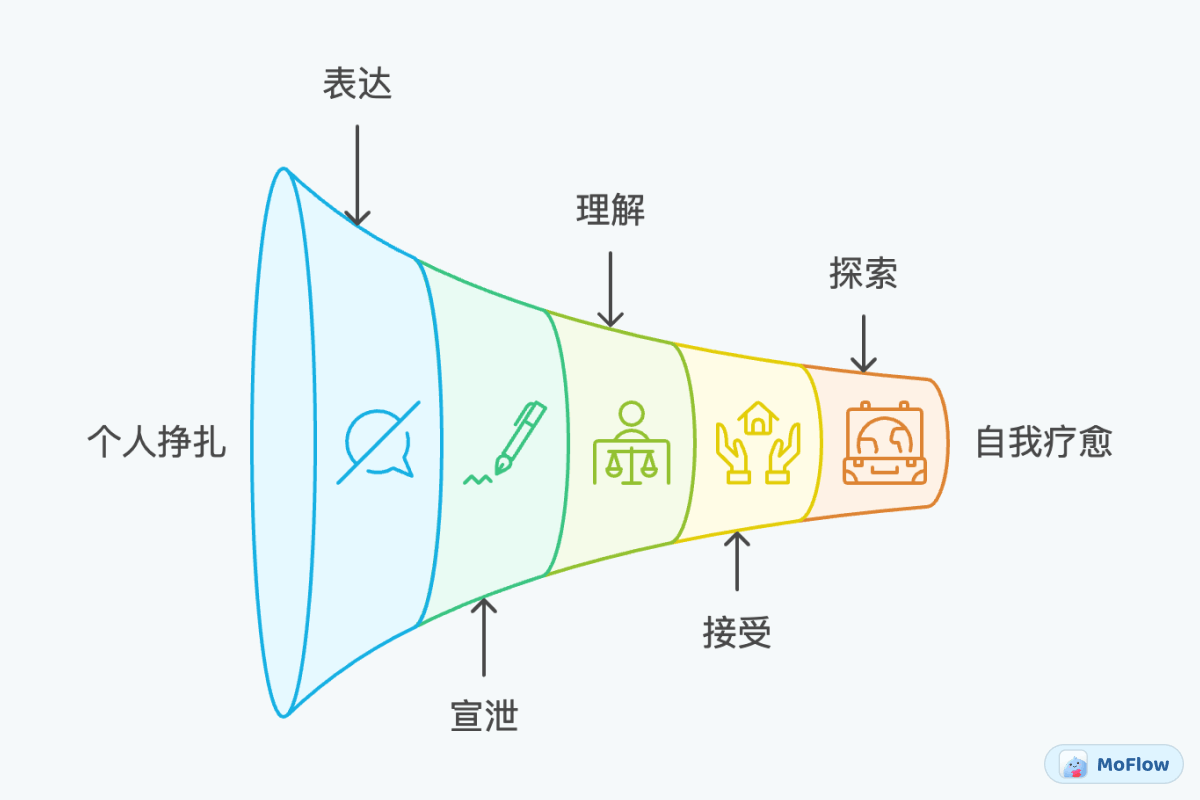
Expression: Expressive Writing as the Vehicle
Self-reflection is the starting point for solving problems. In the process of replying to readers, I also reflect on how I trace the root of issues for myself. If it were me, I would choose a quiet environment, review the difficulty and my current situation in my mind, and write it down. Within the words, I try to find the hidden factors behind the events. Over the years I have developed the habit of spending ten minutes before bed recording the experiences of the day.
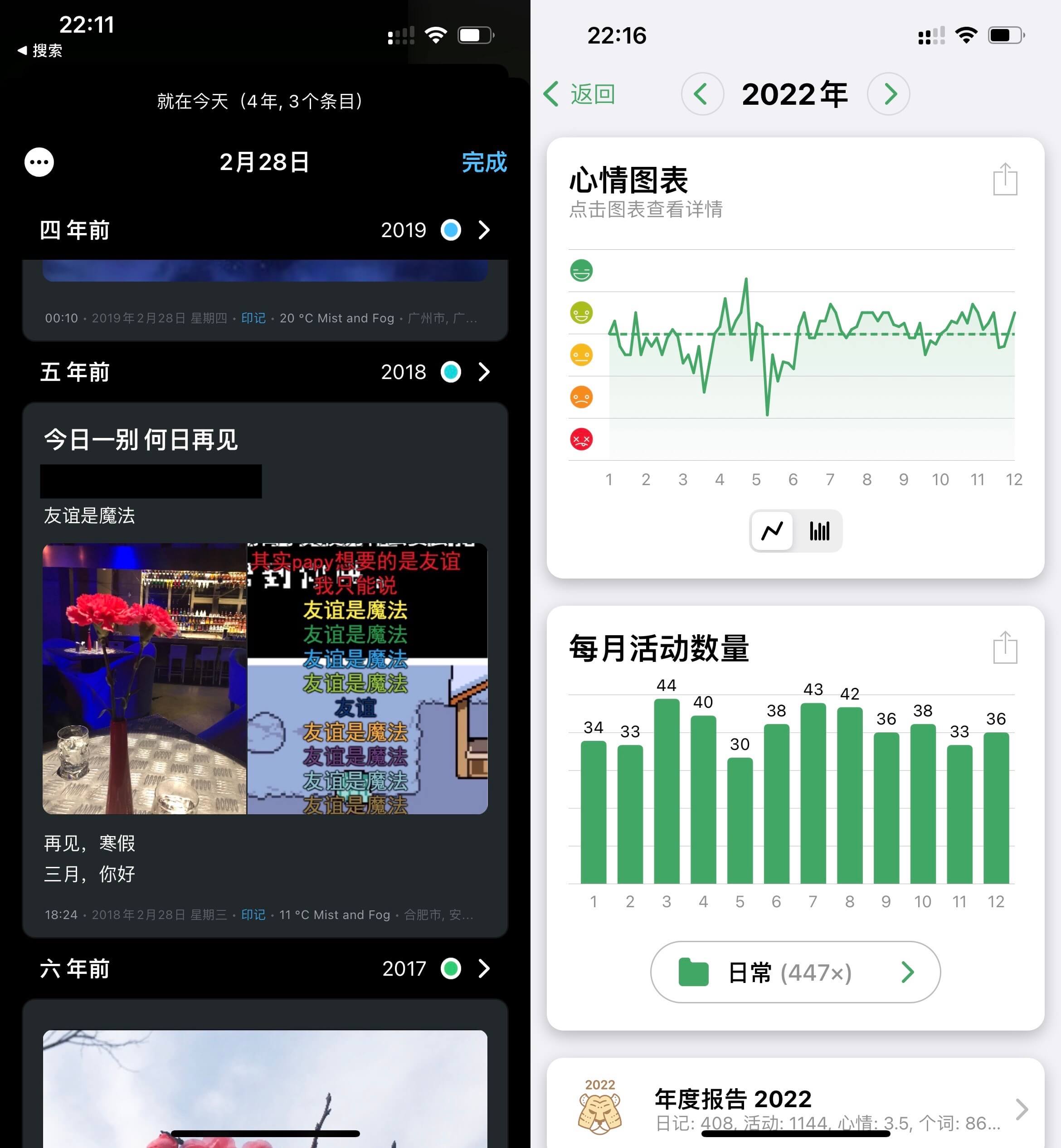
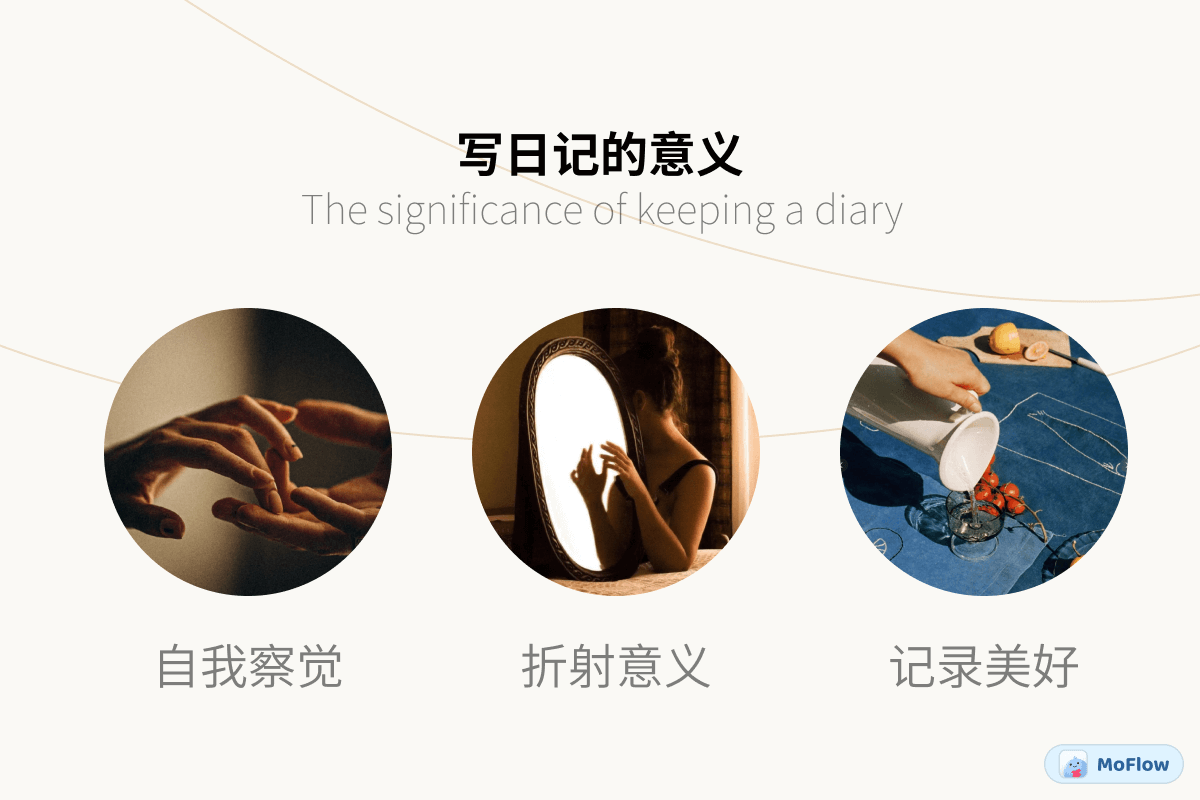
In Monthly Digest #19: The Meaning of Keeping a Diary, I explored the meaning I’ve discovered in years of diary-keeping — three points in total:
- A tool for self-awareness
- A mirror reflecting life’s meaning
- A record of the beautiful things around me
A diary is more than a record of life — it is a form of dialogue with oneself and a path of growth. Through writing, I am able to transform the inner chaos and distress into clear words. The process itself is healing. In the quiet moments of writing, I can temporarily step back from daily noise and focus on listening to the inner voice.
Keeping a diary has helped me develop the habit of talking with myself, allowing me to examine my own emotions and thoughts from a more objective perspective. Through sustained writing, I not only record the moments of life but also observe the trajectory of my growth, discover patterns in my emotional shifts, and thereby better understand and manage my psychological state.
Journaling is just one vehicle for developing the habit of recording — it can also take the form of weekly reflections, personal essays, memos, or other formats. This style of writing is known in psychology as expressive writing, a commonly used method for helping people manage stress and improve mental health. The writing process allows people to genuinely express their feelings and thoughts, fully baring the inner self. It helps to reach into deep loneliness, reconnect with the self, and find inner peace.
As written in the third edition of Oxford’s Handbook of Positive Psychology: “In the months following a writing exercise, people who wrote about the ‘deepest thoughts and feelings’ about a traumatic event visited a clinic 50% less often. This writing has been called ‘emotional disclosure writing.’ To examine physiological factors, researchers designed another study. Blood was drawn before writing began, at the last session, and six weeks after the end, to assess immune function. The results showed that those who wrote about their thoughts and feelings experienced a significant improvement in immune function. This effect peaked at the last day of writing and often lasted more than six weeks. Researchers also found that participants often said how useful the writing was in helping them understand and process things.”
As a form of psychotherapy, expressive writing reveals an important truth about the human interior: expression itself is liberation. From a philosophical angle, expressive writing is a practice of self-reflection — not only an emotional release but a renewed examination of one’s own existence. By writing, we externalize inner chaos into tangible words; this process allows us to revisit our emotions and thoughts from a spectator’s perspective. This method works because it allows a person to have a dialogue with themselves, breaking through inner loneliness. If you can express your deepest thoughts and feelings, that act is in itself healing.
We cannot encounter ourselves because we don’t give time to ourselves. Expressive writing teaches us to face ourselves gently — to gently set aside our masks and approach ourselves in a tender, soft way.
As Heidegger said, the essence of human existence is “Being-in-the-world,” meaning we are always connected to the world and to others. But in today’s fast-paced, high-pressure society, people often feel alienated from themselves and from others. Expressive writing offers a path to reconnect with the self and find inner stillness.
So we define the vehicle of this systematic solution as expressive writing. The emphasis of the approach is not on “writing” but on “expression.” The next question is: how do we use this vehicle to solve real problems?
Release: Awakening to Emotion Through Free Writing
Within the stillness of expressive writing, we begin to seek the deep source of emotion. The basic premise of Rational Emotive Behavior Therapy (REBT) is that it is not events themselves that cause our emotional responses, but our cognition and interpretation of events that determine our feelings and behaviors. So the first thing to establish is: what has already happened cannot be changed, but memory and experience can be changed. This is the precondition for healing.
From this premise we can derive that the primary goal of healing is to regulate one’s own cognition and emotion. The most crucial step in regulating cognition and emotion is learning to notice and identify emotions — and this is the core of our systematic approach. The precondition for identification is being able to notice emotions. So how can we effectively notice our own emotions?
Emotional awareness is closely linked to our capacity for feeling. Bob Dylan once said: “Some people can feel the rain; others just get wet.” Different individuals experience the same events differently, depending on their perception and inner state.
In life we are often passive recipients of events, not actively perceiving and understanding the world around us. We first need to reactivate our capacity for feeling in order to explore our core emotions deeply, thereby gaining a richer life experience. This deep perceptual capacity not only fosters personal growth but also strengthens our connection and understanding with others. The art of living lies in distilling meaningful experience from each moment — not merely passing through it.
The most direct way to reactivate the capacity for feeling is release — a self-repair mechanism for emotion. In the context of modern society, however, we need a safe channel for harmless release. Our answer is free writing. We encourage individuals to let go in free writing — to clear the mind, write whatever comes, without following logic or rhetorical rules, without concern for formatting, coherence, or grammatical correctness. Follow the flow of thought; let emotions move freely. Record what happened today; write down your mood. This is also a form of narrative therapy. We advocate writing because writing better enables emotional separation and release, and is more conducive to object separation.
I know well that restoring the capacity for feeling is not easy. Turning raw feeling into something refined and delicate is like sifting gold from murky water. Yet through free writing, I believe individuals can gradually begin to notice their own emotions — because in the writing process, we have already learned to “meet ourselves.”
If free writing is the exploration of the inner world, then the next step is a deepening of self-understanding.
Understanding: Identifying Core Emotions in the Moment
In free writing, we often express our reactions through inhibitory emotions like anxiety. The task of this stage is to penetrate these inhibitory emotions, locate the core emotion in the event, and identify it within the free-written text. Through this process, we can achieve precise emotional healing and a deeper understanding of our inner world.
The most important task while writing is therefore to find the core emotion we face regarding this event — as if tracing the thousand strands of feeling to find their source: the core emotion.
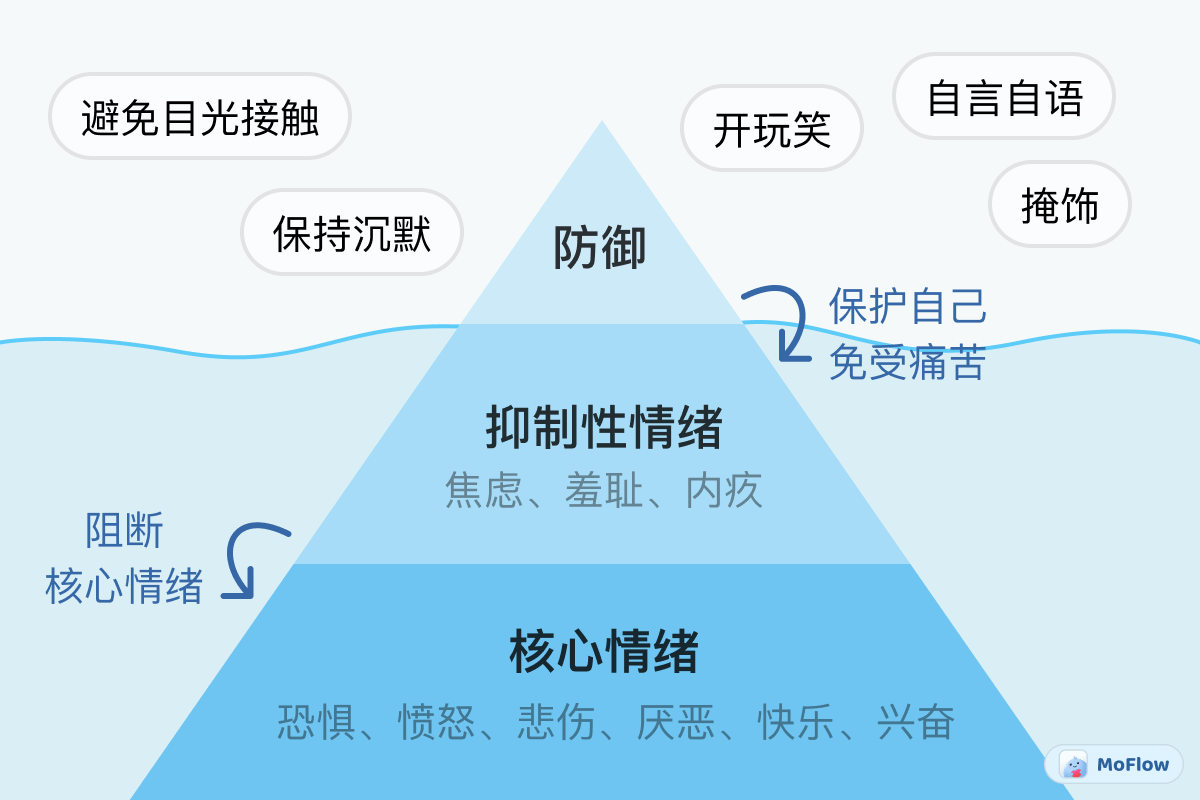
Core emotions hide behind various inhibitory emotions. The search often runs into difficulty, and this is where a new concept comes in: emotional granularity. Just as a painter can distinguish fine color differences invisible to most people, our perception of emotions works similarly.
If our perception of emotions is too vague — if we can only say “I feel terrible” or “my mood is bad” — then every time we feel “not good,” we tend to get caught in a negative mind-body reaction. This state continually drains our energy, because we neither know exactly what we’re dealing with nor how to address it. When we develop the ability to quickly distinguish different emotions, these clearly labeled emotions form a kind of “linguistic protective barrier” for our mental world.
There are two ways to develop emotional granularity: learning new vocabulary, and labeling emotions. We can think of this emotional identification capacity as an inner “linguistic barrier.” Once we learn to attach precise labels to emotions, they are no longer hazy feelings — they become clear, understandable, and manageable information. This capacity both protects us and drives personal growth, because it helps us more accurately recognize the needs and boundaries of our inner life.
This identification process, however, requires us to rationalize our feelings — which brings a new challenge: in pursuing emotional identification and heightened self-awareness, how do we ensure we don’t lose the appreciation for life’s unpredictability and spontaneity? Furthermore, could this kind of emotional identification lead us to over-rationalize our feelings, ignoring the natural flow and change of emotion?
This is where MoFlow’s key concept comes in: letting emotions flow freely.
Allowing: Let Emotions Flow Freely
Labeling emotions can, in some circumstances, lead people to over-rationalize their feelings. Using emotional identification tools may incline people toward analyzing and labeling emotions rather than naturally experiencing and processing them. This kind of over-analysis can make people ignore the natural flow and change of emotion — or even lead to excessive control or suppression of emotion.
We need to allow emotions to occur naturally. For instance, negative emotions are a “survival tool” for humans — they evolved to help us adapt more quickly to change: anger reminds us when our boundaries are violated and gives us the courage to act; anxiety sharpens the focus we need to handle problems; loneliness reminds us of our need for close relationships; sadness reminds us that we have just lost something or someone important. Without negative emotions, we cannot skillfully respond to external threats.
Beyond that, emotions are an important driver of action. Fear is being afraid of something; worry is being afraid of nothing; anger motivates us to correct injustice; sadness makes us cherish and care for others more; passion and enthusiasm drive us to pursue our goals and realize our dreams. People grieve for the loss of love, and maintain grief in order to regain it.
All events in life are there to shape us. Looking at our past with a different attitude, we can find in it resources and strength, discern patterns, discover our life mission, and plan the path of our future lives well. Suffering itself is not the goal — it is a process. By changing how we view suffering, we can draw experience and strength from it.
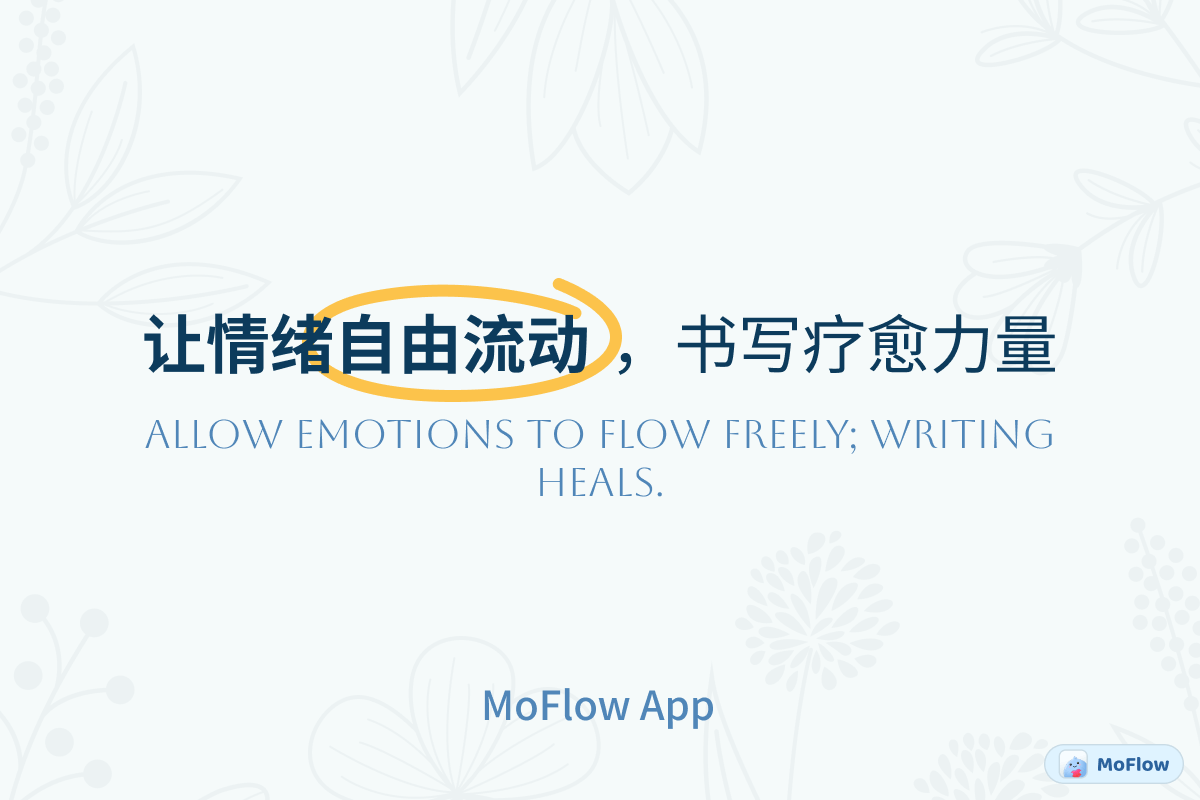
So in pursuing inner peace, what matters is finding balance: maintaining equanimity while not ignoring the positive role of emotions. This is exactly MoFlow’s slogan: “Let emotions flow freely; write your healing power.”
Writing-based healing encompasses three overall stages: noticing, identifying, and healing. In the healing stage, MoFlow emphasizes the immediacy of experience and a grounding therapeutic approach — guiding us to accept ourselves and allow emotions to occur, turning toward inner peace. Acceptance means being willing to face and receive things as they are in this moment; acceptance is not suppressing the occurrence of emotions, but watching the various emotions and thoughts arise, develop, and pass away.
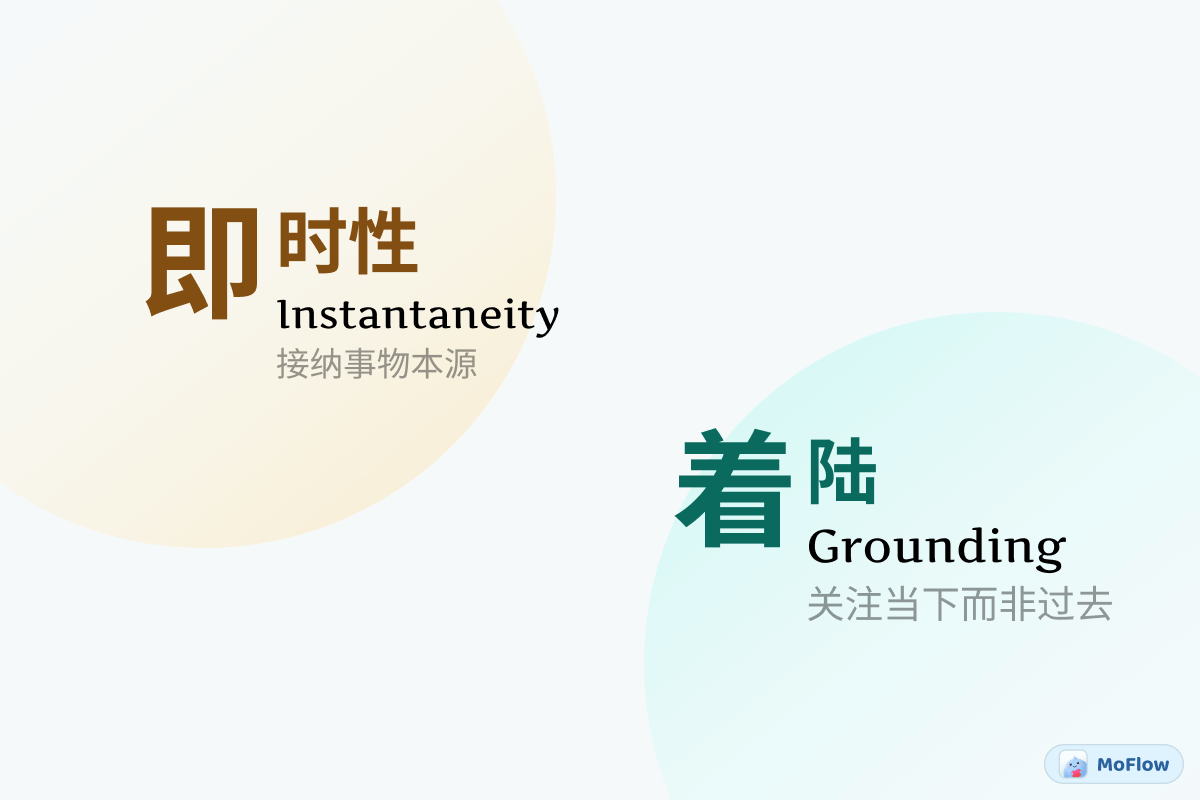
First, “immediacy of experience” refers to a state of mind that does not focus on facts removed from one’s own experience — in simple terms, an attitude of accepting things as they are; an individual’s direct perception and experience of an event or situation in the present moment. This immediacy emphasizes full engagement with and feeling of the current experience, rather than recalling the past or anticipating the future. In On the Value of Existence and the Experience of Life, I emphasized the importance of “the present”: “The only certainty is the present. The only thing that matters is now, this very moment. A person must first exist before anything about life can be discussed.” In other words, as Adler said: “Life is a series of moments. The most important thing is this very moment.”
Second, “grounding” is a method used in psychotherapy — a collective term for techniques that bring the mind back to “now.” A person’s real existence lies in experiencing “this moment,” not in being mired in the past or anxious about the future. A person can only truly live in the present: in fact, it is impossible to live longer than the present — the present is always with you. Even in the moment of reviewing one’s past life, even in the final moment of life, a person is still experiencing, still living. The permanent tense is the present, not the future. Living in the shadow of the past or in anxiety about the future often causes us to miss the real experience of the present moment and the meaning of existence. This perspective helps us reduce unnecessary suffering, avoid having the wound struck by a “second arrow,” and allows the self to “land” and find inner peace.
This is also the core philosophy of Acceptance and Commitment Therapy (ACT): emphasizing acceptance of reality and commitment to action — helping individuals accept what cannot be changed, focus on the present moment, and take action aligned with personal values, thereby achieving psychological flexibility.
Write Yourself Healed says: “Healing means we see our wounds, understand where they come from, and transform the emotions around those traumas — so that in our daily lives we no longer react as intensely to specific events as we once did, and can think and act more objectively and rationally. Healing means opening the eyes of the heart to see the needs hidden beneath our wounds, needs that are difficult to express, so that we stop driving ourselves from within, thereby reducing or even eliminating inner conflict and facing life with greater ease and freedom.”
But we must acknowledge that not all writing leads to healing — as when Iron Plum in the film A Good Day to Be Bad writes about her experiences as a single mother and gets cyberbullied. There are many uncertainties and pains in life that are unavoidable, but we can choose how to respond to these challenges. Accepting reality does not mean giving up — it means finding inner peace through acceptance, and building on that foundation to take positive action.
This is an inward journey: focus on this moment; when the self is immersed in recording the feelings of the present, allow emotions to occur, let emotions flow freely. Allow yourself to experience these emotions — after going through the whole process, you will receive life’s gift: “When lost, the heart is surrounded by scenery. After awakening, scenery is surrounded by the heart.”
Exploration: MoFlow’s Mental Healing Scenarios
The above is MoFlow’s design philosophy. Around this theoretical framework, we have explored and designed a series of product features.
Mood Tracking
MoFlow offers basic mood tracking — allowing you to record your current emotional state with a simple mood check-in, without needing to write anything. MoFlow encourages you to turn your gaze inward and set aside time each day to listen to your heart: Am I happy right now? Do I feel content? What am I really seeking? What am I afraid of? What am I avoiding? What changes should I make? How can I live as my true self? Only when you’re willing to spend time in stillness and listening can you hear your most authentic inner voice.
In the Insight module, MoFlow displays your emotional calendar and the connections between mood and activities — helping you visualize mood changes and revealing potential links between emotions and daily activities, providing support for deeper self-awareness.

Writing Assistant
MoFlow’s writing assistant is seamlessly integrated into the writing experience. When you hit a mental block during free writing, you can summon the writing assistant for help expanding your thinking. Through this guidance, you can write more and dig deeper into your core emotions. This process both promotes self-expression and supports more in-depth emotional exploration.
On the thinking level, if you’re curious during writing about “why you feel this way,” you can use a method of questioning yourself — also called Socratic questioning. In counseling and psychotherapy, questioning is the fundamental tool of talk therapy and reflects the depth of a therapist’s skill. MoFlow provides a questioning tool you can use to ask yourself questions while writing. More features will be added to the writing assistant in the future to better support free writing.

Writing Reports
After writing is complete, MoFlow uses a fine-tuned model to conduct personalized analysis of your writing and generate a structured writing report. For different core emotions, the model provides corresponding coping strategies. This analysis not only helps you better understand your emotions but also provides concrete guidance for emotional management. Through MoFlow’s analysis, we continually wipe the fogged mirror of the mind — clearing the blur between the false self and the true self, allowing ourselves to become more real. This is also the process of stretching our psychological elasticity and expanding our psychological boundaries.

Thought Distillation
During writing, thoughts gradually crystallize. All psychotherapy is based on a fact: under certain controlled conditions, neurons in the brain will move and connect with each other in predictable ways, forming new connections. Without the restructuring of brain cells, learning cannot occur.
In certain writing content, MoFlow triggers Cognitive Behavioral Therapy (CBT) analysis, attempting to uncover the core beliefs underlying your thoughts. By relying on a thought classification model, MoFlow can handle the dependency relationships between thoughts. This process not only deepens understanding of your own thinking but also provides you with a more systematic means of organizing thoughts and analyzing emotions.
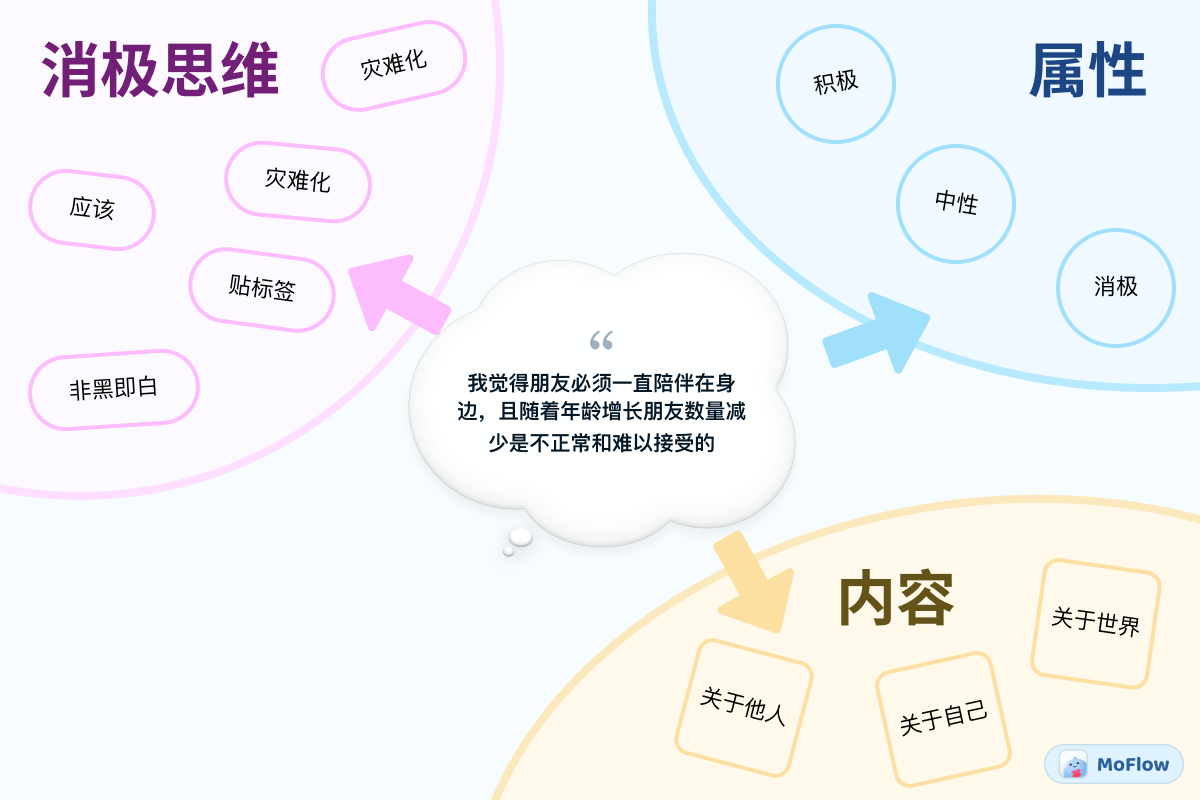
Action Suggestions
In certain writing content, MoFlow combines Dialectical Behavior Therapy (DBT) to provide targeted action suggestions. MoFlow hopes to regulate emotions, improve interpersonal skills, and strengthen the sense of control over life through skill training. MoFlow emphasizes the relationship between inner peace and outward action. In pursuing life at its best, we need to not only focus on inner acceptance and understanding but also take active steps to realize our values and goals. As Suzuki Yuki may explore in his work, life at its best is perhaps not perfection but a dynamic process of continuously pursuing personal value and meaning while accepting reality.

Energy Cards
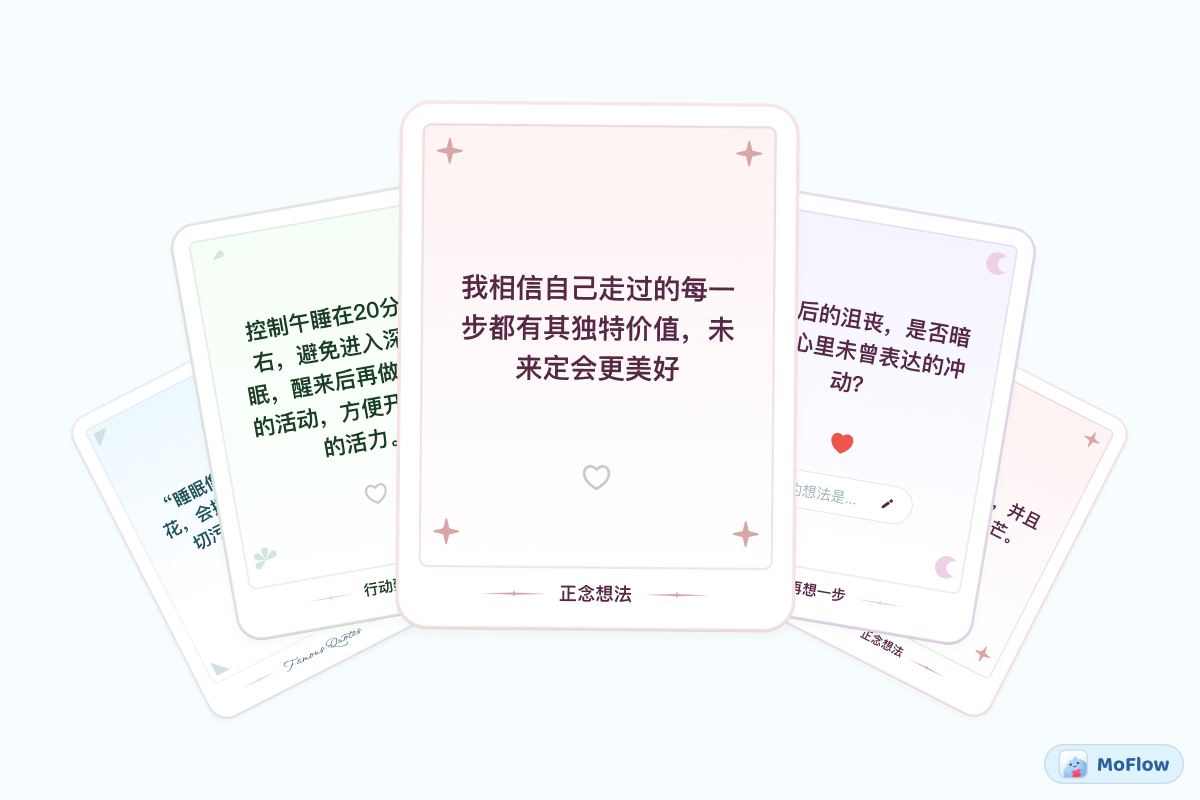
MoFlow’s Energy module provides mindfulness cards and reflection cards based on specific events. Through mindfulness practice and self-reflection, we can not only better understand and manage emotions but also transform them into sources of creativity and action. This process of energy transformation aligns with what the law of attraction in manifestation theory emphasizes — when we maintain a positive mindset and clear intention, we more easily attract corresponding energy and opportunities. Additionally, this module helps cultivate curiosity: staying curious about the surrounding world, trying new things, exploring the unknown — all of these are important components of manifesting an ideal life.
Resonance Moments
In certain writing content, MoFlow shows you historical events, famous quotes, and books/films/music related to your current emotions and events. This is intended to better achieve self-separation — drawing inspiration from external reference points to gain new perspectives and understanding, thereby deepening insight into your own emotions and experiences.

Regular Reflection
MoFlow offers a feature akin to a psychology counseling follow-up — an emotional weekly digest. Through this feature, you can reflect on your emotions and behavior and identify areas where you might better balance self-awareness with spontaneity. Additionally, for certain extreme emotions, it may not be possible to perform rational emotional analysis in the moment — so regular reviews will provide you with deeper insights and suggestions.

Privacy & Security
MoFlow places great importance on user privacy and provides end-to-end encrypted communication and data storage. At registration, a unique key is generated for you, and all data is encrypted through this key — ensuring that no unauthorized third party can access it.

Companionship in Healing
MoFlow encourages you to enjoy each small step of progress and each unexpected discovery, and to enjoy the whole process of using MoFlow. We hope you can feel the flow of emotions rather than only focusing on the healing report results. To that end, MoFlow plans to launch a series of emotional support and companionship features in the future — stay tuned.
The past is where our ties come from; the future is what drives us forward. Going forward, we plan to continuously improve and expand MoFlow’s features. The version released today is only the tip of the iceberg of MoFlow’s self-contained loop.
We hope that MoFlow can give every person their own gift — inner peace and stillness.
We hope that MoFlow can create a more understanding, inclusive, and compassionate social environment.
“Let emotions flow freely; write your healing power.” — MoFlow.
MoFlow is now available for pre-order on the App Store for iOS. Search “MoFlow” to pre-order.
More product details:
- MoFlow website: https://moflowapp.com
- App Store: https://apps.apple.com/cn/app/id6737146258
This post is by Airing, MoFlow Founder. Blog at ursb.me. Illustrations by LZH, MoFlow designer.
