I hadn’t planned to write a year-in-review post, but I’ve hit a wall on my thesis and my mind has gone blank. Maybe writing about something else will unstick it.
Work
This year I entered the workforce for real — technically just an internship, but it felt like a major milestone. I’d prepared over winter break, and the moment spring recruiting opened, I landed an offer at QQ Music. It all went according to plan, maybe even more smoothly than expected.
I remember it was March 8th. Tencent opened the new grad application portal that evening. Barely after I’d submitted my resume, a recruiter named Chuang added me on WeChat that same night and asked bluntly whether I preferred Alibaba or Tencent. Both were companies I admired — my job-search goal was simple: Alibaba or Tencent, nothing else. After a moment’s hesitation, I said Tencent. That was the honest answer. Even before I decided to pursue grad school in my junior year, I’d always imagined ending up at Tencent after graduation. The next day — a Saturday — Chuang came into the office just to interview me. It was a long interview, and it went well. The following week I flew to Shenzhen for an in-person round. I should thank my friend Dr. Xu here — over winter break, he’d arranged for a senior Alibaba engineer to run mock interviews with me, and that preparation made a real difference.
The internship at QQ Music was largely what I’d expected, though with a few surprises. I loved the working hours — writing code carefully during the day, eating lunch with colleagues — it felt like family even though I was alone in Shenzhen. By contrast, I didn’t much enjoy the weekends: sleeping in, binge-watching shows, a lingering sense of emptiness. One thing that surprised me: the work itself was simpler than I’d imagined. So when return-offer season came and I had options and some hesitation, I ultimately chose to stay. Wherever you work, what matters is doing the work with care. The people here believed in me, and I owed it to them to prove that belief was warranted.
Later, walking with a classmate along the Pearl River, he told me his job felt monotonous and he didn’t know what to do. I said every job feels monotonous; the question is how to make yourself love it. He said he felt his work was meaningless. I told him: not every effort produces visible results, and the meaning of work lies in the doing itself — ideals are built piece by piece.
Two investors later asked me why I’d chosen technical work instead of product management, which they thought was more meaningful. I said I loved coding, loved technology. They asked why. I didn’t have a profound reason. I just did.
Learning

In June, a PhD classmate from my cohort graduated. At the farewell dinner, he drank too much. Walking him home, he grabbed my arm, tears running down his face, repeating again and again how good our advisor was, urging me not to take it for granted.
I understood. I really did. When I’d run into bureaucratic trouble switching fields, our advisor had personally intervened to sort it out. At my thesis proposal defense, he was the only advisor present — while other students were at the podium, he sat in the audience taking notes on the questions asked and writing out suggestions on structure and key points. Other students noticed and were envious.
All around me, I’d heard graduate students complain about their advisors — being used as cheap labor, forced to come in over holidays, required to run errands, pressured to publish but denied authorship guidance. None of that happened to me. My advisor refused to ask students to do his work for him; he believed his tasks were his own. Instead, he shared opportunities with us. As for co-authorship — he wouldn’t let us list his name. He said a sole-authored paper would carry more weight when job-searching.
So I was genuinely frustrated hearing about what was happening to my friend Xiaoyu — his advisor made him carry heavy packages and wash dishes on weekends. When I asked whether he did it willingly, he said it was just part of the arrangement: the advisor paid his stipend, so this was part of the deal. A few hundred yuan a month. I asked whether he could say no. He said it was normal — everyone around him did the same. I couldn’t accept that logic. Just because everyone around you does something doesn’t make it right.
I feel grateful that throughout my education, the teachers I’ve encountered have — by example — shown me what is right and what is wrong. The sense of justice I carry has never had to bend.
I’m also grateful I chose philosophy. Finishing my thesis now, after two short years, I can still feel the joy philosophy brings — that particular clarity that comes from suddenly understanding something deep. When I wrote to my advisor last winter saying I loved philosophy but also loved programming and wouldn’t pursue a PhD, I meant it: I won’t stay in academia studying philosophy formally, but in life I’ll keep thinking carefully, asking questions, letting philosophy do what it does. As the Chinese saying goes: “The Way is not far from people” — philosophy isn’t abstract doctrine; it lives inside how we move through the world.
On the Project: Shuangsheng (双生)
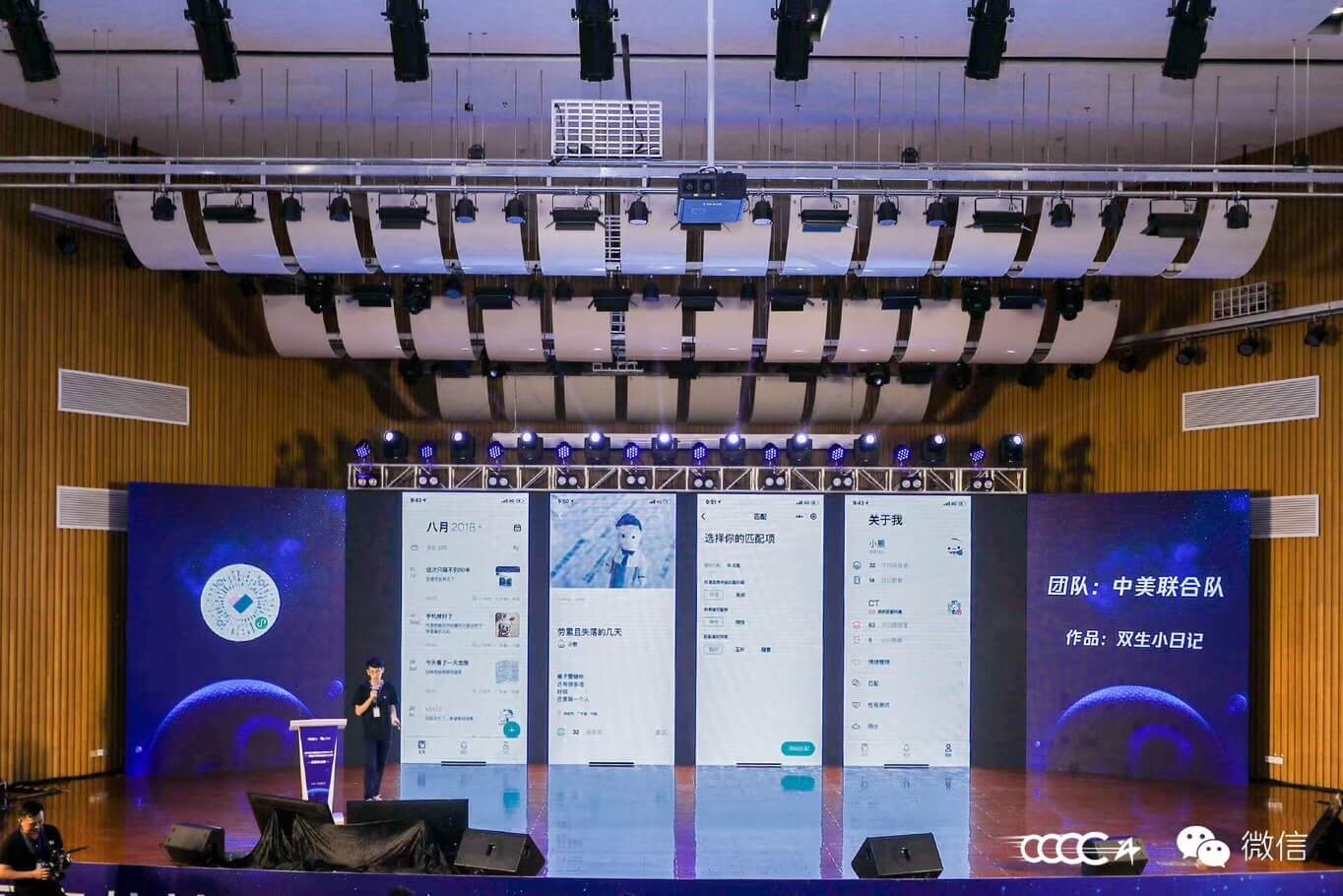
This year I worked on one project: Shuangsheng (Twin Diary, a shared diary app for couples). The two national first prizes we won were our highest achievement to date, yet I felt oddly calm — I’d known they were within reach. Over five years of competitions, I’d steadily climbed from department level to school level, city, province, national. No innate brilliance, just accumulated experience. That process was genuinely fun.
Many people asked why I didn’t take Shuangsheng and start a company. A few reasons: first, I didn’t think I was ready to be a founder yet; second, I built this product to learn, not to monetize. So even with modest user numbers, I keep going.
A product manager at Tencent once laid out the reasons for low retention — the target user base was too narrow, and there’d been no promotion. I said that was fine; let it grow slowly. If we were optimizing for traffic, bigger would be better. But that isn’t why we built it. We built it hoping to help people with their emotional lives. If even a small number of users find it genuinely useful, that’s enough.
I have no grand ambitions here. Watching Shuangsheng grow is like watching a child grow up. If its existence can help someone who needs it, that’s all I want. That’s why I built it in the first place.
On the Future
The year started badly — in January, a relationship that had lasted more than a decade ended. After that I focused on recruiting, then the Shuangsheng competitions, then the summer internship, and now I’m in the thick of finishing my thesis.
On romance: there’s not much to say. It’s a matter of timing and luck. I’m not pinning great hopes on meeting the right person this year. In the meantime, I’ll just keep becoming someone worth meeting. Love, I think, is finding someone who moves you — and discovering they feel the same way. I haven’t found that yet, but I’m doing fine. I hope you are too. And when we finally meet, I hope we’ll both be at our best — that the best version of me will meet the best version of you, at exactly the right moment. Maybe that’s the most beautiful thing life can offer.
Near the end of the year, I met two investors whose manner of carrying themselves left a deep impression. Knowledge, character, vision — these things have a way of reaching across the distance between people, touching something real. I realized I still have a lot to cultivate in myself. New year’s resolution: read more, think more, write more, grow more.
That’s all from me for now. No more resolutions — I’ll think more about the thesis once I’ve eaten dinner.
2019, here’s to something good.