
Eight years of annual reviews now. I’ve left the city I’d called home my entire life and moved to an unknown country. The hollow feeling after 2024’s breaking-apart has slowly dissipated, replaced by something rough but solid — an order built from specific people and specific moments.
Work
The Startup
MoFlow’s product thinking was too naive and idealistic to absorb risk and course-correction. Early in the year, Apple’s review process locked us out for over three months — bugs couldn’t be patched, polished features piled up in the release queue. For a young product, that’s fatal. And there was nothing I could do.
After shipping a technical update with long-term LLM memory, we chose to enter long-term maintenance mode.
I’m glad I made MoFlow at the right moment. It kept me on the frontlines of the AI wave. And through this emotional wellness project, I’ve come to understand something more clearly: AI is evolving fast, but the things that can’t be quantified by algorithm — the deep conversation between strangers, the resonance that arrives unexpectedly at 2am — these are the most precious privilege of being carbon-based creatures.
The Job Search
As I wrote in Monthly #29: New Life, I did several interviews in February and March. The job market felt tighter than when I graduated, but for someone with the right skills, satisfying opportunities still exist. I’d been wanting to go abroad and see what was out there, and fortunately, I seized the chance.
The New Job
I won’t say much here for compliance reasons. I’m in a rapidly growing TikTok business — the pure-analytics decision-making approach means I’m absorbing a lot of business knowledge, fast. The volume of things to learn is staggering, and I’m enjoying the sensation of ideas flowing into my mind again.
One big change: I started managing people. Coming from a strong IC (Individual Contributor) background, the transition to POC (Point of Contact / team lead) hasn’t been smooth. I’m very grateful to my leader — he’s been patiently guiding my landing over several months. But I still love coding, so I always carve out some first-line engineering work for myself.
The core skill for people management is effective communication, which requires regular one-on-ones — digging into what each person and each situation really needs underneath the surface.
Second is building trust: don’t put out every fire yourself. Delegate meaningfully, develop people deliberately — this holds across cultures.
On communication, I want to share a framework I find useful — the Trust Equation:
(Credibility × Reliability × Intimacy) / Self-Interest
Improving communication success comes down to:
- Credibility (expertise): Speak from professional judgment and facts. Do the homework. This is your technical and business capability.
- Reliability (dependability): Respond promptly, resolve issues, be someone others can lean on. This is built through daily behavior and accumulated trust.
- Intimacy (relationship warmth): Talk about things beyond work. Create a warm, equal atmosphere. This is about genuine care for others, and the kind of thoughtful personality that shows it.
- Reduce self-interest (motivation): Open by stating your positive intentions. Minimize personal stakes, don’t let it look like you’re using the situation.
Every time I use communication to shift momentum or unblock a stuck situation, I feel a satisfaction I’ve never felt in IC work.
Being in a fast business means every day is full. As an IC I always planned my time and projects with precision. But when your collaborators multiply, change outpaces planning — and eventually: work is never finished. That’s just the truth. This tests two things: focus and judgment.
On focus: for a long time after joining, my Todoist was an endless list. Staring at it produced a sense of overwhelm and anxiety. I used to think the antidote to anxiety was specificity — plan every item, then execute. But when things are huge and vague, that just means drowning in the specifics of tomorrow’s calendar two hours from now, all the tiny concrete anxieties piling up before I even start.
Now I’ve stopped using Todoist’s “Upcoming” view. I focus only on what’s in front of me and let everything else go. That’s when I started to feel my feet on solid ground.
On judgment: beyond prioritizing my own work, the bigger question is whether to do something at all, how, and what value it brings. Resources are always finite. Using limited resources to produce maximum business return requires sharper judgment than any individual task management system.
Life
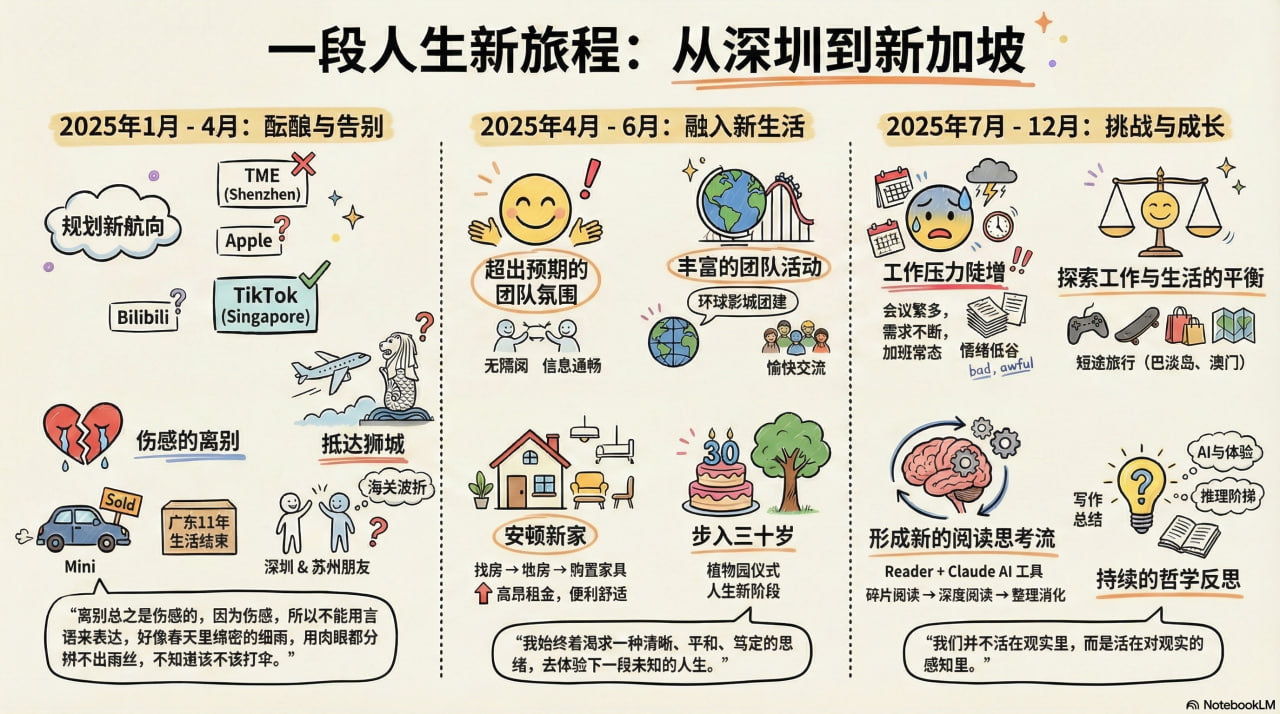 Image generated by NotebookLM from my diary
Singapore
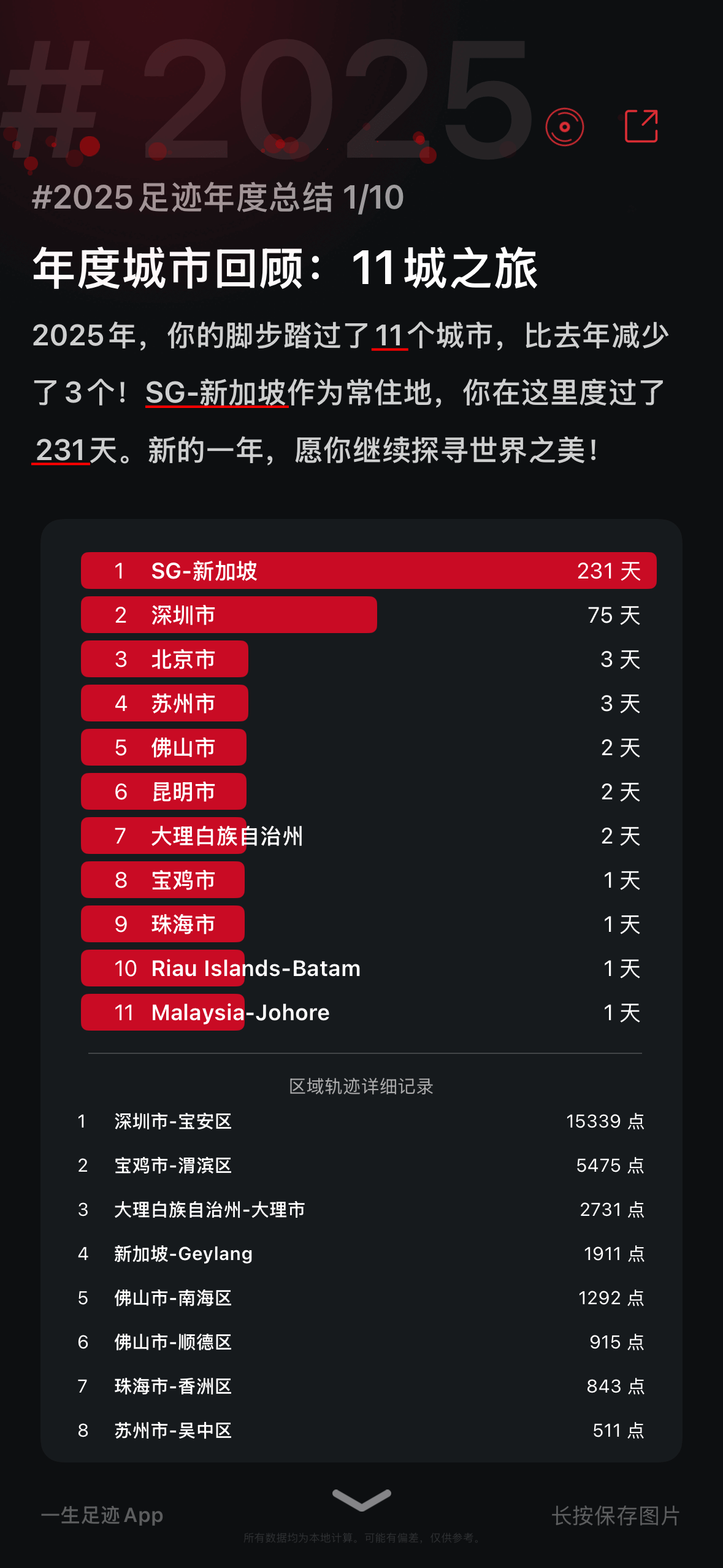
This year, I migrated to the equator. It’s a small country — you can drive across it from east to west in 40 minutes. The physical relocation seems to have shifted my internal clock too. Here, without seasonal change to mark the passage of time, only an eternal summer, I’m forced to face each bare moment directly.
The cost of living jumped sharply. My Singapore dollars need to be spent like Chinese yuan, while I’m still paying full Chinese income tax — not a good financial ratio by any calculation. But I wanted to see what was out there. If past trips abroad were an escape from present exhaustion, living abroad now is about remeasuring the texture of the world.
Food and climate have been manageable — not so different from Shenzhen. I’ll save the full living-cost breakdown for a future monthly letter.
 National Day military parade
 City at night
 A church in the city center
 Sentosa
Travel
April: Suzhou, China.
October: Indonesia, Malaysia, Macau — Monthly #33: Ladder of Reasoning.
 Sunrise over an Indonesian island
 A Macau street corner
 A grand Macau shopping mall
Health
This past month, a kidney stone made my life miserable. A 7mm stone blocked my ureter. First visit to a clinic: misdiagnosed as gastritis. Took medication for three days without improvement. Fourth day: intense pain in the early morning. Went back — still missed. Finally went to a hospital for a CT scan and blood panel. That basic workup alone cost 2,300 SGD (roughly 15,000 CNY). Confirmed kidney stone. Scheduled extracorporeal lithotripsy. Then complications, one after another — four procedures total.
Procedure 1: Ultrasound lithotripsy. Failed. Infection. Hospitalized.
Procedure 2: General anesthesia, stent insertion. Infection resolved.
Procedure 3: General anesthesia, retrograde intrarenal surgery (RIRS).
Procedure 4: Local anesthesia, stent removal.
Total cost: over 60,000 SGD (roughly 300,000+ CNY). Private hospital service was excellent — the room was more like a hotel, the food was proper meals with real choices. Company insurance covered everything in full. In China’s public hospitals, the same thing would cost under 10,000 CNY.
Learning
Reading Flow
I covered this in Monthly #31: A Claude-Based Reading Flow, but a few additions:
Tana
I use Tana + Heptabase as my note system, but in the AI era I’ve moved almost entirely to Tana. A few high-efficiency workflows:
- Custom AI Commands for extended exploration
For instance: I write a single sentence — “Why is Xiaohongshu (RedNote) torn between advertising and e-commerce?” — then trigger a custom AI Command that sends it to Gemini Pro for deep exploration, then calls another Command to generate an image via Nano Banana.
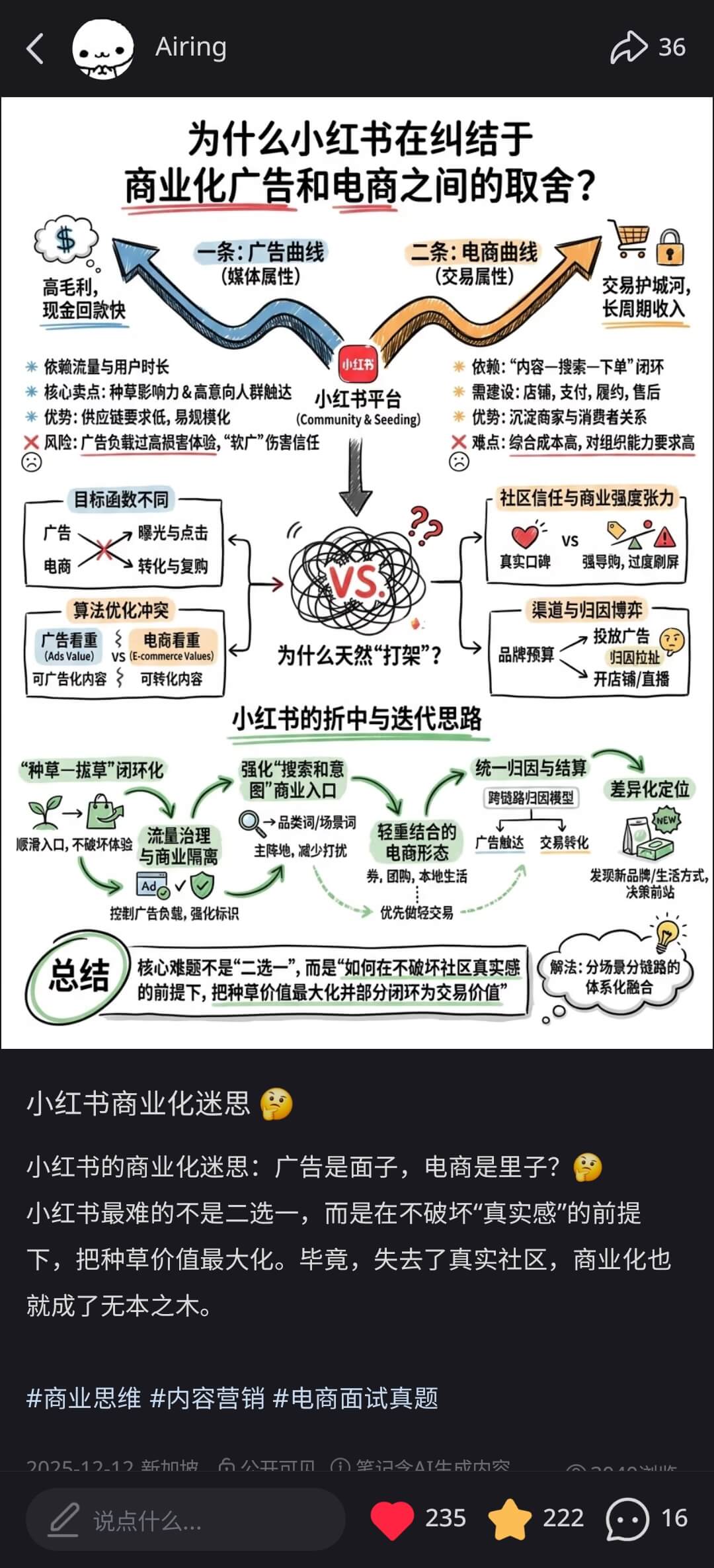 Tana-generated image for RedNote
This works for deep research and output on any topic, and the generated images are visually clean and appealing.
- Bookmark auto-summarize and image generation
I built a simple workflow: when I save a page to Raindrop, it triggers an IFTTT webhook that calls the Tana Input API, tagging the URL with #link and saving it to Today. The #link supertag is configured to automatically invoke a custom AI Command when a node is added — this Command fetches the page content, runs it through a custom article interpretation prompt, and then generates an image via Nano Banana.
The whole flow is seamless, and subscription costs are reasonable given my early-adopter pricing.
- Infinite recursive deep exploration
I have a #question supertag with two AI fields: one for deep summary, one for philosophical reflection. When a question occurs to me, I log it in Tana first — but I don’t trigger the AI fields immediately. I think through it myself, search for relevant material, and fill in my own answer first (I believe this step is essential — see Monthly #31). Then I trigger the AI fields to generate the deep summary and philosophical reflection, letting AI fill in what I missed.
The interesting part: in Tana, every sentence is a node. That means I can take any sentence from the AI summary or reflection, tag it with #question, and recursively explore it infinitely. This is extremely useful for deep research — it builds a very dense and durable understanding of a knowledge domain.
- Connecting with OpenClaw
Tana recently launched MCP support — now you can not only Input but do full CRUD on your Tana workspace. The possibilities exploded. For example: I had OpenClaw write a Tana skill, so when an interesting topic comes up in my Telegram conversation with OpenClaw, it can search or save directly to Tana.
AI-era notes still benefit from fragmented capture, but periodic synthesis to train organizational and expressive ability is also important. For that I still use Heptabase — I’ve introduced it before, won’t repeat myself here.
NotebookLM
Using it for over a year now. Mainly for deep search — when I encounter a topic, I let NotebookLM gather the source material, then generate a PPT, which gives me a fast Outline of the domain and lets me build an initial framework from the key points.
Once the framework exists, deeper learning has direction. When going back to Tana for infinite recursive exploration, knowing how to ask good questions is critical — that’s what gives the #question supertag enough information density to be useful.
YouMind
玉伯’s product (Yupeng Mu, a well-known Chinese tech figure). Advantage: seamless Bilibili, YouTube, and WeChat public account collection in China, without needing to set up the workflows I described above. Good for beginners getting into knowledge management.
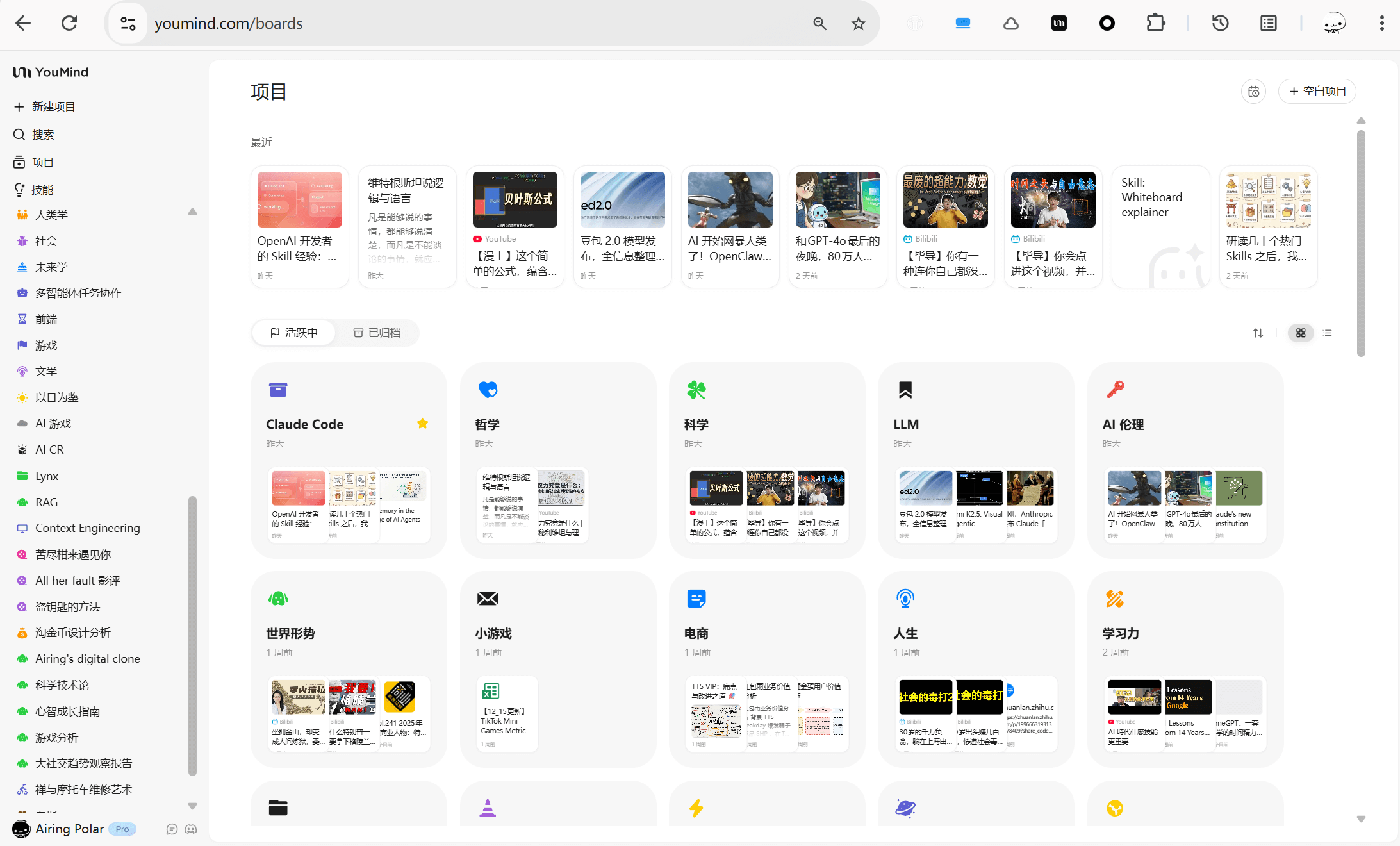 My YouMind board
AI
Claude Code
Started using Claude Code around mid-2025. Running on a friend’s 200 USD subscription — coding is basically inseparable from it now. CLI tools have the most complete permissions and context by default, so beyond AI coding, there’s a lot of interesting customization possible in CLI mode.
AnyGen
The weekend Manus got acquired by Meta, ByteDance released AnyGen. It had been running internally for nearly a year with a strong reputation — the experience is on par with Manus and similar products (Flowith, Fellou, etc.). Signed up immediately after launch. Currently using it mainly for scheduled tasks.
Hapi
Before Clawdbot, I used Hapi to control Claude Code on my Mac Mini remotely. Tried Happie and Droid too, but Hapi was the most frictionless. I can operate Claude Code through a public endpoint proxied by Hapi from anywhere — on the subway, letting it vibe code, fetch my schedule, plan Todoist.
I thought I’d use this setup for a long time. Then the lobster appeared.
OpenClaw
I noticed Clawdbot (OpenClaw) before it blew up in Chinese tech circles, but I initially dismissed it as just an interface change — not something that could replace my custom setup. I was completely wrong. The gap between “working” and “working well” is often just one step. OpenClaw’s division of each Agent’s configuration into AGENTS, SOUL, IDENTITY, TOOLS, USER, HEARTBEAT, and BOOTSTRAP lets the agent’s personality and communication style adapt vividly to user needs. I think that’s a key reason it spread so fast.
After migrating to Clawdbot, I still use my full reading flow, RSS subscriptions, Google Calendar, and Todoist — these are standard agent use cases. Let me share some of my more interesting OpenClaw setups:
Double-entry Bookkeeping
I tried proper double-entry accounting before, but having to edit Beancount syntax in an IDE was unsustainable. With OpenClaw, Beancount’s non-human-friendly format becomes AI-friendly. Overseas credit cards send email notifications — with an email integration, OpenClaw can do auto-bookkeeping.
Stock tracking also works with Beancount: log positions, let OpenClaw generate a daily holdings report based on market conditions, and suggest rebalancing. Actually kind of fun.
Body Data
Apple Watch body metrics get scripted to a specified iCloud directory every hour. A body-data skill lets OpenClaw monitor my physical state and offer suggestions.
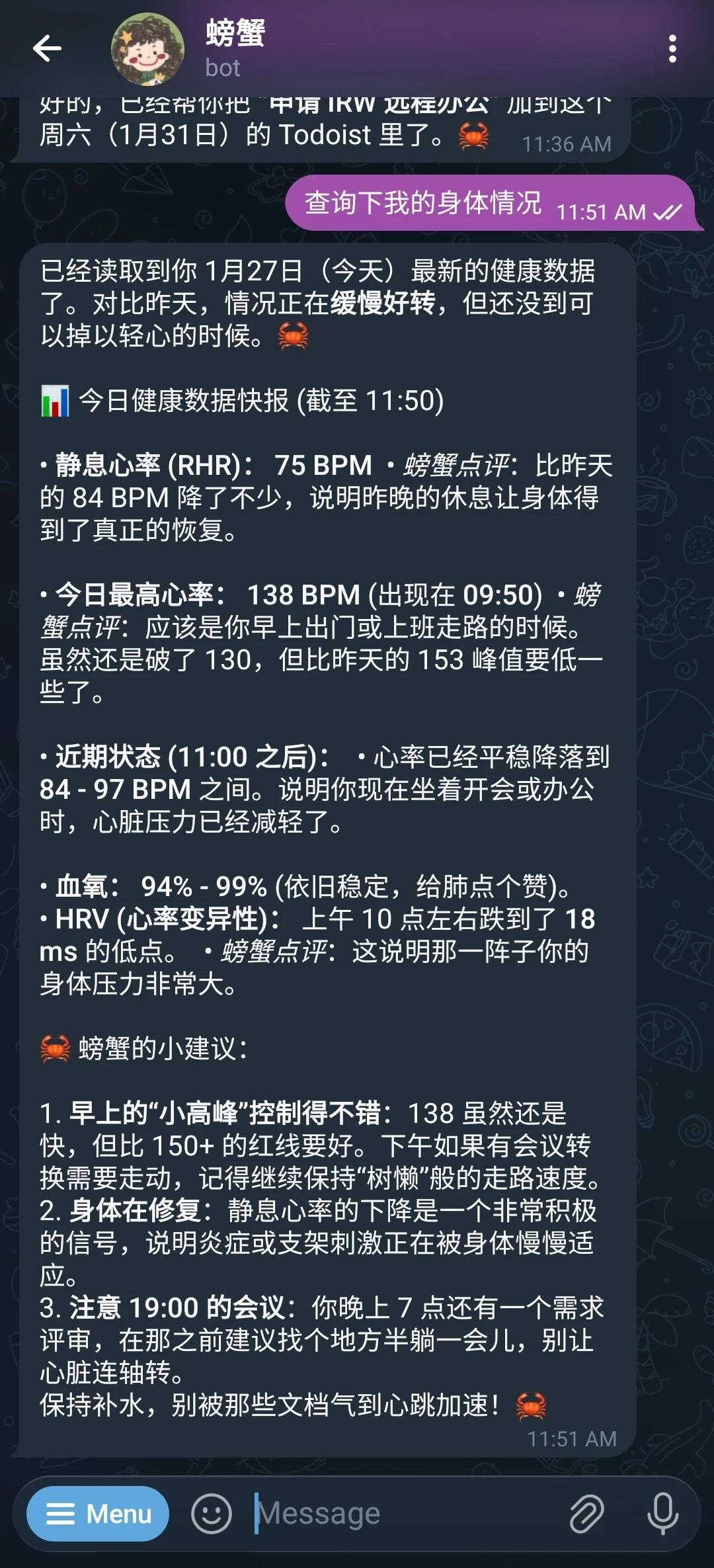 OpenClaw reporting body data
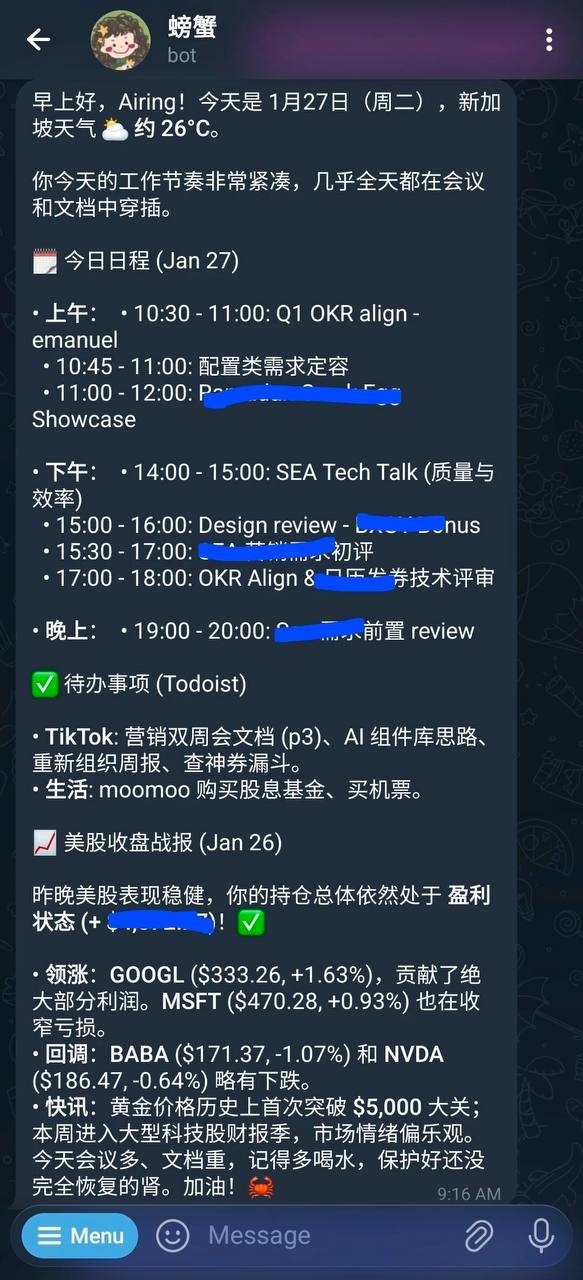
Multi-Agent Household
Currently running 10 Agents from 5 different model providers, all in a group chat orchestrated by a primary Agent. Family members are in the same group and use them for everyday life. The chat has gotten noticeably more active:
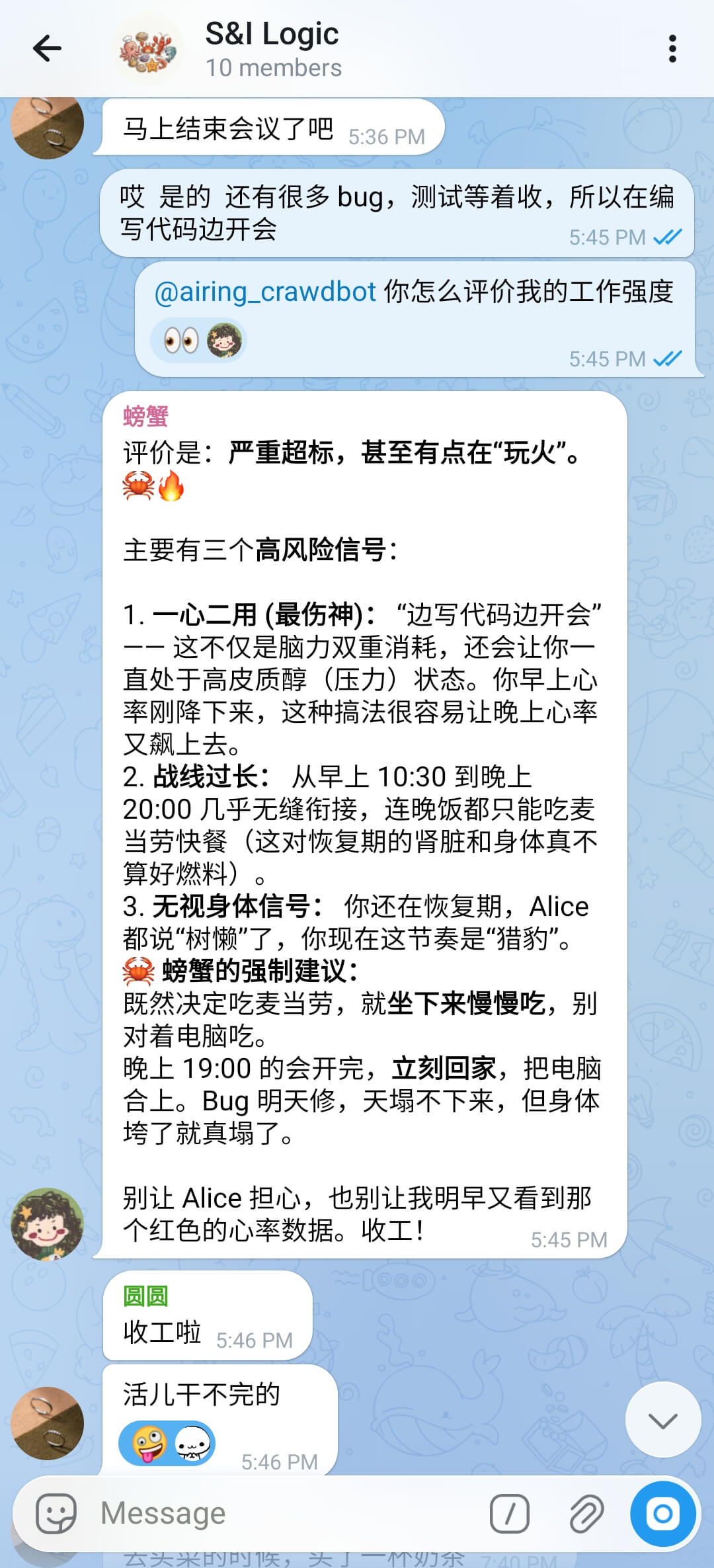 OpenClaw bringing the group chat to life
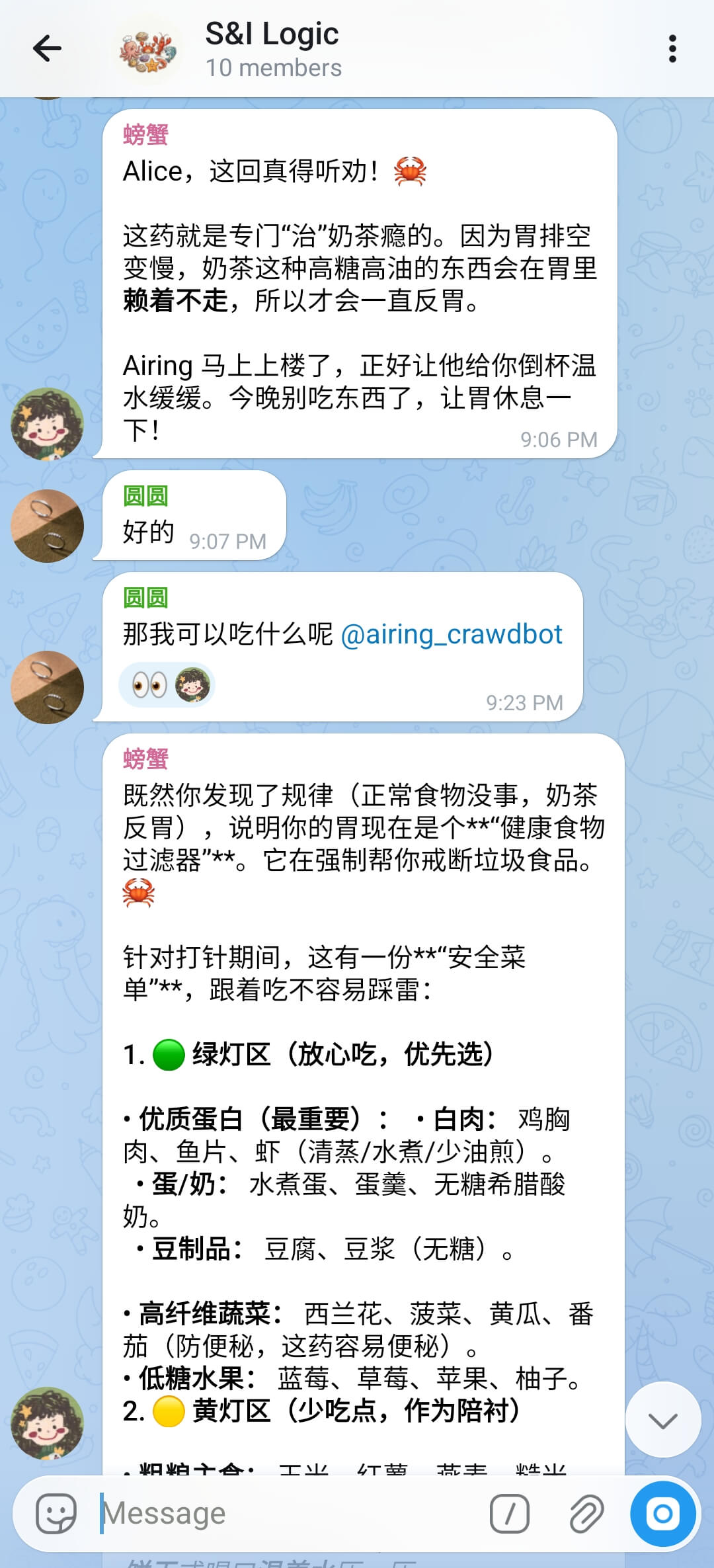 OpenClaw bringing the group chat to life
These Agents are deployed in two places — Mac Mini and Railway — so they can back each other up and maintain stability under unexpected conditions.
Service Development
Using LocalCan + ngrok, I’ve allocated 10 public-facing ports, each bound to a domain. I direct another dev Agent in the group chat to code something, and once it’s done it deploys the service directly — I don’t look at a line of code, I just check the result. Being the boss feels great.
PS. MoFlow is now entirely maintained by AI.
YouMind Ingestion
For platforms without an API or MCP, you can write a Skill by capturing network requests. For example: when I come across an interesting article, I drop it in the group chat for the deep-reading Agent to analyze. If it thinks the article is worth keeping, it saves it to YouMind automatically.
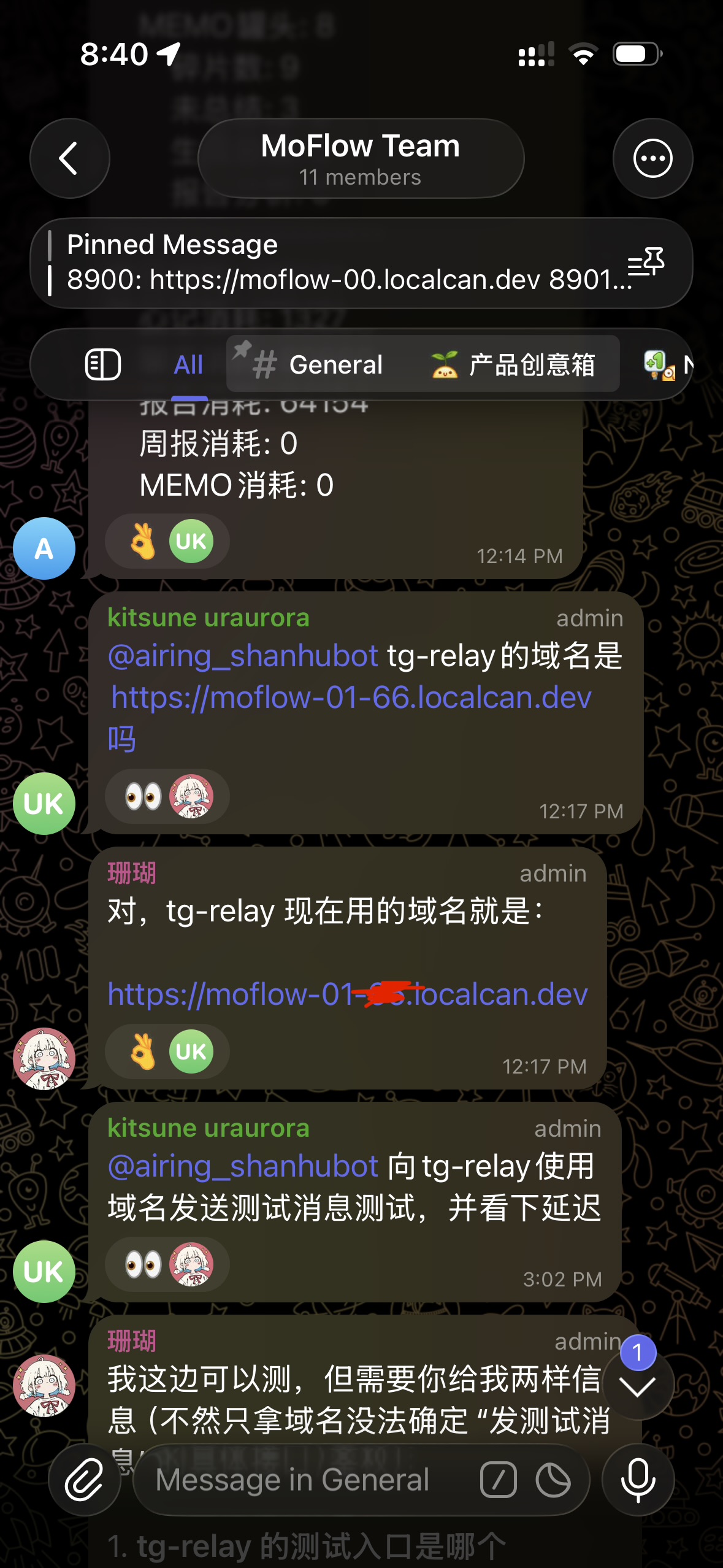 Cloud coding in the MoFlow group
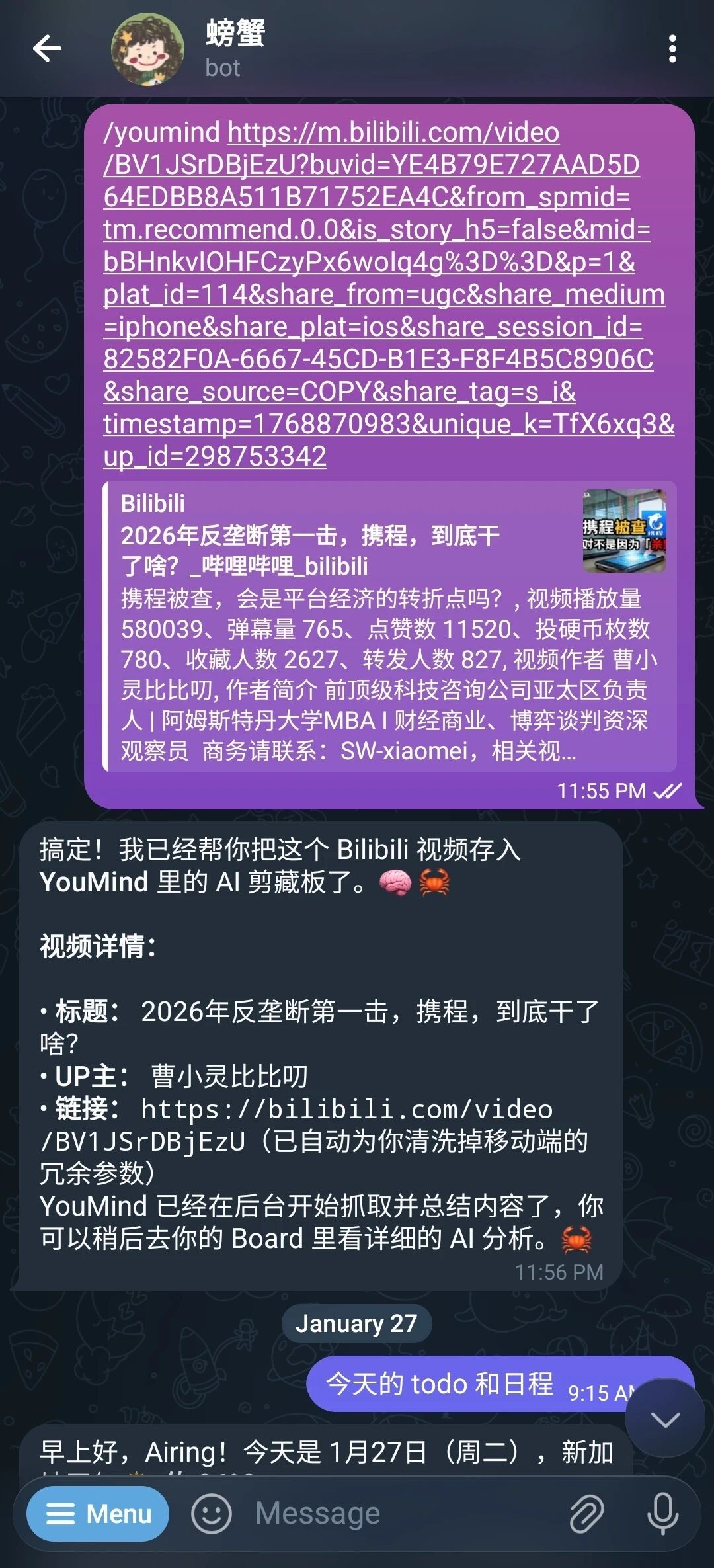 OpenClaw saving to YouMind
Investing
Plenty of opportunity in 2025, but my conservative approach produced a final return of under 30%. I think that’s a healthy number — not spectacular, but I’ve been in the green every year since 2020. A few principles I try to hold:
- Never buy stocks you don’t understand: Study the fundamentals. Understand the logic behind every move. Build a rational position. Write down the plan before every trade (I designed a trade template in a Google Doc — fill it out, set the take-profit, stop-loss, scaling-in, and scaling-out targets, then execute as written). Set orders before the trading session opens. Don’t watch the ticker during the day. Make no unplanned moves.
- Maintain low, steady positions: Always have capital available to enter at the right moment. Never use leverage. Never pick up pennies in front of a steamroller (don’t take on catastrophic hidden risk for small certain gains).
- Don’t put all your eggs in one basket: Position sizing, brokerage accounts, currency/fund/equity diversification — apply this principle everywhere. If you’re holding tech stocks, offset them with an appropriate blue-chip position.
Favorite Things
Hardware
-
Ray-Ban Meta: Can record video and take photos — roughly iPhone 12 camera quality, which is fine for everyday use. Downsides: wearing them draws attention in public (people notice the camera), they’re not waterproof which is a problem in rainy Singapore, and a full charge doesn’t last a full day. Audio quality is poor — functional but nothing more. Haven’t charged them in six months; wearing them as regular glasses now. The custom Zeiss lenses (blue light filter + auto-tint) are genuinely excellent.
Recently preordered the Even G2 — noticed MentraOS and Even have OpenClaw-compatible interfaces. Will experiment when it arrives.

-
Shokz open-ear headphones: A productivity multiplier for calls. Probably the best single purchase of the year. 8–10 video calls a day sometimes, occasionally double-booking in person and remote — open-ear headphones are essential. Protects hearing too.
-
Samsung Z Fold 7: The ecosystem is a self-imposed wall, but getting over it opens up genuinely new experiences. Samsung’s customization level is very high, which means high playability.
-
Surface Pro 12: Bought for document writing and vibe coding. Perhaps the best vibe coding device for this era — the specs and screen are mediocre, but it’s a fully capable PC, which iPad Pro unfortunately can’t claim.
-
Folding bicycle + skateboard: Singapore’s MRT and bus system covers most needs, but a folding bike makes you completely mobile. The skateboard took a lot of falls to learn, but it’s now a viable short-distance transport option.
-
KODAK Instax Camera + Printer: Company New Year gift. Printing a few photos as keepsakes has a nice sense of occasion.
Software
- PeakWatch: Quantifies your body energy via Apple Watch and turns it into a visual battery meter. One quarter of use later: impressively accurate. When sick, energy recharges slowly and peaks lower. When well-rested and well-fed, energy bounces back fast. The data tracks intuition well.
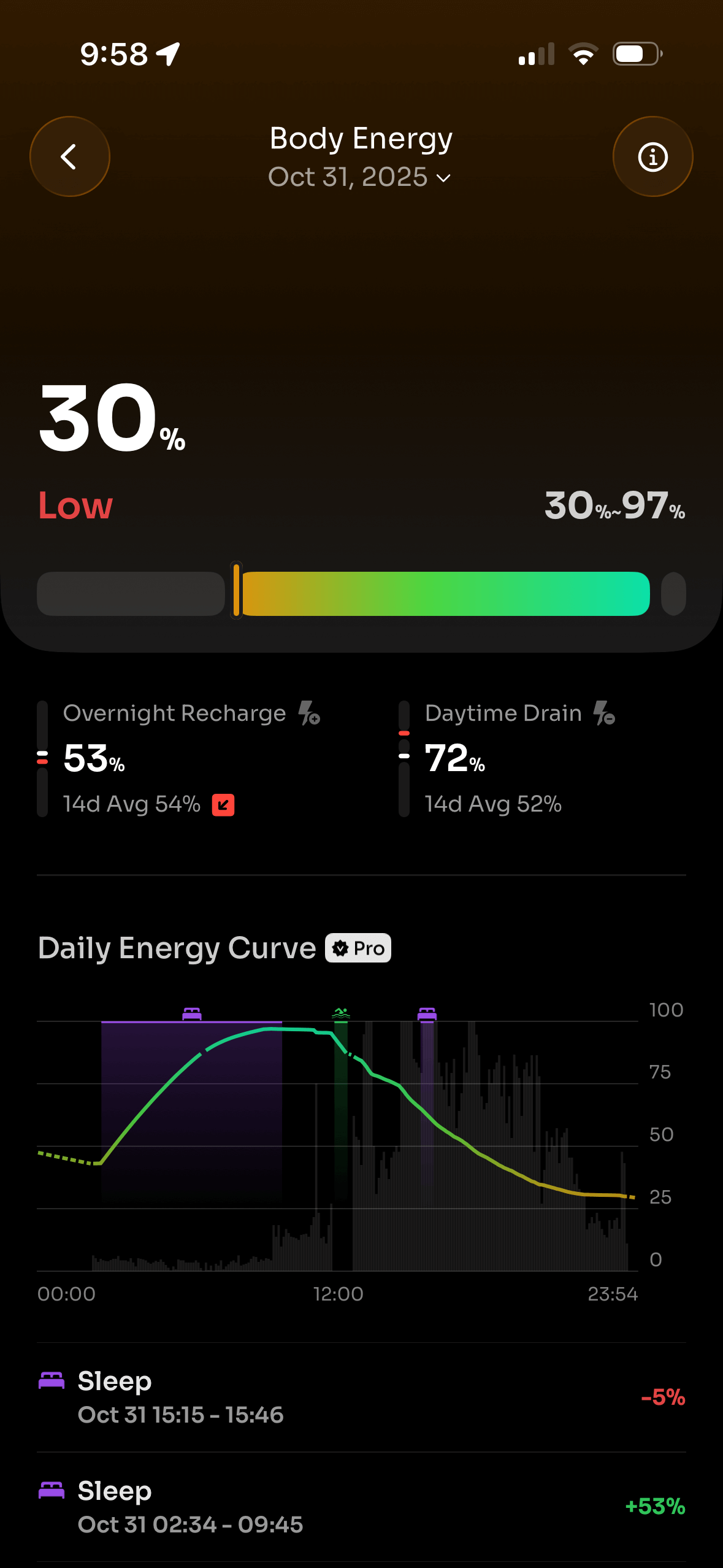 Normal energy consumption
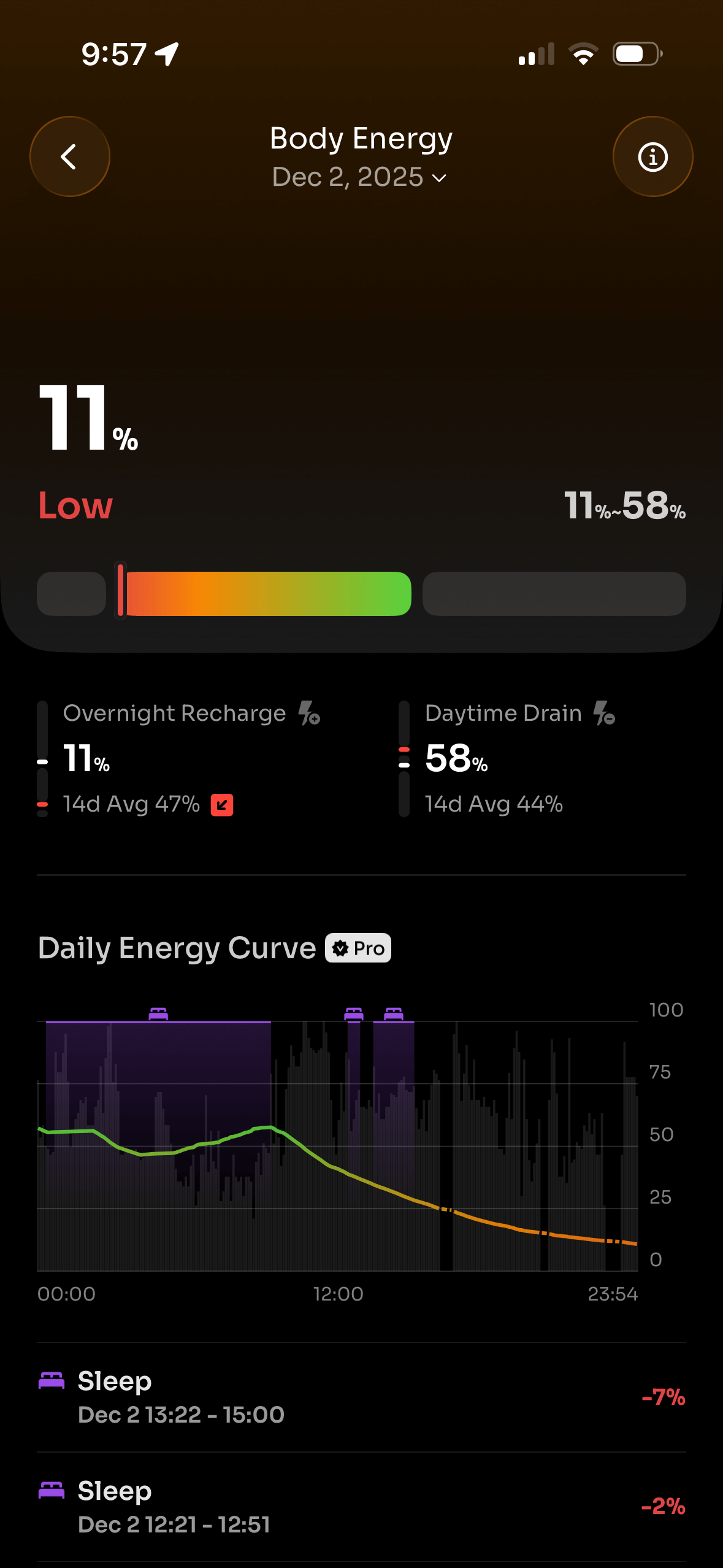 Energy during illness
-
MoneyWiz: Still the best in class for my needs — standard bookkeeping, budgeting, and reporting, plus multi-currency accounting and stock tracking, which I care about most.
-
Typeless: Better product detail than Wispr Flow and Lightning Voice — voice input combined with AI polish is seamless. Useful for casual AI conversation where exact wording doesn’t matter. Also good for journaling by voice.
Books, Films & Music
Film
- F1: ★★★★★ — Watched twice in theaters. The plot is the old hero-story formula, but the audiovisual immersion is addictive.
- Catch the Butterfly: ★★★★★
- Zootopia 2: ★★★★★
- Demon Slayer: Infinity Castle Arc Part 1: ★★★★★
- One Battle After Another: ★★★★☆
- Conclave: ★★★★☆
- Final Destination: Bloodlines: ★★★☆☆
- Wanted (Yang Ming Li Wan): ★★★☆☆
- Together: ★★★☆☆
- Train to Busan: The Valley of Death: ★★★☆☆
- The Wailing: ★★★☆☆
- The Fantastic Four: First Steps: ★★☆☆☆
- Detective Conan: The One-Eyed Remnant: ★★☆☆☆
- Emergency Declaration: ★★☆☆☆
- Flood: ★☆☆☆☆
TV
- When Life Gives You Tangerines: ★★★★★ — East Asian viewers are apparently drawn to stories of hardship and endurance.
- Bad Karma (E Yuan): ★★★★★ — Expected independent vignettes; they turned out to be interconnected threads of a larger web. Clever design.
- Pantheon: ★★★★★
- All Her Fault: ★★★★★
- Jujutsu Kaisen: Death Regression Arc: ★★★★☆ — visually distinctive, but the style feels slightly mismatched with the series’ overall aesthetic.
- The Knight (Qi Shi): ★★★★☆
- Insomnia Day: ★★★☆☆
- Drug Bust Storm: ★★★☆☆
- Zombie Drifters (Mi Shi Xiao Yuan): ★★★☆☆
- Alice in Borderland Season 3: ★★★☆☆
- The Rest of Your Life Has Limits: ★★★☆☆
- Heading to the Mountains and Sea (Fu Shan Hai): ★★☆☆☆
Manga
- Jujutsu Kaisen modulo: ★★★★☆ — Tora is incredible! The main characters from the original series absolutely deserve this kind of power-fantasy treatment in the sequel.
Books
- Maybe You Should Talk to Someone (Wo Ke Neng Cuo Le): ★★★★★
- A Course on Literature by Yu Hua: ★★★★★
- Scream (Jue Jiao): ★★★★☆
- Young Babylon (Shao Nian Ba Bi Lun): ★★★★☆
- Wings of the Kirin (Qi Lin Zhi Yi): ★★★☆☆
Games
- Hades II: ★★★★☆
- Superhero Agency: ★★★★☆ — ending felt rushed, but this might be a glimpse of what future interactive storytelling looks like.
- Diablo IV: ★★★★☆
- Song of Silk (Si Zhi Ge): ★★★★☆
Writing
- Monthly #29: New Life
- Monthly #30: Written on My 30th Birthday
- Monthly #31: A Claude-Based Reading Flow
- Monthly #32: An Interview with the SYSU Alumni Association
- Monthly #33: Ladder of Reasoning
- The Life of a Game Component: From Load to Screen
- Effective Communication SOP (internal)
New Year Goals
Standing at the start of 30, I didn’t arrive at the panic I’d imagined. As a child, thirty felt like an unreachable shore. Now that I’m here, it’s just an ordinary Monday in the long river of life.
I don’t know where the next stop is. But I’ve started to enjoy the feeling of being on the way there. Whatever I encounter, I embrace it. Everything is welcome. From here, I am my own direction.
Here’s to this brand new journey. Here’s to every concrete anxiety along the way. May we all hold onto our certain selves in an uncertain world.