This issue wasn’t what I had originally planned. Last night I changed everything at the last minute and decided to write through the night. This is a belated “announcement” — and a farewell letter — to mark the end of a love story with a “bloom” of just 20.5 days.
We didn’t know each other for long, and the time we spent together was brief (May 1st–May 21st). But I’m grateful for everything you gave me. This was the sweetest relationship I’ve ever had — one that fulfilled everything I’d ever imagined love could be. I also owe you an apology: I didn’t take good enough care of what we had, and let it wither before its time. You walked away with grace and dignity, and in doing so, you preserved it forever at its most beautiful. Thank you.
This issue is my long-overdue reflection on A Bouquet of Love — the only film we ever saw together in a theater. You insisted on that one. I said the ending was a bad ending and I didn’t want to watch it. But whether in that moment after the credits, or right now at this hour, the image of love at its most beautiful that A Bouquet of Love showed me has stayed buried in my heart ever since, as something I yearn for. I never wrote this piece because I was too embarrassed to express affection in writing. I’ve never written about love before.
But what’s done is done. The past is the past. Today I’m using this newsletter as a way to finally “announce” what happened, and to talk about how I understand love — with A Bouquet of Love as my frame.
Mugi and Kinu are two people who fit together almost perfectly. They meet by chance, get to know each other, fall in love, and spend one or two years in bliss. After graduating from college, Mugi gets absorbed into working life. Under the pressure of promotions and raises, he changes. He stops remembering the plot of Houseki no Kuni, gives up on Golden Kamuy after volume seven, stops talking to Kinu about Natsuko Imamura’s new work. Kinu stays much as she was in college — she can quit a respectable job to chase work she loves, watch theatre she cares about, follow novels and manga she’s obsessed with.
The incompatible rhythms, the diverging values — by year five, it’s over. As they part, Mugi proposes. His logic: if dating doesn’t work anymore, get married; if marriage fails, have a child; if that doesn’t work either, just muddle through. Romantic love turns into family love eventually — isn’t that just how it goes?
And maybe it does. In the fast-paced, disposable culture we live in, young people walk through one procedure after another, failing again and again, each time lowering the bar, compromising, conceding — filling one void with another, until they lose themselves in an endless darkness.
But Kinu is still the girl she always was, the girl who still believes in love. Even though the person in front of her is the one she loves most, she refuses the proposal through tears and breaks it off. This confirms the line: “The end of a love affair is inevitable; not ending is the exception.” Mugi and Kinu — the most perfectly matched couple — arrive at a bad ending.
That’s the whole story of A Bouquet of Love.
I want to try to answer four questions:
- What is love?
- Why do we need love?
- What holds love together?
- How do you cope when love is gone?
What Is Love?
First, an attempt at a question with no fixed answer — what is love?
You might say Mugi changed, and that’s why this fairy-tale romance ended. But I’d say: Mugi was not wrong, and neither was Kinu. This is just reality. Love, at its core, is nothing more than the pleasure caused by hormones — brief, fast to arrive, fast to fade. You can sustain it for a while through reunions, through stronger stimuli, but in the end it dissipates regardless.
In Issue 1, I quoted Chungking Express: “I don’t know when it started, but everything has an expiration date. Canned sardines. Canned ham. Even plastic wrap. I started wondering: is there anything in this world that doesn’t expire?”
Everything expires. Scientifically, the longest shelf life for romantic love is 18 months. The shortest, as you’ve shown me, is 21 days. We stopped at 20.5 days — while the love was still alive.
So within the premise of expiration, what can love still be?
Director Imaizumi Rikiya answers this way: love is “a momentary dream” — a moment when two souls somehow resonate, that precise, dream-like instant of perfect feeling. That instant is love.
That instant: you, beside me at the circus, clapping and laughing with delight.
That instant: on the roller coaster, your scream, your hand gripping mine.
That instant: a confession at four in the morning, the lights of Huangpu Avenue still burning.
That instant: walking together under one umbrella along the Pearl River on a rainy night.
That instant: the beginning of so much heartbreak.
Yes — everything in this world expires. But “that instant,” for me, is eternal.
That dream-like moment is, for me, what love is.
Love is a series of small moments of genuine, positive resonance — real, positive, joyful experiences in a specific place and time. Which is to say: “Forever is probably just a degree of intensity. ‘I’ll love you forever’ means: in that moment, I felt like I would love you forever.” Love is the feeling of that instant.
But this isn’t impulsive or muddle-headed. It’s the sense of eternity I feel in that moment — which makes me start imagining our future in detail, building the structure of something that belongs to us. Even if that structure later collapses for reasons beyond our control, the grief and pain don’t erase the joy and anticipation of building it.
This is how I see love: don’t fixate on the past, or eternity, or the future. Many things have no ending — and not having one is already the best ending our circumstances allowed.
Why Do We Need Love?
Second question: why do we need love? Strictly speaking, I can only answer for myself — my reasons may not represent everyone’s. So the question becomes: why do I need love?
My last relationship was in 2017, and it ended quickly too. I’ve sometimes wondered whether I’m just not suited for romance. But I’ve kept searching all these years. Why?
For me, it’s because I’m afraid of loneliness. There’s a passage in The Storied Life of A.J. Fikry that I love:
Because we are afraid, in our hearts, that we are not worth loving, we go it alone. But it is exactly because we go it alone that we come to believe we are not worth loving. One day — you won’t know when — you will get in the car and drive. One day — you won’t know when — you will meet her. You will be loved, because for the first time in your life you will truly not be alone. You will choose not to be alone anymore.
After being loved, I discovered how wonderful it feels to be seen as important — to realize there is someone this good in the world who cares about me. And so I’ve kept searching for that person.
In the age of fast love, the prevailing wisdom is: cast wide, cut fast. There’s a saying: “If you refuse to settle, you’ll grow old alone. Life will get harder. You’ll get lonelier.”
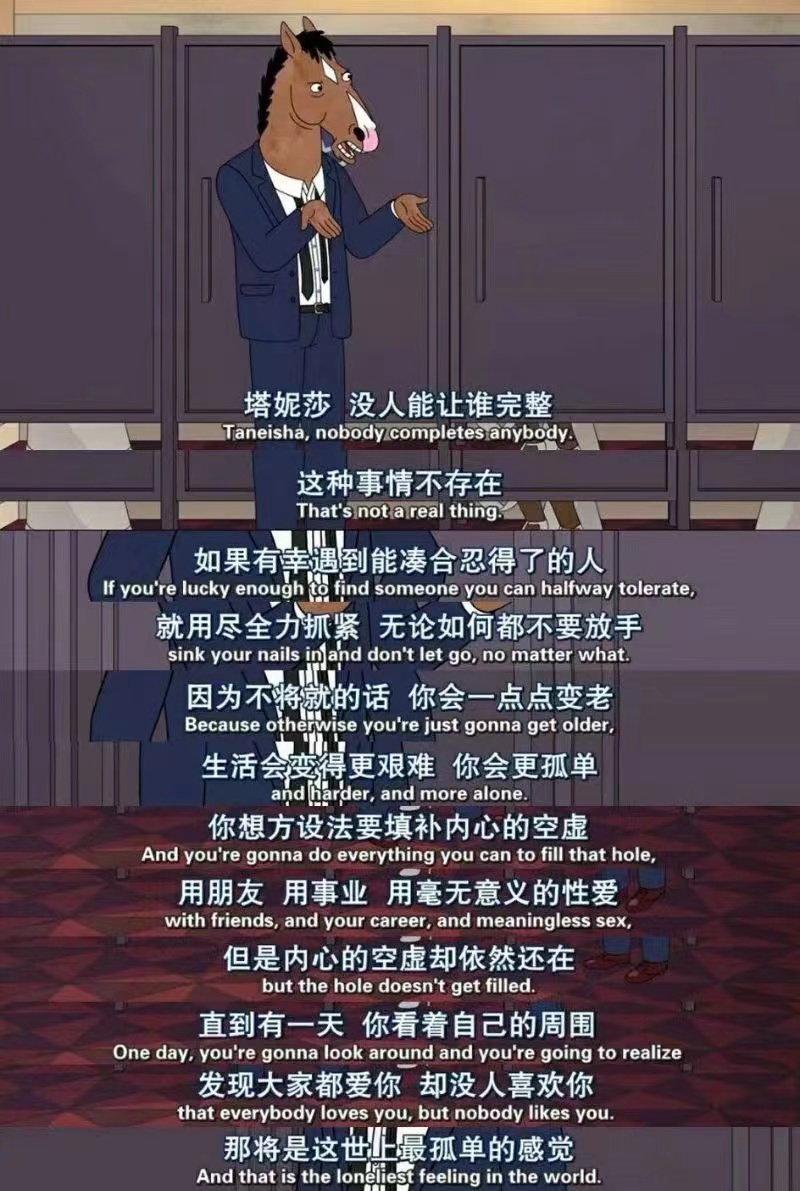 But I won’t settle. I’ll keep waiting for that moment when love arrives. Maybe not settling means I’ll spend my whole life without finding it, without ever having “that instant of a momentary dream.” Maybe no one will ever love me. Or maybe it doesn’t matter either way.
What I seek is a real experience — not “a momentary dream” but “a momentary truth.”
The feeling of being cherished lifts the weight of loneliness. It makes me feel, tangibly and physically, that I am alive. Not a dream — real. I don’t want to look back on life and feel like it was a haze. I write in a journal every day. When I was with you, I also kept a daily hand-written log. I track my time to the second in ATracker. I let Traces silently collect my GPS coordinates as I move through the world.
Why, in an age of surveillance capitalism, do I voluntarily log my own behavior? Because it makes me feel that I truly exist in this world.
There’s also another reason: I’m someone who cares intensely about experience. I wrote in an earlier post that “the meaning of life lies in experience” — in the most immediate, authentic experience of the present moment.
The Storied Life of A.J. Fikry puts it this way:
“We are not the things we collect or read or buy. As long as we are alive, we are love, we are the things we love, we are the people we love. All of this, I think, truly survives us.”
The meaning of life isn’t handed to us by grand events. It lives in the incidental, ordinary fabric of daily existence. That’s my life, and that’s my meaning. So I want to document every moment — happy or sad — which is why I post my mood calendar in every annual review. Because those are the most authentic moments of my year. When I look back on them, I can feel what I felt then — and through that, I know I was really here.
The only thing I’m certain exists is the present. The only thing that matters is now, this moment, this feeling. A person has to exist before anything else about life can be discussed. I care about collecting memories because I care about my own existence and my own life.
On this topic of souls connecting — it’s genuinely hard. People can’t be reduced to simple tags. I’m always INFJ on every personality test; you’re obviously ENFP. In theory, a perfect match. But theory is just a label.
Strip away all our labels, and if two people can still love each other — and love each other more over time — then what they love is the real person underneath.
What Holds Love Together?
Third question: what ties an intimate relationship together?
I once thought this through and wrote down seven things for you:
- Affection: Mutual feeling — this is the foundation of everything.
- Honesty: An honest attitude, open communication, not closing your heart.
- Understanding: Built on honesty — the ability to empathize with and make allowances for each other.
- Trust: Built on understanding — real mutual trust.
- Companionship: Being there, consistently. Presence is the most enduring declaration of love.
- The desire to share: The impulse to want to share everything you experience with the other person.
- Being in sync: Shared interests, similar directions of growth, goals you pursue together.
- Positivity: Being each other’s sunshine.
We were good at all of these, and we still ended. Maybe my answer was just wrong from the start.
Intimate relationships are, above all, a continuous process of adjustment, deepening, and mutual self-disclosure. In this process, each person feels seen, understood, and cared for at a real level. When both people come to include their partner within their sense of self, a structure of interdependence forms — love for the other becomes part of one’s own motivation, the most important part of one’s life.
When I fall, I fall completely and without reservation. But my friend told me tonight that in recent weeks I’ve been unrecognizable. He said my priorities had all shifted — love had moved to the top, and everything else had been pushed down. I was giving so much there that there was almost nothing left. I stopped studying on weekends and evenings. I barely had time to hang out with friends. I even became slow to respond to people who needed me.
I don’t know what to do with that observation. In my heart, that order of priorities felt right. I know what I want, and I know what matters most to me. I’m always pushing myself to be the best version of myself. But when love arrived, I lost my direction.
I don’t know if this is right or wrong. Maybe there’s no right or wrong. I don’t know what I’ll miss or what I’ll regret. I don’t know how to achieve my dreams, or where fate is taking me. All I can do is follow the feeling, one step at a time, with your love as the engine.
How Do You Cope When Love Is Gone?
The last question — and honestly the one I want to think about most right now.
When I was apartment hunting, I had a thought: I talked to so many agents, but only the last one got paid. All the others who worked hard, who showed me great places, who took me around — most of that effort went unrewarded, because only the last agent closed the deal.
In the same way, every relationship is fertilizer for the next. In the end, only one person — the right one, the one you actually marry — will receive the full harvest. Everyone before is, in a sense, preparation.
Does that mean everything before was meaningless?
No.
When I first started looking for an apartment, I had no criteria. Going from agent to agent, seeing place after place, I gradually discovered what I actually wanted: a living room that opens onto a balcony, a building with a shuttle bus, a large common area, a sunny bedroom. Each of those preferences was built up from experience. Eventually I found what is probably the most suitable place for me right now.
And if I compare relationships to apartment hunting (an imperfect analogy), every one has brought me both growth and regret. As I came to understand while playing Finding Paradise last year:
On loneliness, Faye says as she leaves: however it goes, moments of loneliness will always come. But that’s part of growing up, and part of life. It’s what makes every moment spent with the people we love so precious, and our memories worth a thousand times more.
On choices, Sophia says: life is so short. We can’t do everything we want to do. Whatever we choose, there will always be something else worth trying, another road worth walking. In the end, all we can do — all we must do — is find peace in the path we chose.
On regret, Colin says at the end: “Those chances I missed, those small accidents, all my unfinished wishes — yes, they’re still my regrets. But they gave me everything I have. And what I have… nothing could take it away.”
Each of us is caught in loneliness, yet we act as freely as we wish. I think that once you see through the world’s pretenses, the world belongs to you. Cherish the present. Cherish this moment. Cherish everything around you.
We fall for someone because they happen to meet certain needs we have at a particular point in time. There are many such people in the world, so there’s no such thing as a fated one-and-only love. But in that specific moment, I happened to meet you — not someone else — and that’s what fate is.
I may not have been able to stay with you. I always told myself: love fully, leave no regrets. But now I realize that no matter how you choose, regrets are inevitable.
That’s the regret — Colin’s deathbed regret, the road Sophia didn’t take. But it’s also Faye’s most treasured moment, the experience I hold most dear.
Every one of us is a unique individual. No memory can be duplicated; none of it can happen again. All I can do is cherish it, and keep it locked away in a small secret box inside me. So that one day in the future, if I happen to open it, I can —
Remember the moment at the circus.
Remember the moment on the roller coaster.
Remember the moment of confession at four in the morning.
Remember the moment beside the Pearl River in the rain.
And when I remember that “momentary dream,” if I can still feel that genuine, heartfelt joy — that is the meaning of my life.
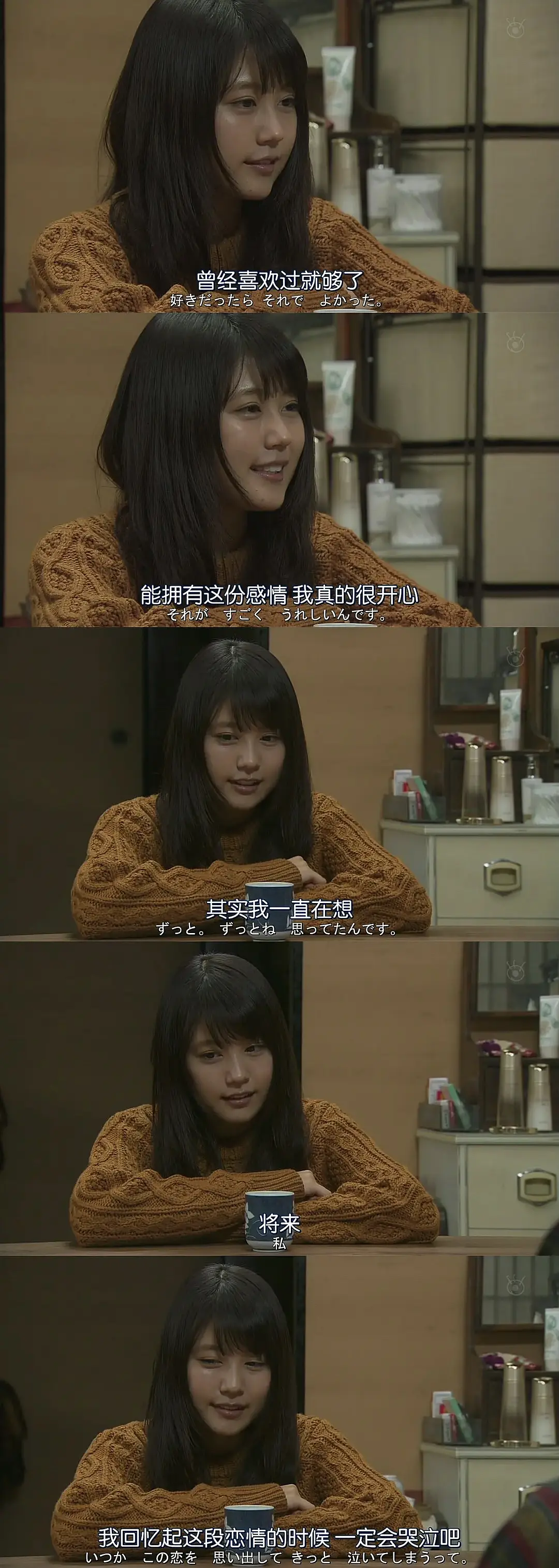 If I could do it all over, I’d still chase after you. Even if the ending would only ever be a graceful goodbye.
Back to the title — why is this film, and this piece, called A Bouquet of Love?
I used to hate receiving flowers. At my graduation ceremony I specifically told my closest friends not to bring them. If they had to give something, make it dried flowers. I couldn’t bear to watch fresh flowers wilt — I knew they were beautiful now, but I couldn’t endure seeing them die.
That rigidity was finally broken by myself — the moment I was preparing flowers for you, I realized: flowers are so beautiful, and giving them to someone this wonderful is itself something beautiful.
Maybe that’s what flowers are for — even if love’s bouquet will fade, it still blooms with everything it has, in brilliant, glorious color. Especially when that bouquet is a gift given with care.
And the most precious souvenir of a love affair is the change it leaves on you — the way a river reshapes the landscape it flows through.
The books you’ve read, the films you’ve seen, the music you’ve heard, the food you’ve tasted, the parks you’ve walked through, the performances you’ve attended, the people you’ve loved — they’ve all already entered your blood and bone, shaping who you are now, becoming part of you. These 20.5 days of bloom have already merged into my blood, into my habits, into the life I’ll live from here.
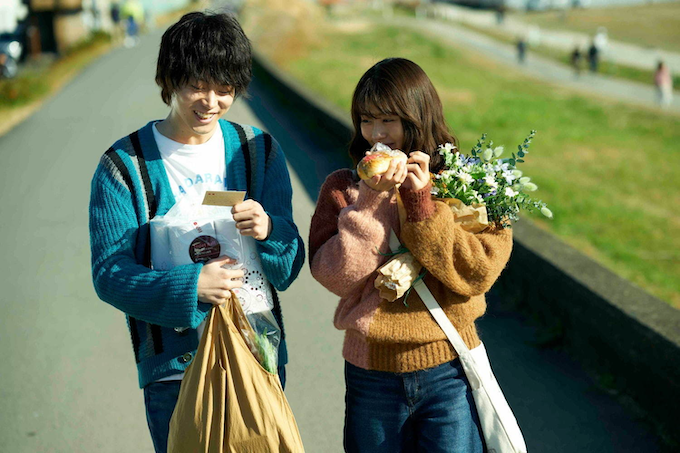 The you I loved disappeared in the moment we parted. The love and longing that remain are mine alone — a memento of something I once had. I know some things can’t be forgotten. Some things are worth holding on to. Some things you give to willingly. And some things you simply cannot help.
I’ve never been good at treasuring what’s right in front of me. In some imagined future I always assumed we’d stay in touch, that we’d definitely see each other again, that there’d be a chance to say sorry someday, that things would get better after today — but I never once thought that any goodbye could be the last one.
So to close: please cherish what’s in front of you. Treasure your own most authentic experiences. Hold that “momentary dream” gently.
Thank you for the love you gave me — a beautiful bouquet with a bloom of 20.5 days.
