Three-Act Structure and the Hero’s Journey
Before diving into the three-act structure, let’s talk about how to analyze a story in the first place. From what I remember of language class, there are two main approaches:
- Element decomposition
- Narrative process decomposition
Element decomposition means analyzing the “who, what, when, where, and why” (5W). If you want to add how the story is told, you get 5W1H:
- Who (characters)
- What (events)
- When (time)
- Where (setting)
- Why (background and cause)
- How (narrative method)
Narrative process decomposition typically follows a “setup, development, turn, conclusion” pattern common in classical Chinese storytelling — similar to Aristotle’s “beginning, middle, and end.” The three-act structure works on the same principle.
The classic three-act (or dramatic) structure divides a story into three parts:
- Setup (Act 1): The opening and origin of the story. It brings the audience into the world, establishes the setting and context, and lays the groundwork for the conflict to come.
- Confrontation (Act 2): The middle, where the protagonist faces obstacles or a major blow. Act 2 serves to push the character’s emotional state to its lowest point and to intensify dramatic tension.
- Resolution (Act 3): The ending. It addresses the conflict from Act 2, whether by overcoming the challenge or crossing an internal threshold. Act 3 needs to lift the protagonist back up, deliver the climax, and bring the story to a close.
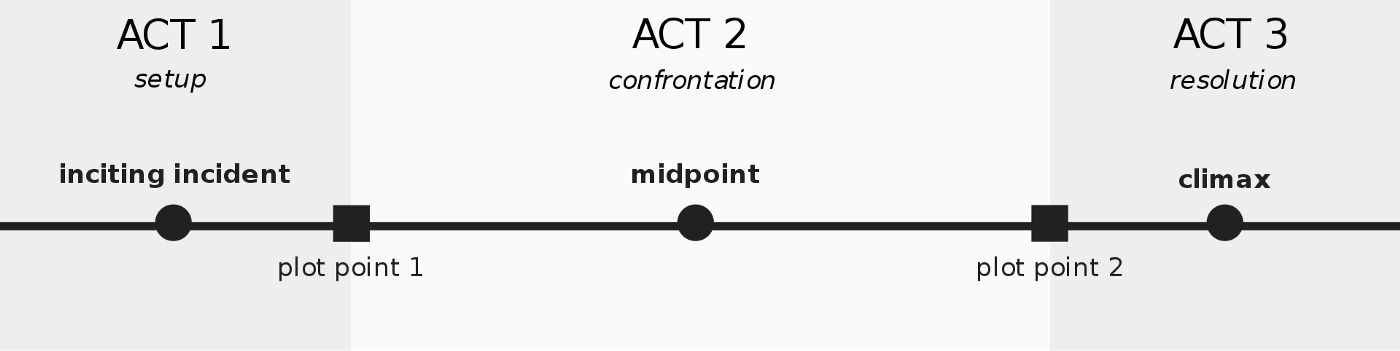 The image above (from Wikipedia’s three-act timeline) shows how each act connects through plot points. The three key moments are the inciting incident, the midpoint, and the climax.
Worth noting: a story doesn’t have to follow just one three-act cycle. You can chain multiple cycles together within a single narrative:
Trigger → Conflict → Resolution → Trigger → Conflict → Resolution → ……World War Z is a great example. Part of why it never lets up is that the pacing is so tight — the film is essentially made of several consecutive three-act units, one after another. Watching it on Bilibili, the experience feels a lot like playing Left 4 Dead, and the comments reflect this (“mission complete,” “chapter one over”):
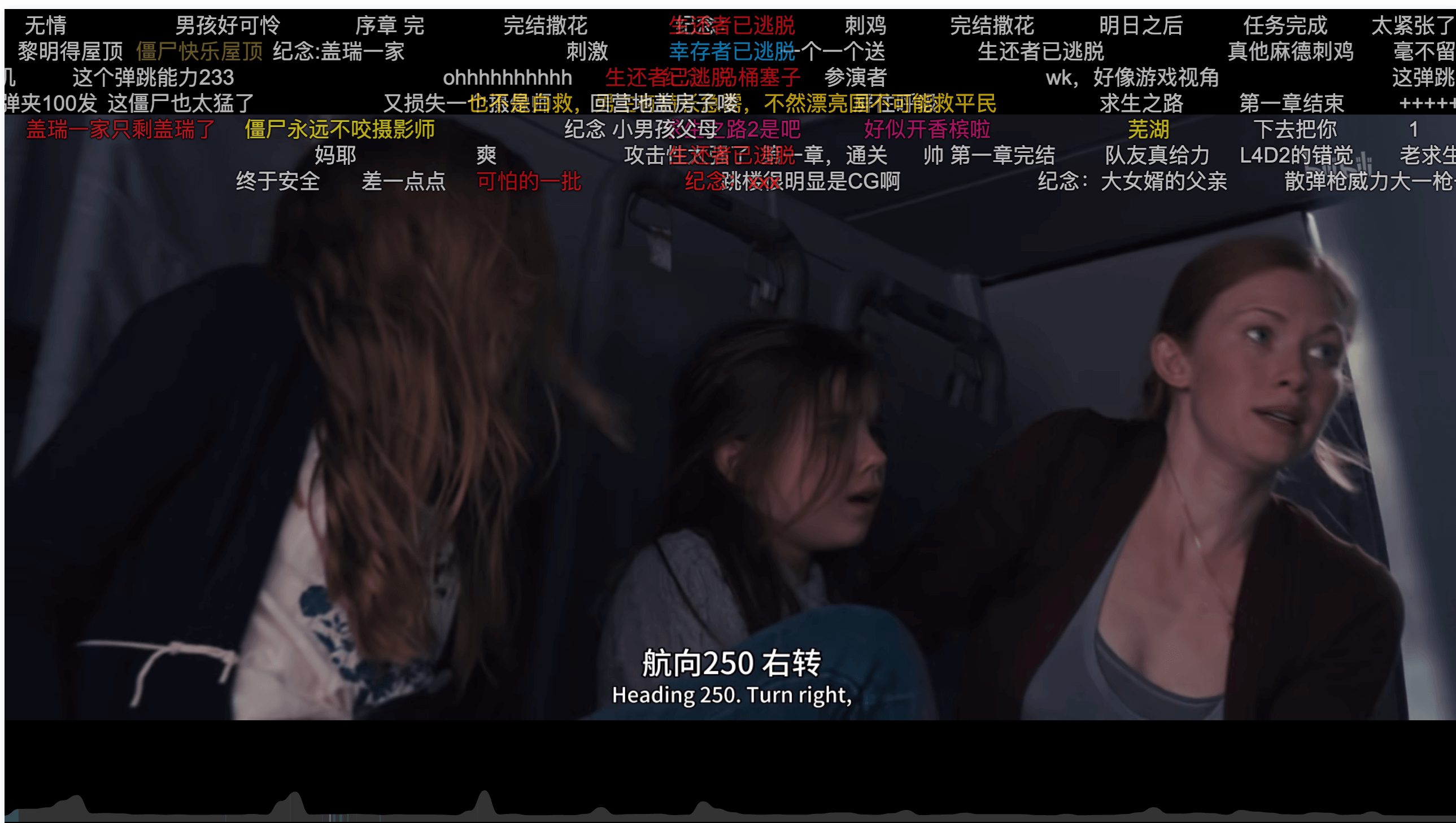 Looking at the comment density graph for the film, there’s an interesting pattern:
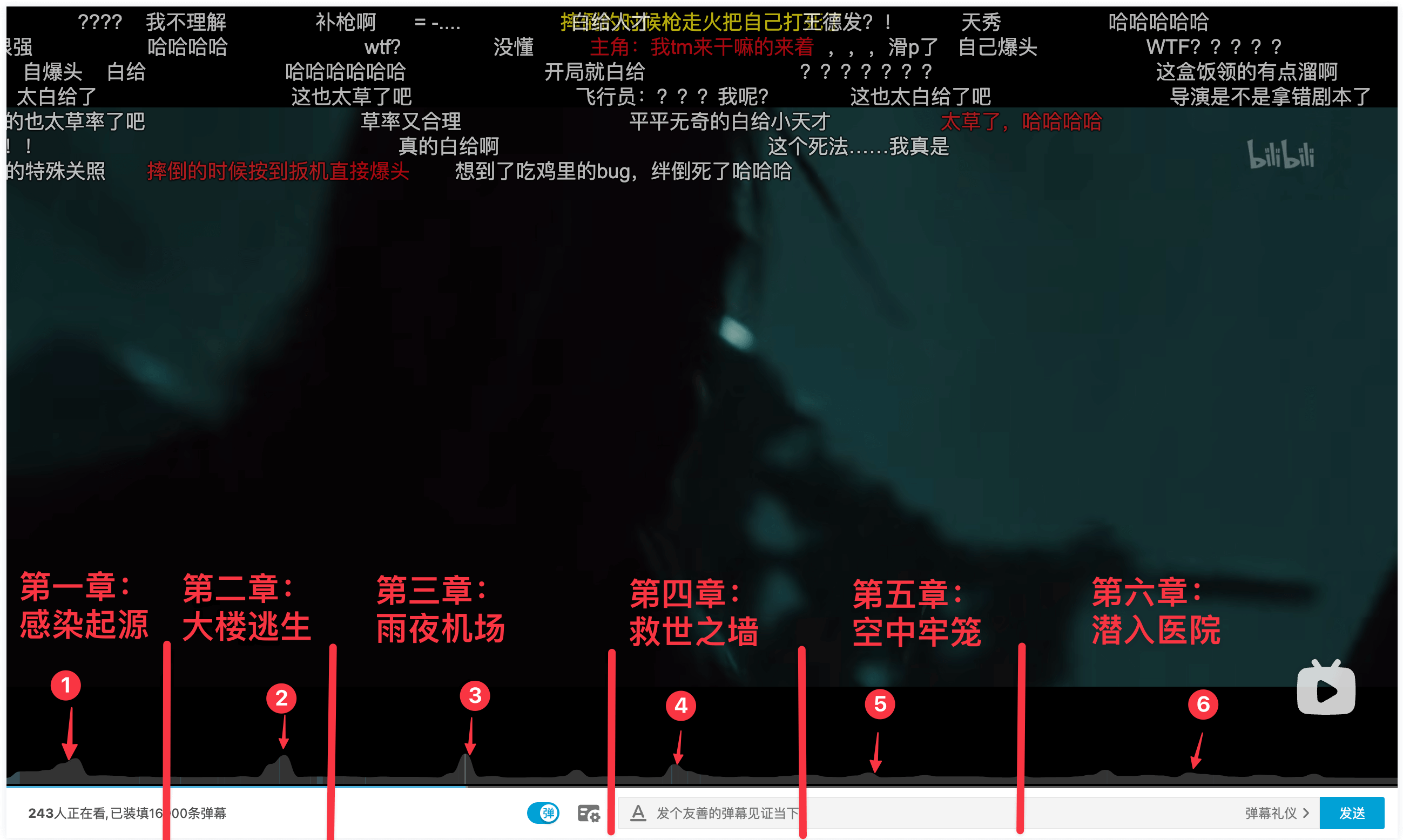 I’ve loosely divided the film into six chapters based on its story beats. Each chapter has one peak in comment density, corresponding to that chapter’s climactic moment:
- Peak 1: End of Act 1 — zombies erupt on the street
- Peak 2: End of Act 2 — the group escapes from the building just before dawn
- Peak 3: End of Act 3 — a gun battle breaks out at the North Korean airport
- Peak 4: End of Act 4 — the zombie surge breaks through the “salvation wall” in Israel
- Peak 5: End of Act 5
- Peak 6: End of Act 6 — less pronounced
Beyond stacking three-act structures, you can also expand into a five-part structure to improve narrative continuity:
Trigger → Conflict → Resolve Conflict → Conflict → Resolve ConflictThe Hero’s Journey is a twelve-stage template developed by Hollywood screenwriters, based on common mythological and narrative patterns — a blueprint for how a heroic protagonist grows:
- The Ordinary World: The hero’s background and origin. Introduces them to the audience and builds identification.
- The Call to Adventure: The challenge or invitation that sets the journey in motion.
- Refusal of the Call: Highlights the danger and cost of the journey. The hero resists — but ultimately goes anyway.
- Meeting the Mentor
- Crossing the First Threshold: The end of Act 1. The hero crosses the boundary between the ordinary and special worlds; the real story begins.
- Tests, Allies, and Enemies: The hero enters the special world, faces trials, makes friends, makes enemies. Not necessarily in that order; rivals often substitute for outright enemies.
- Approach to the Inmost Cave: Approaching the core of the special world, often shrouded in mystery. The second threshold appears.
- The Ordeal: The story’s central crisis — the hardship that precedes the hero’s transformation.
- Reward (Seizing the Sword): Having survived, the hero claims something from the special world — a prize, insight, or ability.
- The Road Back: Act 3 begins. The hero either sets out again or turns back toward the ordinary world.
- Resurrection: The story’s climax — a final confrontation with the ultimate antagonist.
- Return with the Elixir: The story ends. The hero returns from the special world carrying something back. If the ending is open, the story continues.
The hero’s journey also has earlier variants:
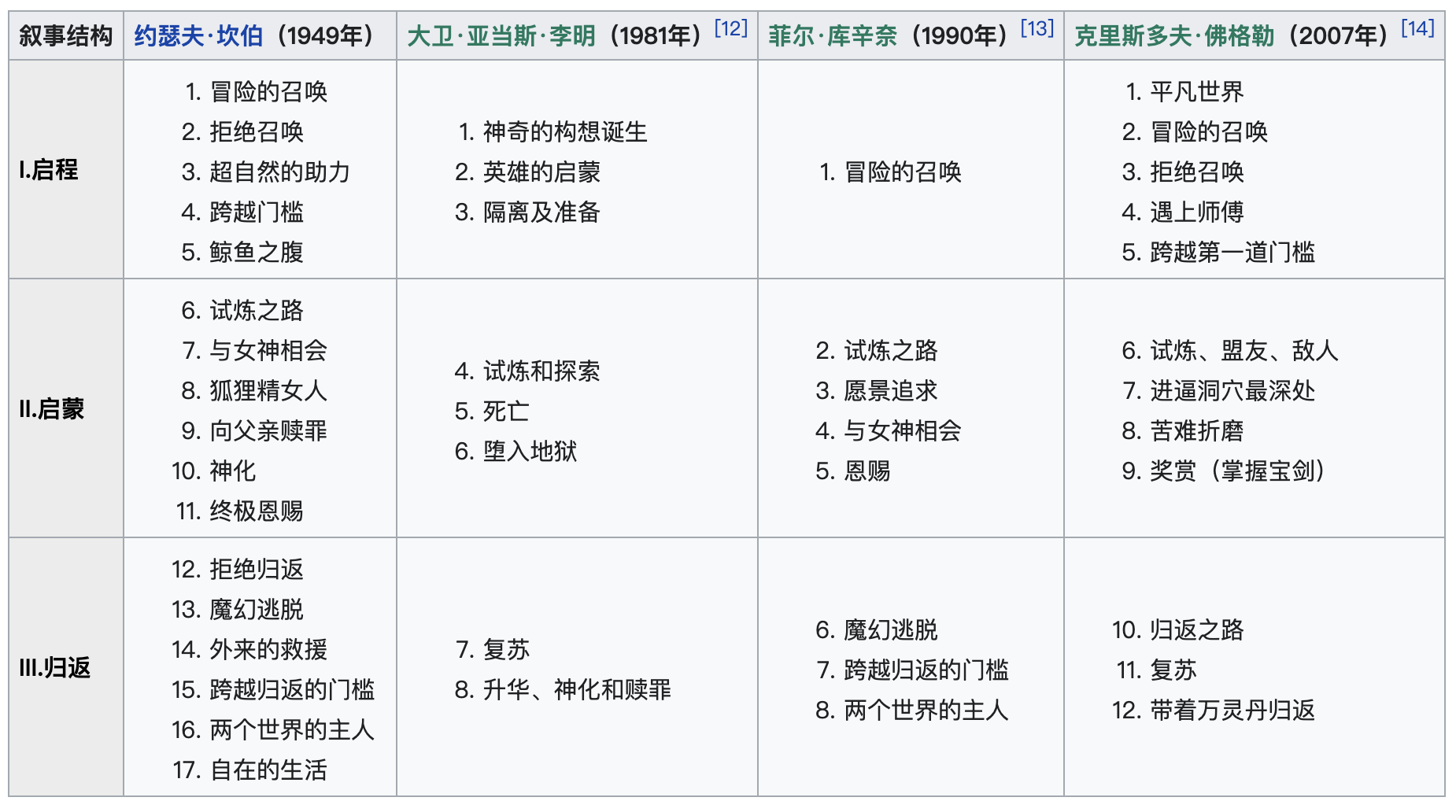 But all of them share the same three-part arc: departure → initiation → return.
This template is extraordinarily common. Kung Fu Panda, for example, follows the hero’s journey almost step for step.
That said, forcing stories into a template usually just produces clichés.
The truth is, great plot structure isn’t bound to any formula. Many excellent works use what you might call a “cross-section of life” structure instead: the opening seems almost incidental, the story begins mid-event, backstory gets woven in naturally, and there’s no clean ending — things simply trail off. What would be the beginning in a traditional sense becomes something unimportant, almost background.
Take Invisible Guest — there’s no conventional “beginning.” The plot is a tightly interlocked chain, embedding context within the story as it unfolds, constantly provoking curiosity, drawing viewers deeper.
Or take Kong Yiji — Lu Xun never explains who Kong Yiji is in any formal way. We learn everything about him through the small scenes at the tavern. He appears in only three of the settings, and in one of them he hasn’t even arrived yet.
Great stories have no eternal formula. Story by Robert McKee puts it this way: “Story is a metaphor for life.” Its core comes from the creator’s deepest beliefs about life — the crystallization of their passions and ideas. Every scene, every moment, must be filled with that passionate conviction.
Film is materializing the spiritual. — John Carpenter
So clichés don’t actually come from following templates too closely. On the contrary, mastering the classic narrative structures is basic craft for any storyteller.
The real root of all clichés comes down to one thing, and one thing only: the creator doesn’t have a deep enough understanding of and insight into the world they’re depicting.
Narrative form isn’t the most important thing — it’s just the vehicle. What matters most is the story’s core.
Weekly Picks
This week’s picks are some note-taking apps I like.
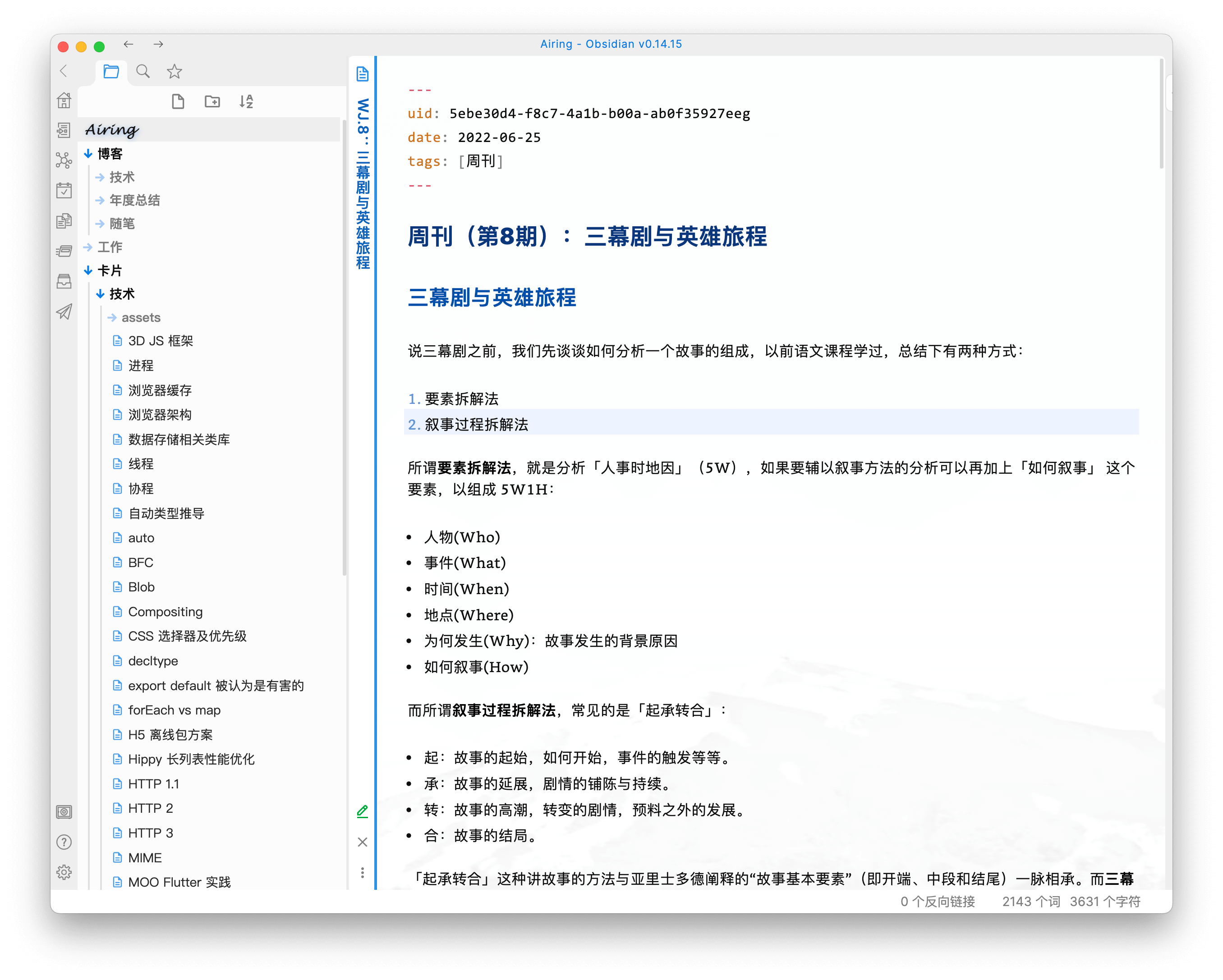
Obsidian
The classic Zettelkasten-style note tool. I currently use it as my Markdown writing environment.
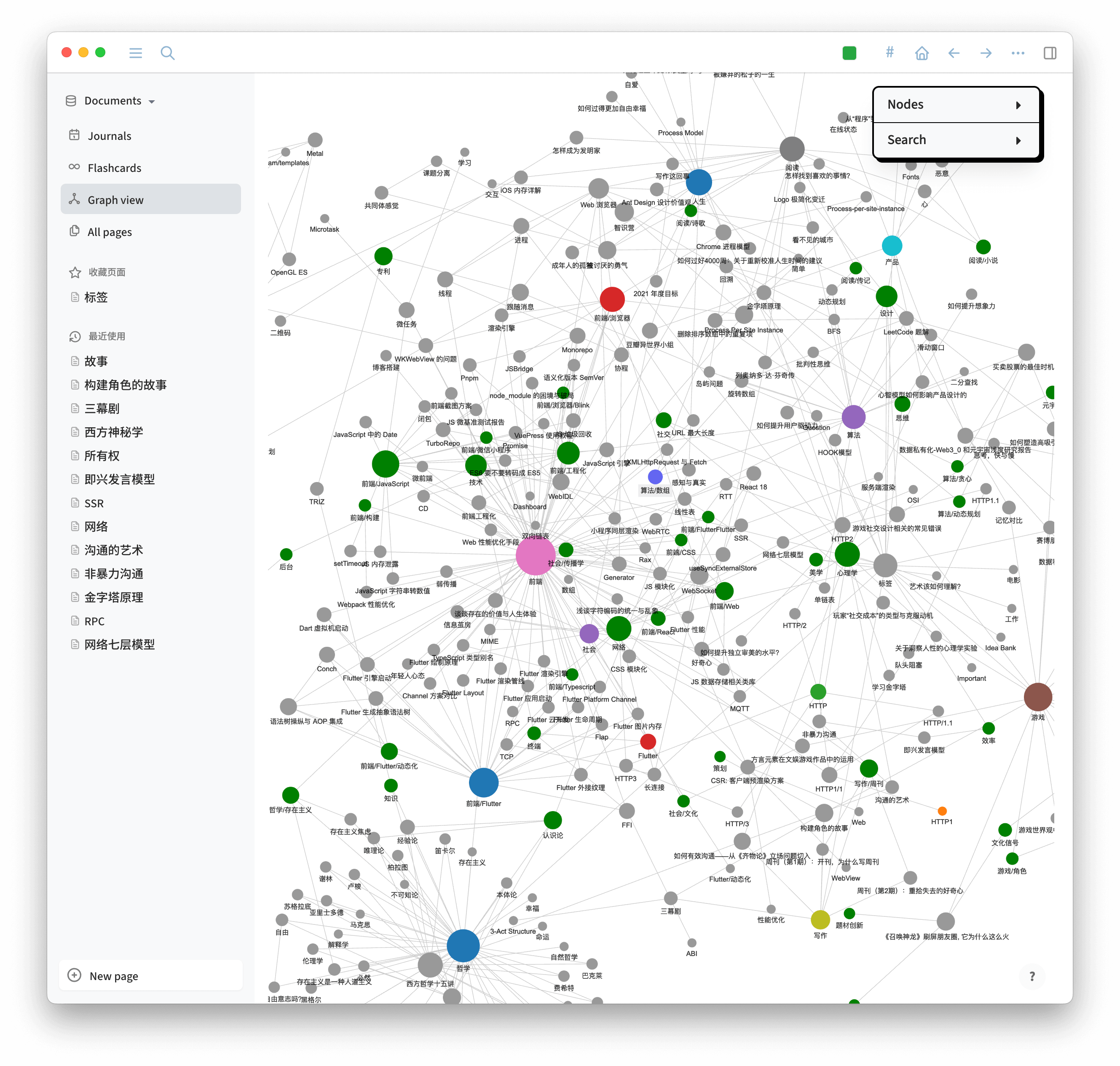
LogSeq
An outliner-style, bidirectional-link knowledge base — essentially a free and arguably better version of Roam Research. It’s currently the only note tool I use consistently.
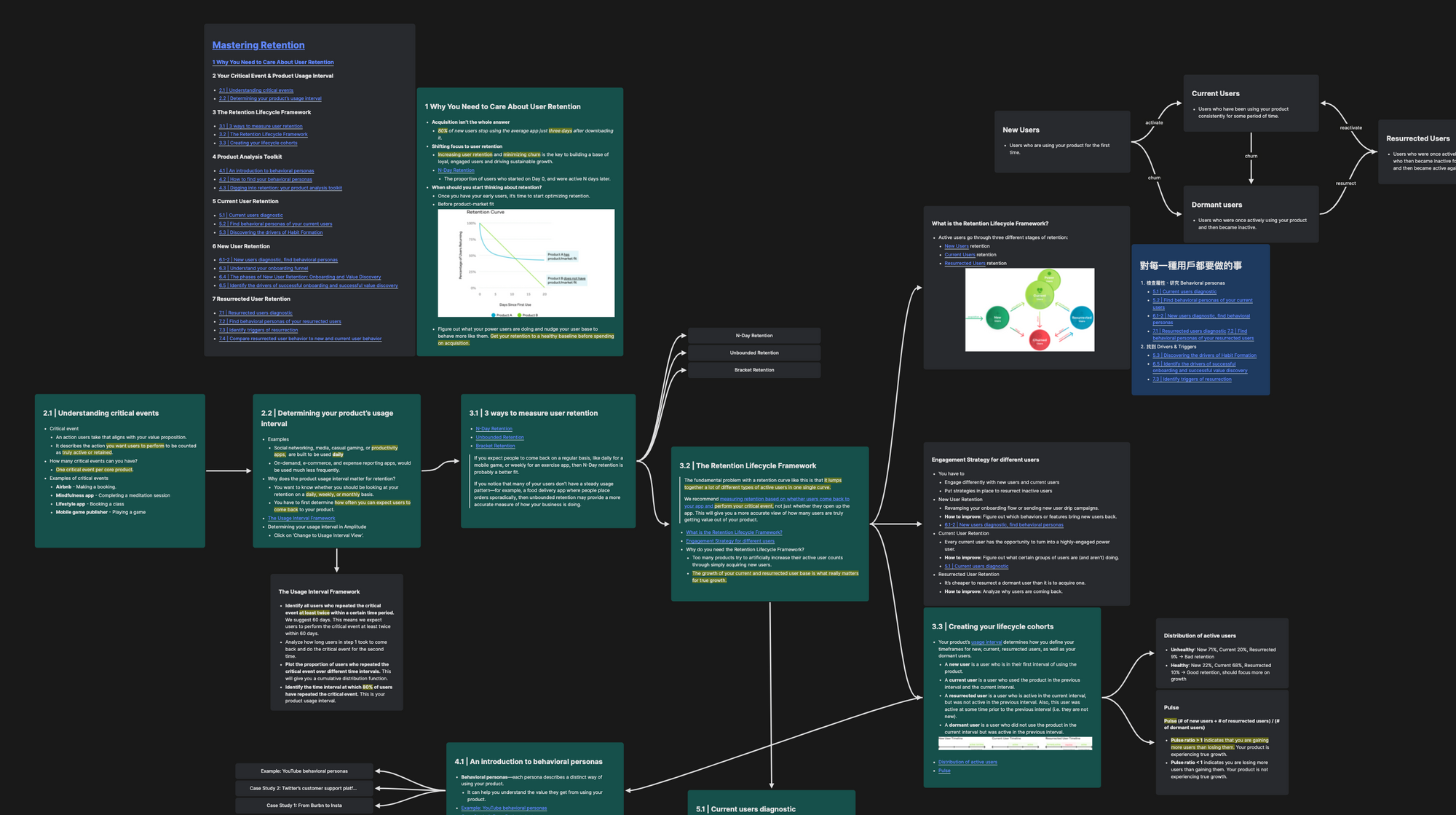
Hepta
The developer is a recent Taiwanese college graduate who has his own coherent vision for how note-taking should work. What impresses me most is that he ships Hepta almost daily — that level of consistent output is something I genuinely admire.
This Week’s Log
Recent Viewings
- Reading: Letters | The Letter with Your Handwriting
- Watching: Anime | Summer Time Rendering
- Watching: Anime | Spy × Family
- Rewatched: Film | Tunnel
- Watched: Film | Doctor Strange in the Multiverse of Madness
- Watched: Game playthrough | The Quarry
- Played: Switch | Snipperclips
- Played: Switch | Fall Guys
I’m too much of a coward to play horror games myself, but I’m very curious about the stories. Watching someone else play them — with the safety net of live comments — is perfect. No fear at all.
By the way, Fall Guys went free-to-play and came to Switch! The direct-play experience is solid. You have to try it — this is exactly the kind of pure, uncomplicated fun games should be.

Recent Code
TypeScript React    40 hrs 12 mins ██████████████▋░░░░░░ 70.1%
TypeScript          13 hrs 43 mins █████░░░░░░░░░░░░░░░░ 23.9%
JSON                1 hr 2 mins    ▍░░░░░░░░░░░░░░░░░░░░  1.8%
JavaScript          41 mins        ▎░░░░░░░░░░░░░░░░░░░░  1.2%
HTML                38 mins        ▏░░░░░░░░░░░░░░░░░░░░  1.1%