COVER STORY
Opus 5.5: making films with code
Opus writes animation, a browser renders frames, and editing tools assemble the film. The interesting change is how precisely a film can be revised.
01 / How does code become a film?
Lemo-opuscar has three layers: the model writes Canvas or WebGL animation; a browser draws frames at specified times; FFmpeg combines those frames with sound and captions. The generated artifact describes how to draw each frame.
That matters when revising: move a title’s cue, change a camera curve, or replace a chart parameter. Content and timing remain inspectable in code. The trade-off is subject matter: the gallery does not demonstrate realistic acting or continuous natural motion. Graphic explainers, brand motion and stylized shorts are clearer starting points.
One treatment, three tracks, one timeline
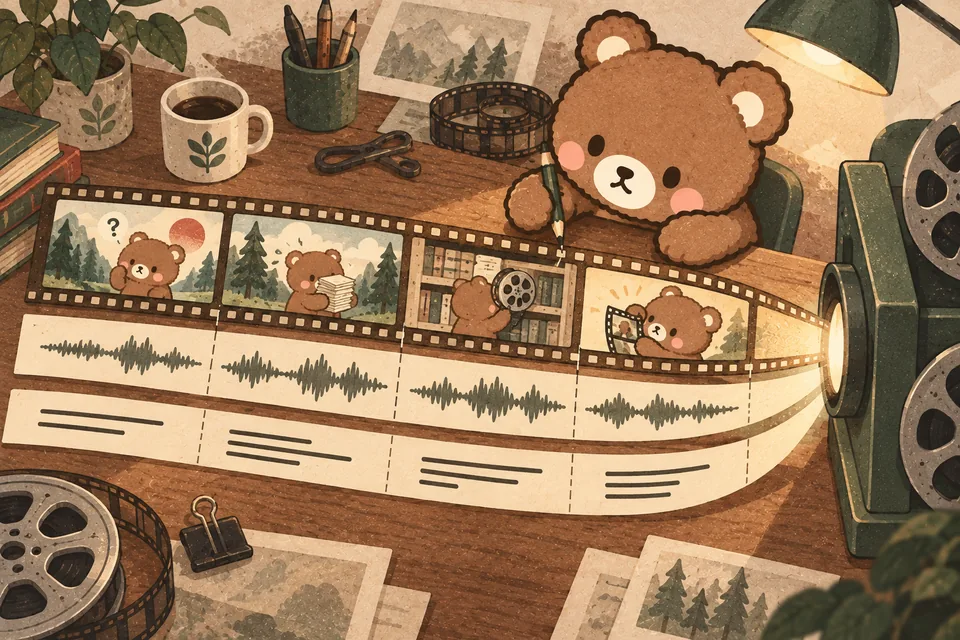
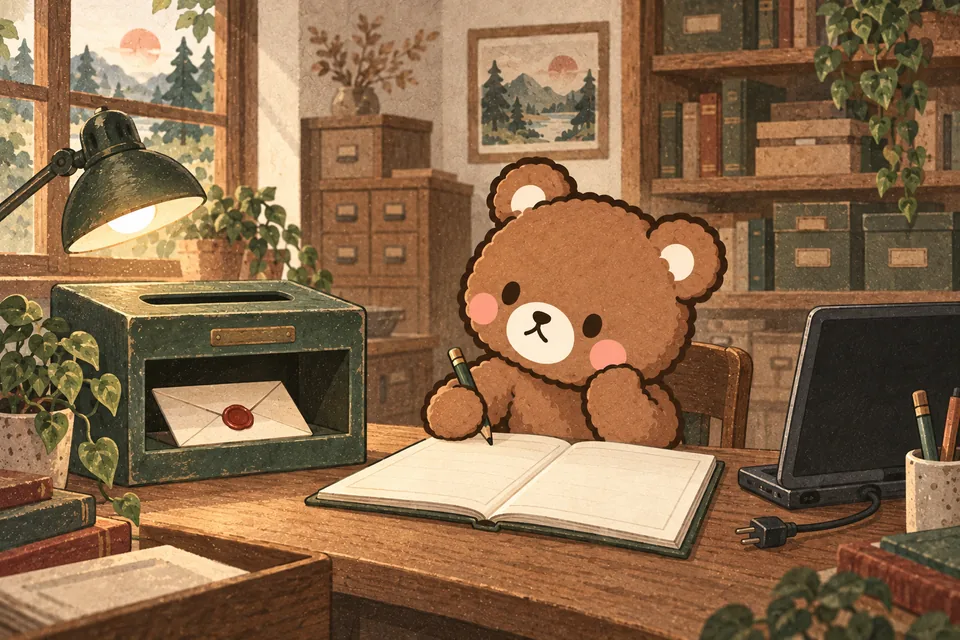
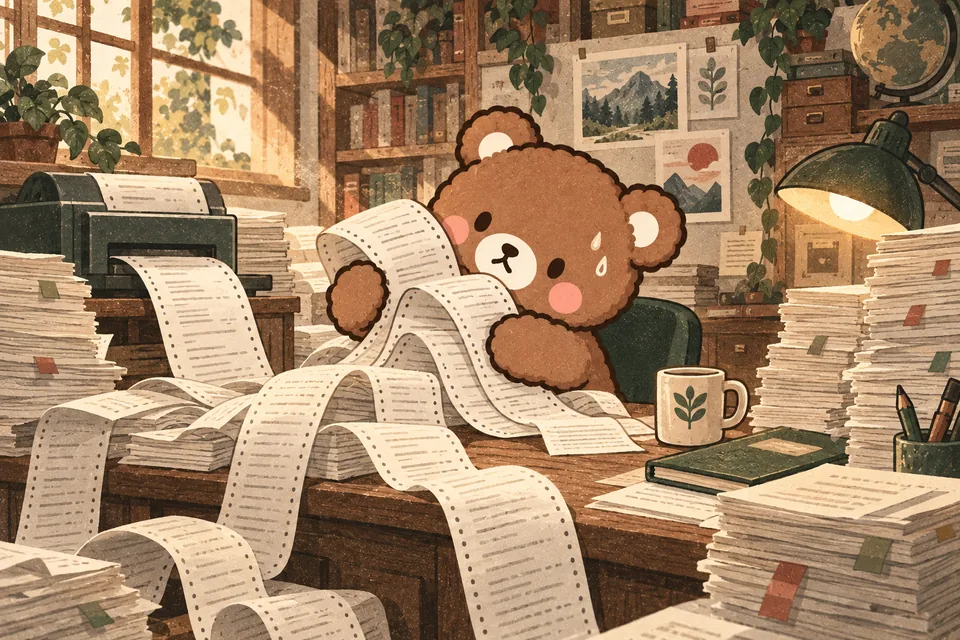
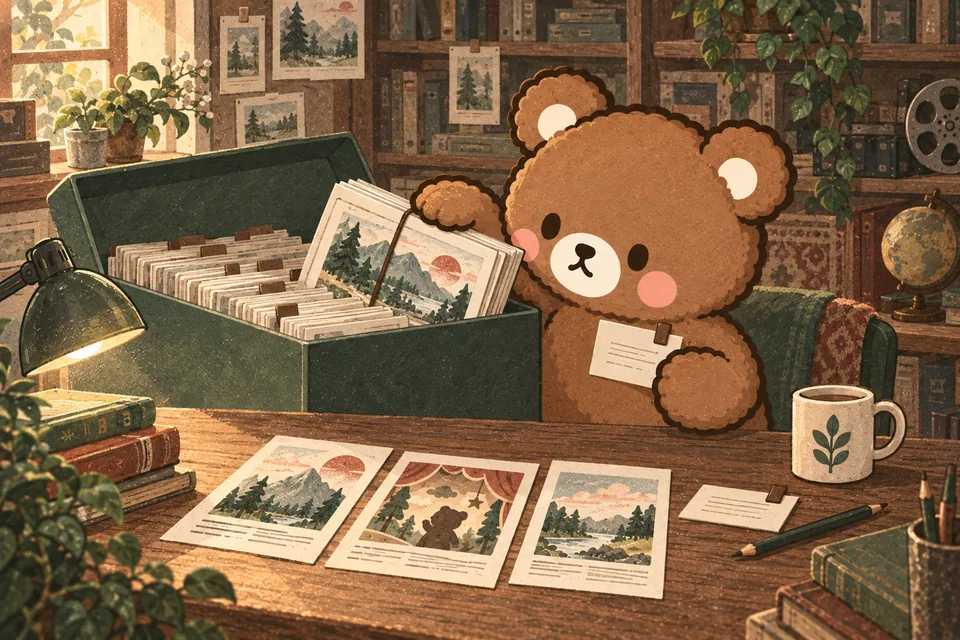
Bear editing desk · editorial concept art. Picture, sound and captions share cut points; the adjacent text gives the production steps.
Animation code
Canvas / WebGL → render(t)A browser selects frames by time; titles, motion and parameters remain editable.
Voice · music · effects
Audio tracks + timed cuesSpeech and action share cues rather than independent clocks.
Captions and titles
Text + start / hold timePlan both the words and the time needed to read them.
Editorial diagram based on DIRECTOR / TECHNIQUE. Shared cues make revisions locatable.
02 / Style changes how a story moves
Each STYLE guide constrains motion and transitions as well as palette and material. A whiteboard can reveal a concept stroke by stroke; shadow puppets obey joints and screens; Swiss motion uses grids, type and rhythm. The wrong choice can obscure an otherwise complete film.
The whiteboard sample compares clocks on the ground and in orbit to explain the GPS correction, introducing marks alongside the explanation. Swiss motion emphasizes structure and rhythm, while puppetry turns light and character movement into narrative cues. Choose the change a viewer needs to see before choosing the visual style.
In the source films: how style helps understanding
Watch the films ↗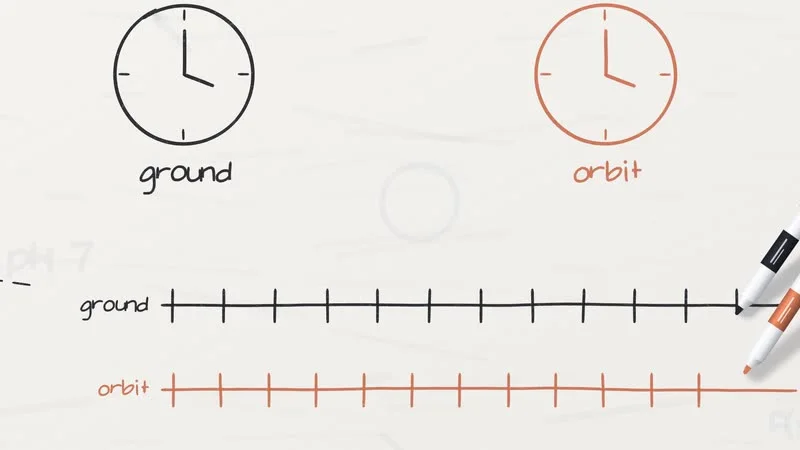
WHITEBOARD
Two clocks make a difference visible
Create comparable objects, then reveal marks and formulas alongside the voice. The picture carries the explanation.
Read the style guide ↗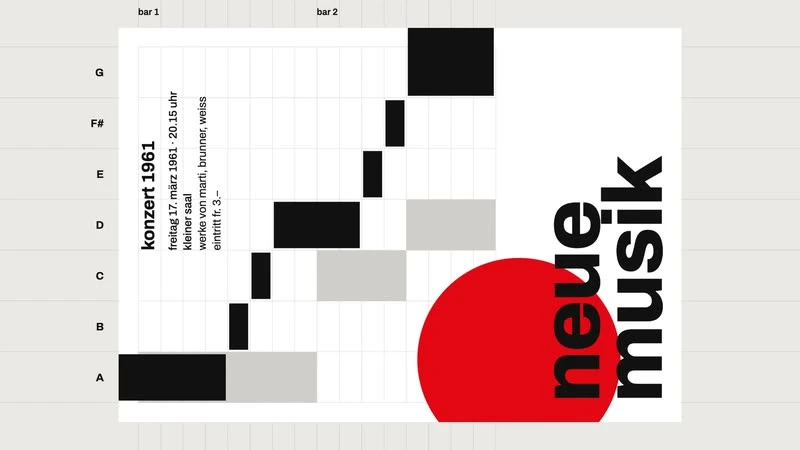
Swiss motion
Grid × type × rhythmRecompose structure on the beat to show rules, proportions and exceptions.
STYLE.md ↗
Shadow puppetry
Joints × screen × lightMovement follows the puppet’s construction; light can carry the narrative.
STYLE.md ↗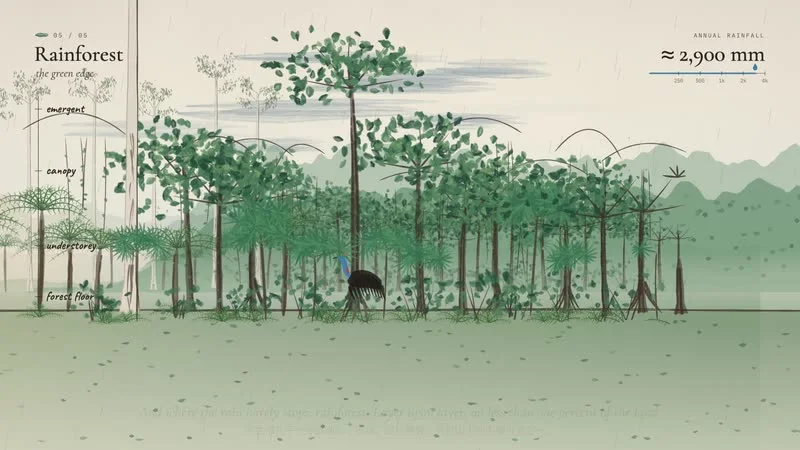
Watercolor brush
Strokes × washes × spaceMaterial can carry a transition and mood while keeping information readable.
STYLE.md ↗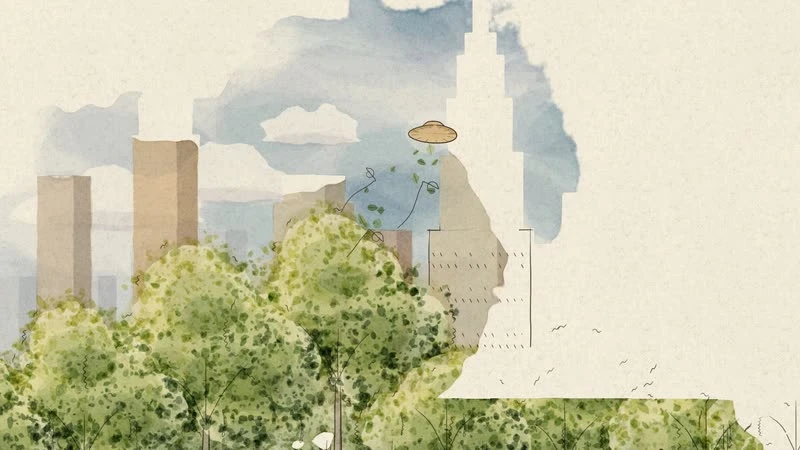
Urban sketch
Lines × color × streetsSequenced lines and washes guide the viewer’s discovery of a place.
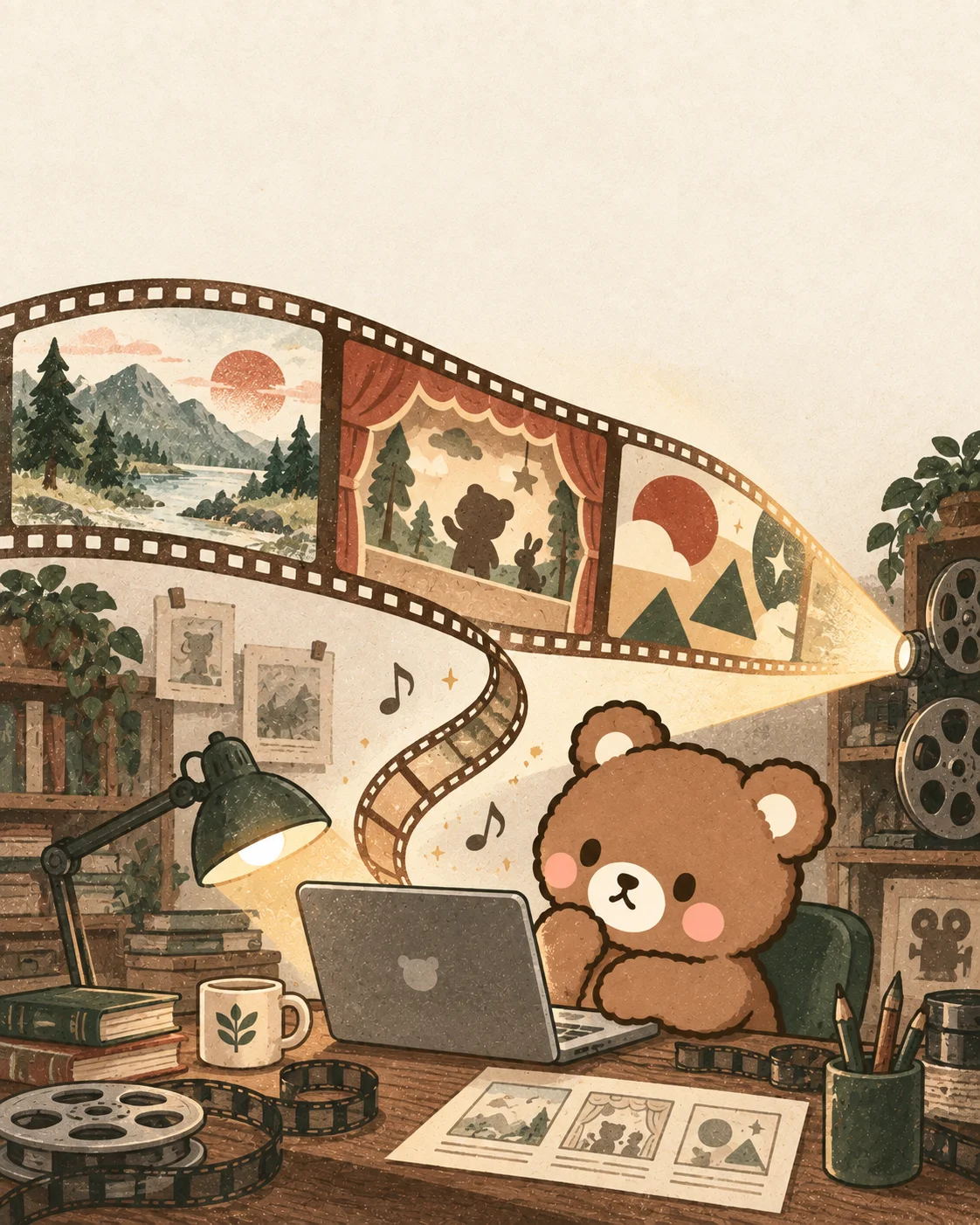
STYLE.md ↗Source frames: Lemo / lemo-opuscar, revision c4bc370. Click a frame for full size. The bear cover is a separate editorial illustration.
03 / Put shots and sound on the same clock
The editorial storyboard below explains context management: pose a question in three seconds, crowd the desk with logs, archive the full record while retaining a recall handle, then retrieve evidence to close. Each visual change carries a change in understanding.
A render(t) function selects the picture at a given time; speech, captions and effects share its cues. Live machine speed and uncontrolled randomness must not change the frame. At the guide’s default 24 fps, 45 seconds produces 1,080 frames—an editorial calculation, not a throughput result. Lengthening narration requires shifting dependent cues together.
45 seconds, four changes in understanding
Editorial storyboard · not an original project film-
 0100–03s
Pose the question
“Why does work get messier?”
Begin with a moment of hesitation, then introduce the context question.
-
 0203–15s
Reveal the burden
“The same log returns every turn.”
Repeating paper crowds the desk, making redundant input visible.
-
 0315–32s
Separate storage and reading
“Keep everything; read what is needed.”
Archive the complete record; retain an index and the pages needed now.
-
 0432–45s
Return to evidence
“Retrieve the original when needed.”
Place the summary beside the retrieved original and check the same detail.
Bear storyboard · AI concept art. These are static narrative frames showing each shot’s purpose, not a claim that Opus generated this animation.
Longer shot-02 narration → shift shot 03 → update picture, captions and sound cues → render and assemble again.
Storyboard panels have equal width; tracks use proportional duration. Editorial frame calculation: 45s × 24 fps = 1,080frames; not a speed measurement.
04 / Make revision a concrete operation
DIRECTOR establishes a subject, goal and turn before defining shots and sound. TECHNIQUE addresses rendering and assembly; STYLE supplies the visual method. Review story, appearance and pacing independently, before a full film reveals a wrong direction.
Inspect a contact sheet for repetitive compositions, missing actions and discontinuities, then watch with sound for rushed speech, unreadable captions and distracting effects. Editable code still needs editorial judgment. The saved title retains 39 styles; the checked repository lists 43. Runnable code, asset rights and a test film matter more than that count.